
News & updates
Latest developments from our institute
Stay informed about new research results, awards, events, and collaborations across our scientific community.
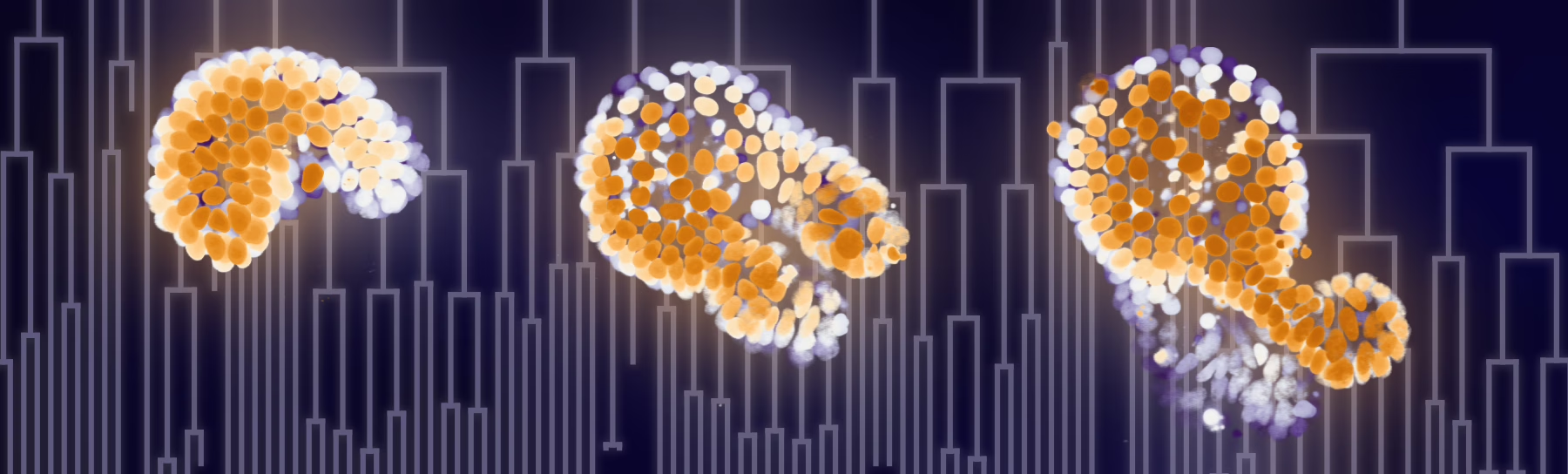
Daughter cells in the intestine do what their mother tells them
AMOLF researchers have discovered what prevents cells in the intestine from dividing rampantly. One hypothesis was that this happens because, on average, for each cell that divides, another cell stops…
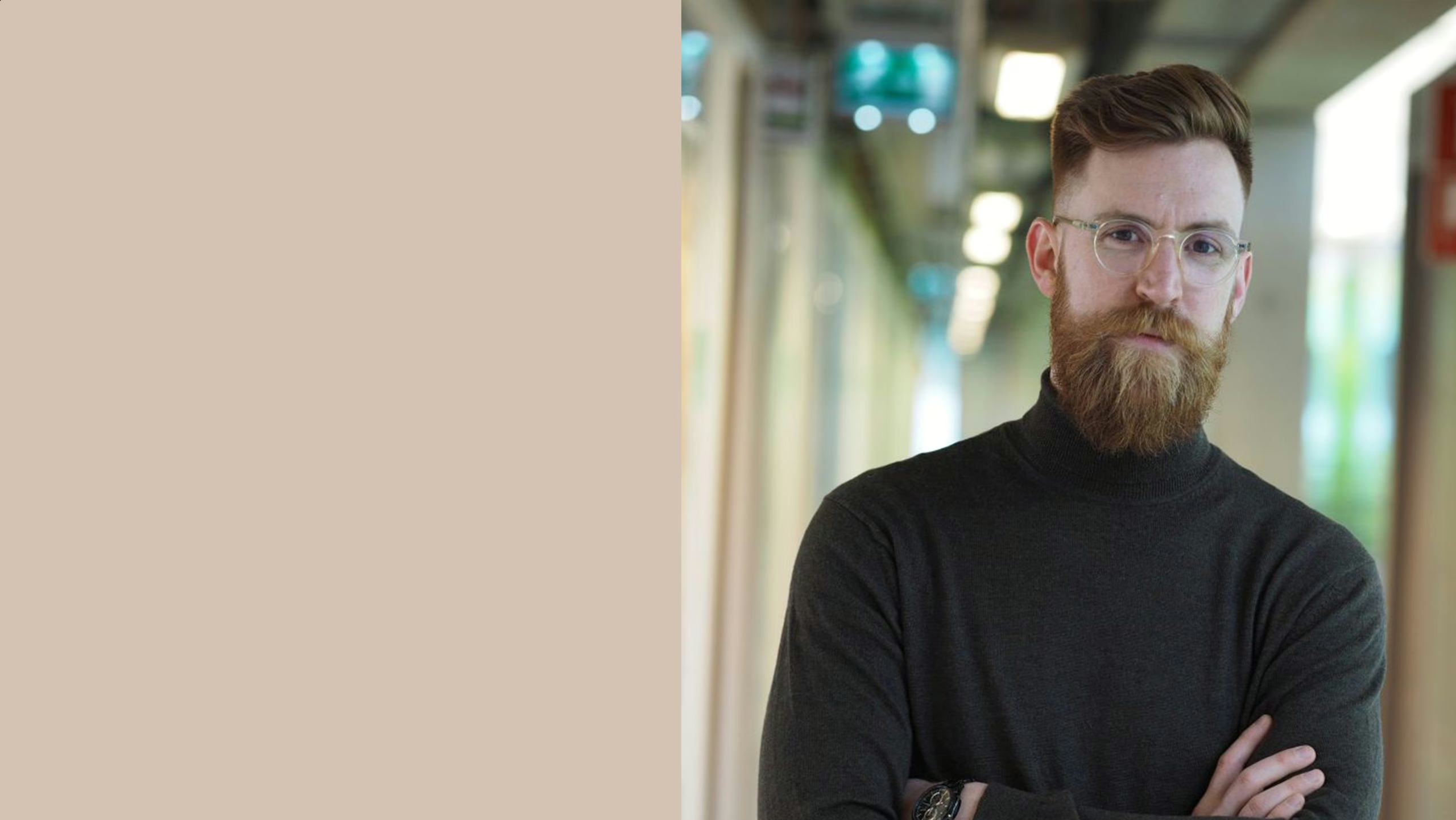
Bas Overvelde wins KNAW Early Career Award
Photo by Lukas Helmbrecht AMOLF group leader Bas Overvelde (Soft Robotic Matter) has won the KNAW Early Career Award. With the award, the KNAW acknowledges young…
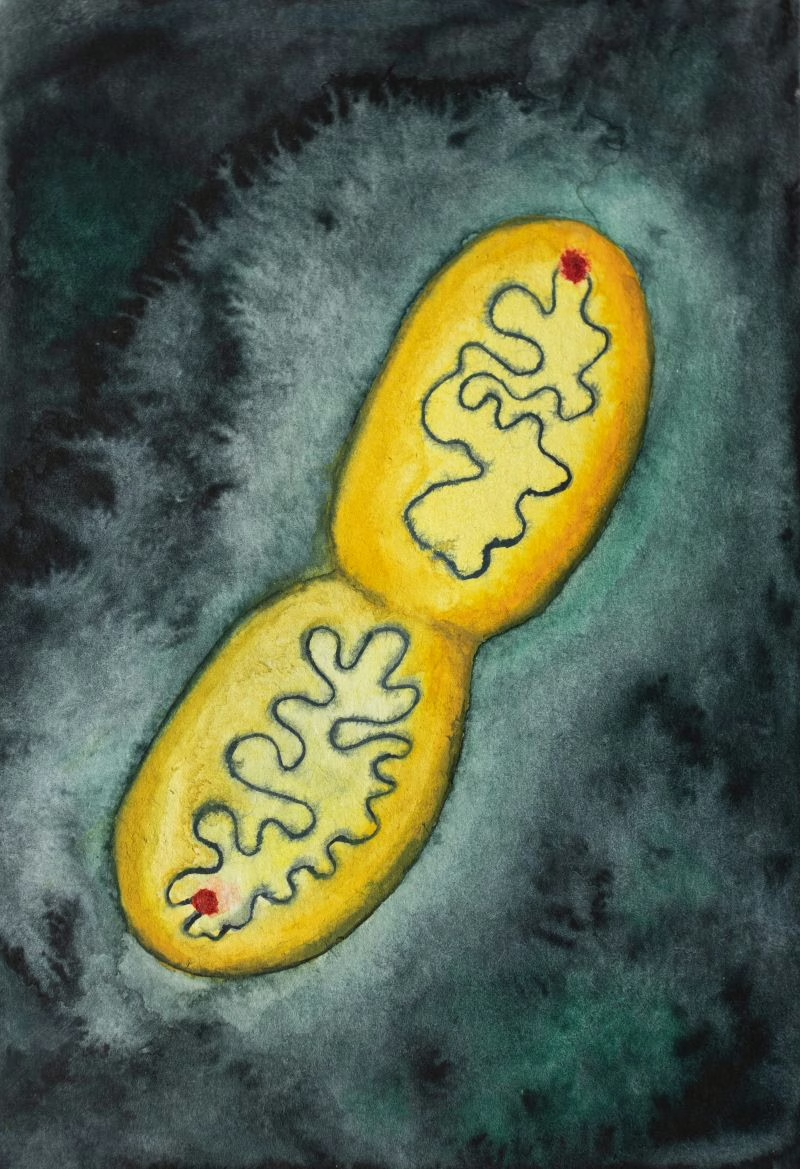
New model for reproduction of E. coli bacteria
With a new model, AMOLF researchers reveal how single celled organisms like bacteria coordinate growth, cell division and DNA replication. Bacteria reproduce via growth and cell division. During each cycle…
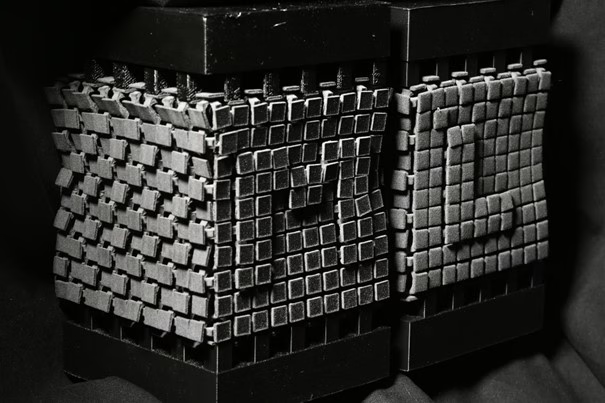
Floppy or not: artificial intelligence predicts properties of complex metamaterials
Given a 3D piece of origami, can you flatten it without damaging it? Just by looking at the design, the answer is hard to predict, because each and every fold…
Extreme-ultraviolet light manipulation to unleash unprecedented capabilities
Sylvianne Roscam Abbing, photo by Ivar Pel Short-wavelength light sources beyond the color that the human eye can perceive have tremendous application potential, but controlling them…
ERC Synergy Grant for AMOLF-Heidelberg-ETH team
Sander Tans, photo by Mark Knight A prestigious ERC Synergy Grant worth 9.4 million euros has been awarded to the research groups of Sander Tans (AMOLF),…
Erik Garnett wins KNCV Gold Medal
Credits:FotoGillissen At the annual Dutch chemistry conference Chains, the KNCV announced that AMOLF group leader Erik Garnett (Nanoscale Solar Cells) is the recipient of the KNCV…
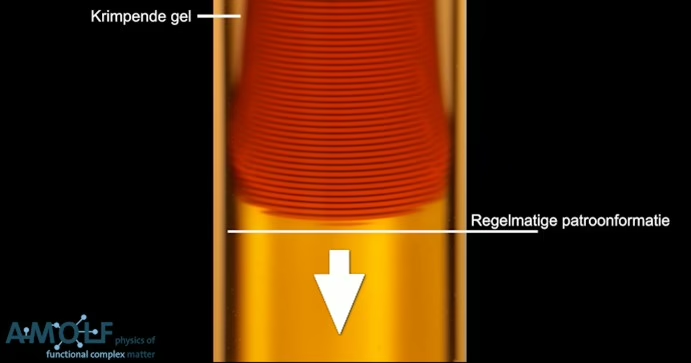
Regular patterns – like those found in nature – now also produced in the lab
AMOLF researchers have found a new method for producing layered materials. Inspired by nature, they developed a physical-chemical process that yields highly regular microstructures. They describe this in a paper…