
News & updates
Latest developments from our institute
Stay informed about new research results, awards, events, and collaborations across our scientific community.
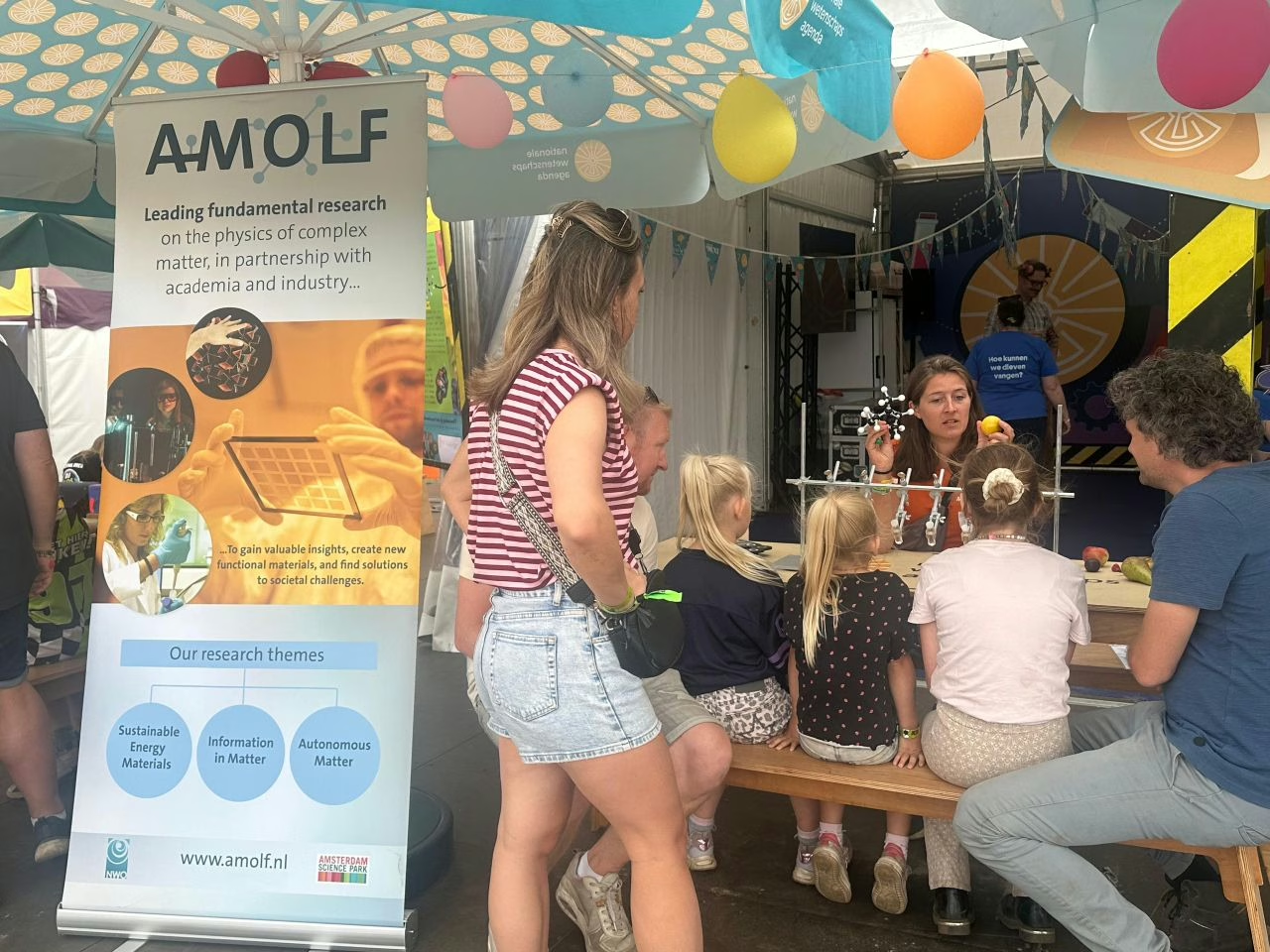
Adding a scientific flavor to Zwarte Cross
For the first time, AMOLF participated in the Netherlands' largest summer festival, Zwarte Cross. Together with volunteers from NWO, the AMOLF team introduced children to the fascinating world of molecules.…
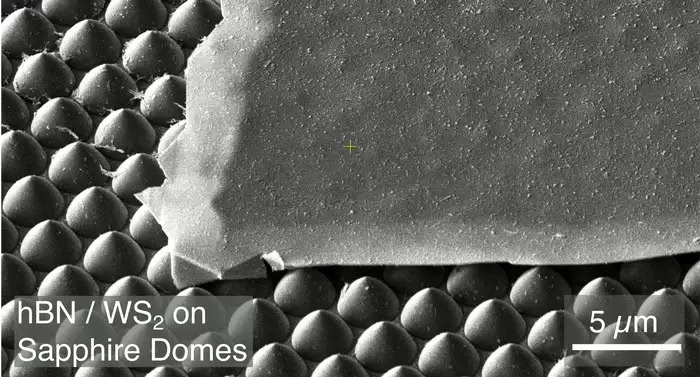
Atom-thin materials: handle with care… and cling film
As materials become thinner – now reaching a thickness of single atoms – it has become ever more difficult to create large enough sheets of these materials and transfer them without cracking them into tiny flakes. Recent work by a broad Amsterdam-based team of scientists, published in the journal ACS Nano, presents a new technique that solves this problem – using an unexpected material that can be found in any home kitchen.

Two Veni grants awarded for projects on immune system activation and twisted perovskites
Two researchers have been awarded Veni grants from the Dutch Research Council (NWO) for three-year postdoctoral research projects at AMOLF. Dr. Megan Farrell will conduct her project on how immune…
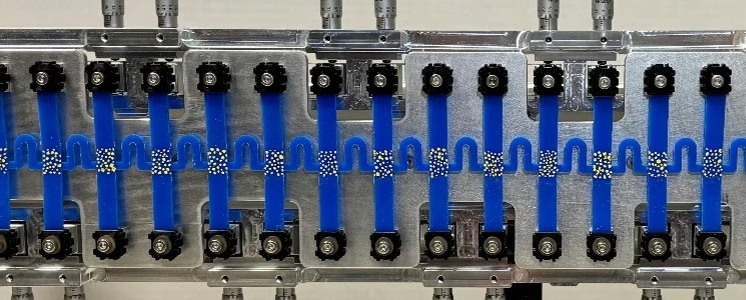
Material that can both store and process information for low-energy computing
Researchers at AMOLF and the University of Konstanz have developed a mechanical material that can store, move, and process information within the same physical structure. The findings, published in Physical Review Letters, could help inspire future computing technologies that use far less energy than conventional computers. Life at AMOLF 2020 Cost item (per person) Public user (€) Private user (€) Tariff per day 680 1,480 Tariff per hour 85 185
test
Researchers at AMOLF and the University of Konstanz have developed a mechanical material that can store, move, and process information within the same physical structure. The findings, published in Physical Review Letters, could help inspire future computing technologies that use far less energy than conventional computers.
Material that can both store and process information for low-energy computing
Researchers at AMOLF and the University of Konstanz have developed a mechanical material that can store, move, and process information within the same physical structure. The findings, published in Physical Review Letters, could help inspire future computing technologies that use far less energy than conventional computers.
Material that can both store and process information for low-energy computing
Researchers at AMOLF and the University of Konstanz have developed a mechanical material that can store, move, and process information within the same physical structure. The findings, published in Physical Review Letters, could help inspire future computing technologies that use far less energy than conventional computers.
Material that can both store and process information for low-energy computing
Researchers at AMOLF and the University of Konstanz have developed a mechanical material that can store, move, and process information within the same physical structure. The findings, published in Physical Review Letters, could help inspire future computing technologies that use far less energy than conventional computers.