
News & updates
Latest developments from our institute
Stay informed about new research results, awards, events, and collaborations across our scientific community.
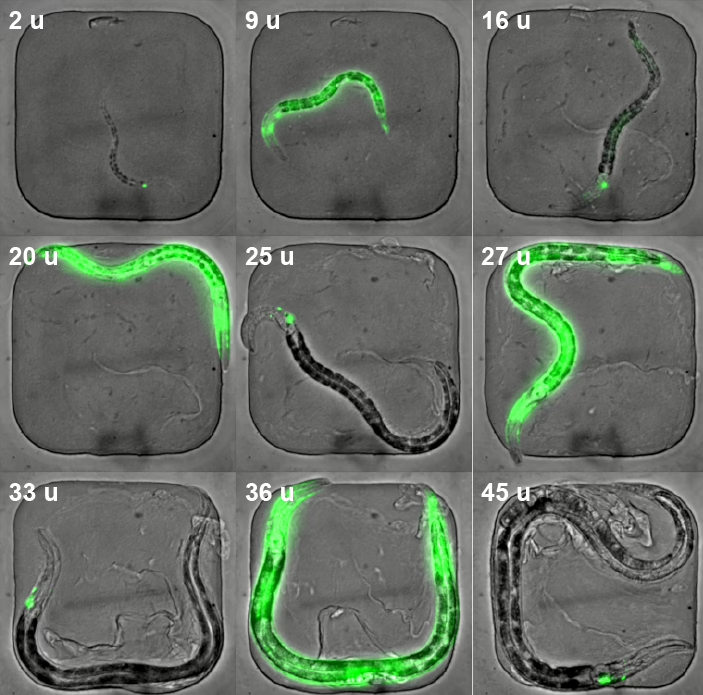
Première: volg live de ontwikkeling van larve tot volwassen worm
Onderzoekers van FOM-instituut AMOLF ontwikkelden een microscopietechniek waarmee ze voor het eerst live de ontwikkeling van de cellen van de worm C. elegans kunnen volgen, dus in een groeiend, etend…
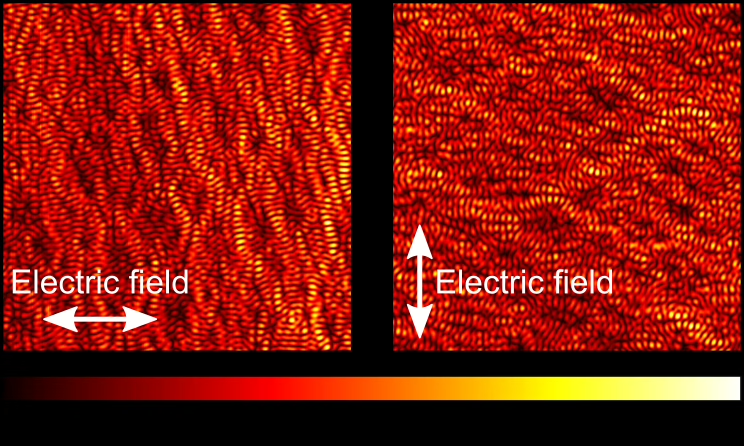
The importance of being a vector: a story of darkness in light waves
Darkness can be found in light. This typically happens at an optical vortex: a point in which the amplitude of light is zero and where it twists like a corkscrew.…
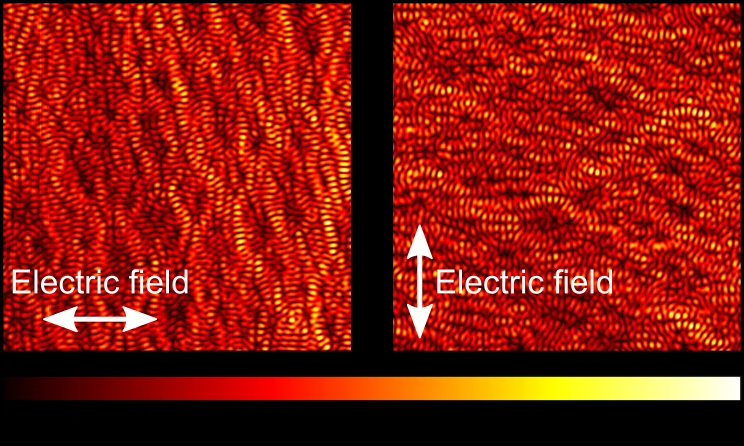
De rol van vectoren: een verhaal over duisternis in lichtgolven
In licht is vaak ook duisternis aanwezig. Zoals bij een optische vortex, een punt waar de amplitude van het licht nul is en waar het omheen draait als een kurkentrekker.…
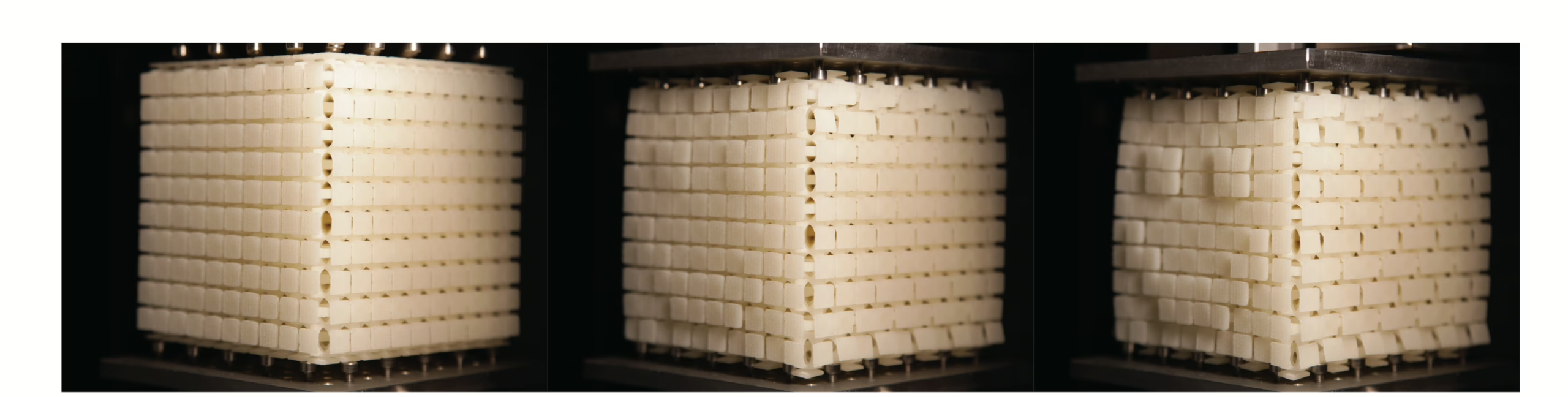
Building with flexible blocks
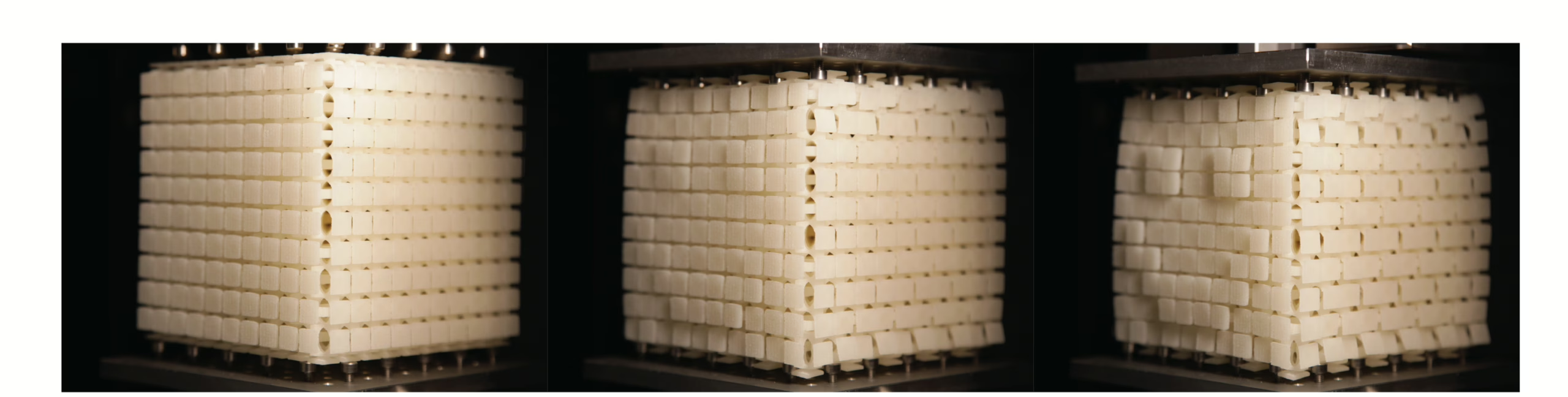
On an apparently normal cube a pattern of hollows and bulges appears when the cube is compressed. Physicists from FOM Institute AMOLF and Leiden University together with colleagues from Tel…
Bouwen met flexibele blokjes
Op een ogenschijnlijk gewone kubus verschijnt onder druk een patroon van hollingen en bollingen. Natuurkundigen van FOM-instituut AMOLF en de Universiteit Leiden hebben samen met collega's van de Universiteit van…
Veni grants for Scott Waitukaitus & Andrew Musser
The Netherlands Organisation for Scientific Research (NWO) awarded Veni grants to the AMOLF researchers Scott Waitukaitus and Andrew Musser. In total 158 researchers received a Veni grant with a maximum…
Rubiconbeurs voor Jorik van de Groep
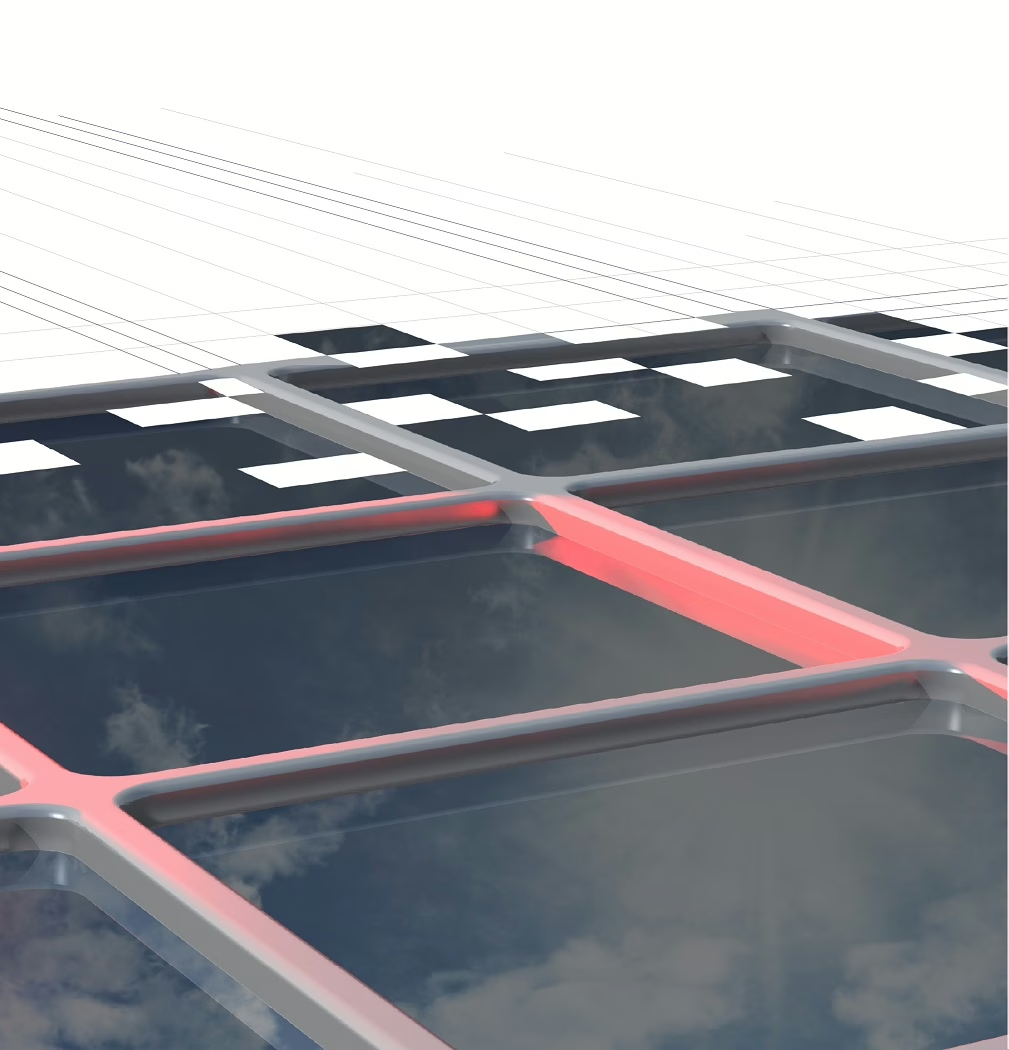
Photo: Mark Knight Jorik van de Groep, oud-promovendus in de Photonic Materials groep van Albert Polman, heeft een NWO Rubiconbeurs ontvangen. Hij kan daarmee de komende…
Virus particles in a doughnut-shaped chamber form fixed patterns
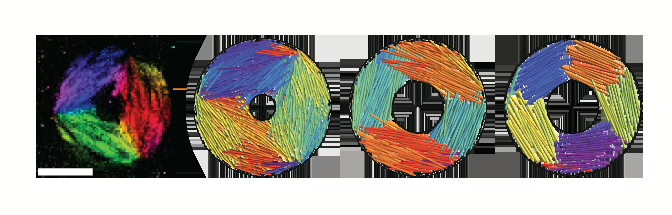
Large biomolecules in a small space spontaneously form symmetrical patterns. Researchers from FOM institute AMOLF discovered this together with colleagues from Oxford and Jülich when they confined rod-shaped virus particles…