Veni grant for Corentin Coulais

The Netherlands Organisation for Scientific Research (NWO) awarded a Veni grant to Corentin Coulais for his proposal on Aperiodic Mechanical Metamaterials. Coulais is postdoc in the group Mechanical Metamaterials. In…

The Netherlands Organisation for Scientific Research (NWO) awarded a Veni grant to Corentin Coulais for his proposal on Aperiodic Mechanical Metamaterials. Coulais is postdoc in the group Mechanical Metamaterials. In total, 161 researchers receive a Veni grant with a maximum of 250.000 euro.

The proposal

Aperiodic mechanical metamaterials: bridging the gap between matter and machine
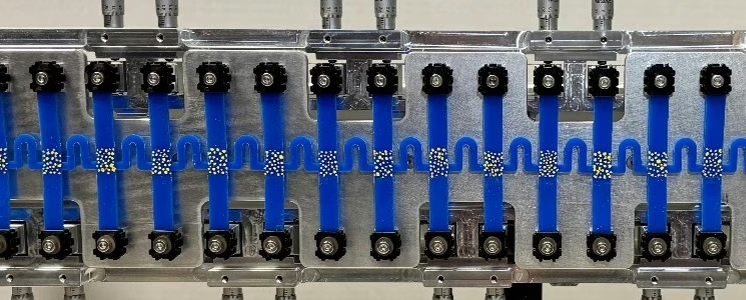
Mechanical metamaterials are artificial structures with extraordinary properties. However, their functionalities are intrinsically limited by their periodicity. This project aims at enhancing what metamaterials can do by making them aperiodic. Combining cutting-edge additive manufacturing techniques, desktop scale experiments and numerical optimization, this project will lead to novel materials with complex mechanical functionalities: machine materials.

About the grants
VENI grants are individual grants from NWO to promote scientific talent. Veni researchers gained their PhD no more than three years ago. They are free to choose the subject of their research. With this approach, NWO and the Ministry of Education, Culture and Science encourage curiosity-driven and innovative research. Veni is part of NWO’s Talent Scheme (Veni, Vidi and Vici) aimed at different career phases of scientists.

Read the NWO press release

mechanical metamaterials martin van hecke corentain coulais

Corentin Coulais


Share article
What's happening

Most recent news items

All news items

Adding a scientific flavor to Zwarte Cross

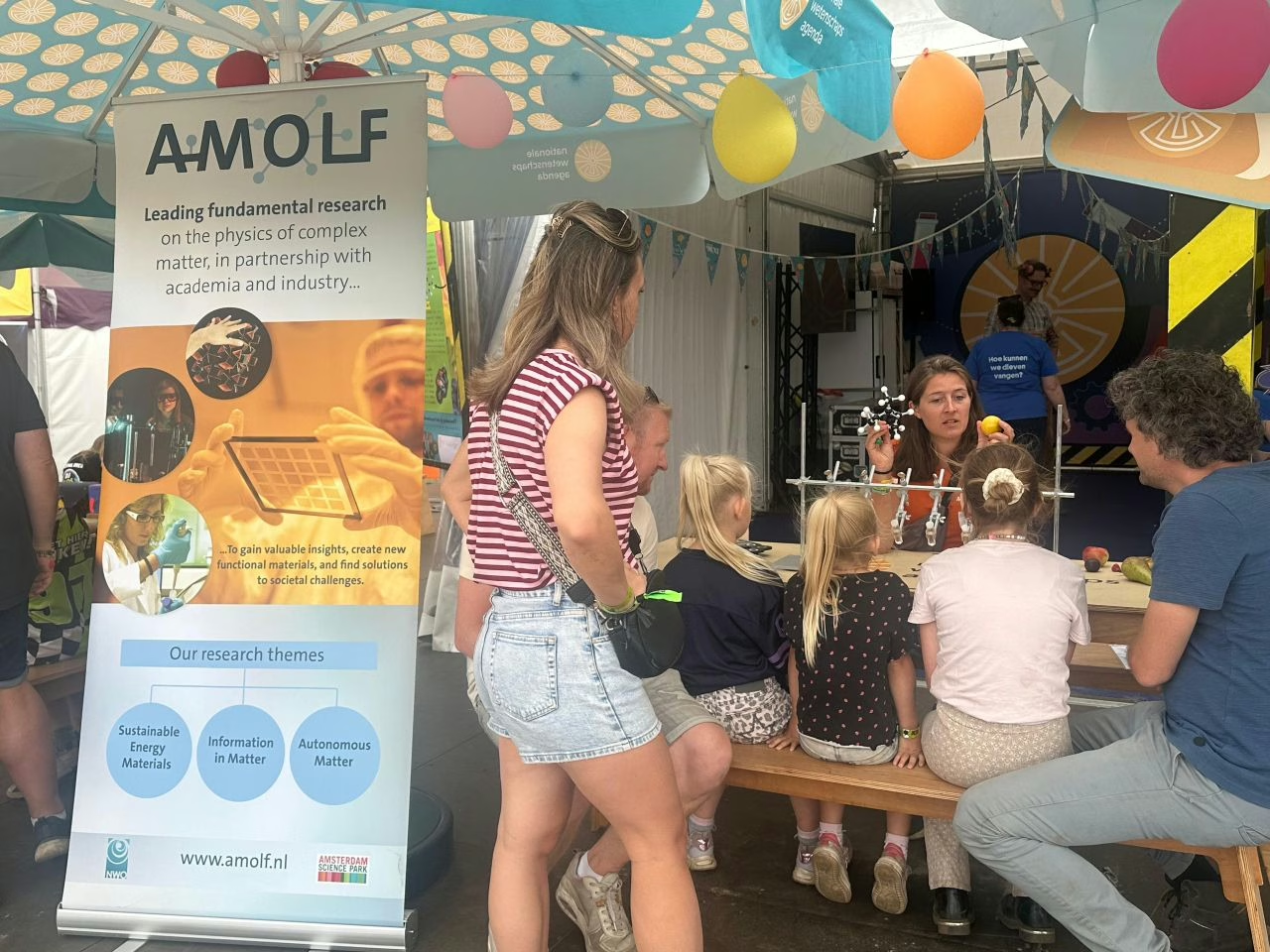
For the first time, AMOLF participated in the Netherlands' largest summer festival, Zwarte Cross. Together with volunteers from NWO, the AMOLF team introduced children to the fascinating world of molecules.…

Read news item

Atom-thin materials: handle with care… and cling film

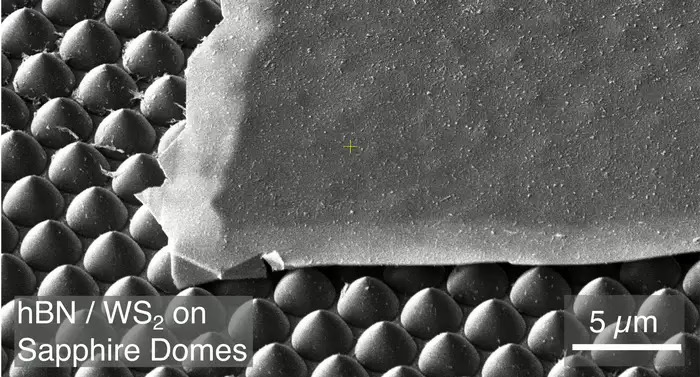
As materials become thinner – now reaching a thickness of single atoms – it has become ever more difficult to create large enough sheets of these materials and transfer them without cracking them into tiny flakes. Recent work by a broad Amsterdam-based team of scientists, published in the journal ACS Nano, presents a new technique that solves this problem – using an unexpected material that can be found in any home kitchen.

Read news item

Two Veni grants awarded for projects on immune system activation and twisted perovskites

Two researchers have been awarded Veni grants from the Dutch Research Council (NWO) for three-year postdoctoral research projects at AMOLF. Dr. Megan Farrell will conduct her project on how immune…

Read news item
Mechanical-material-that-can-store-move-and-process-information
Stay informed

Get the latest research highlights, events, and news from our institute delivered to your inbox