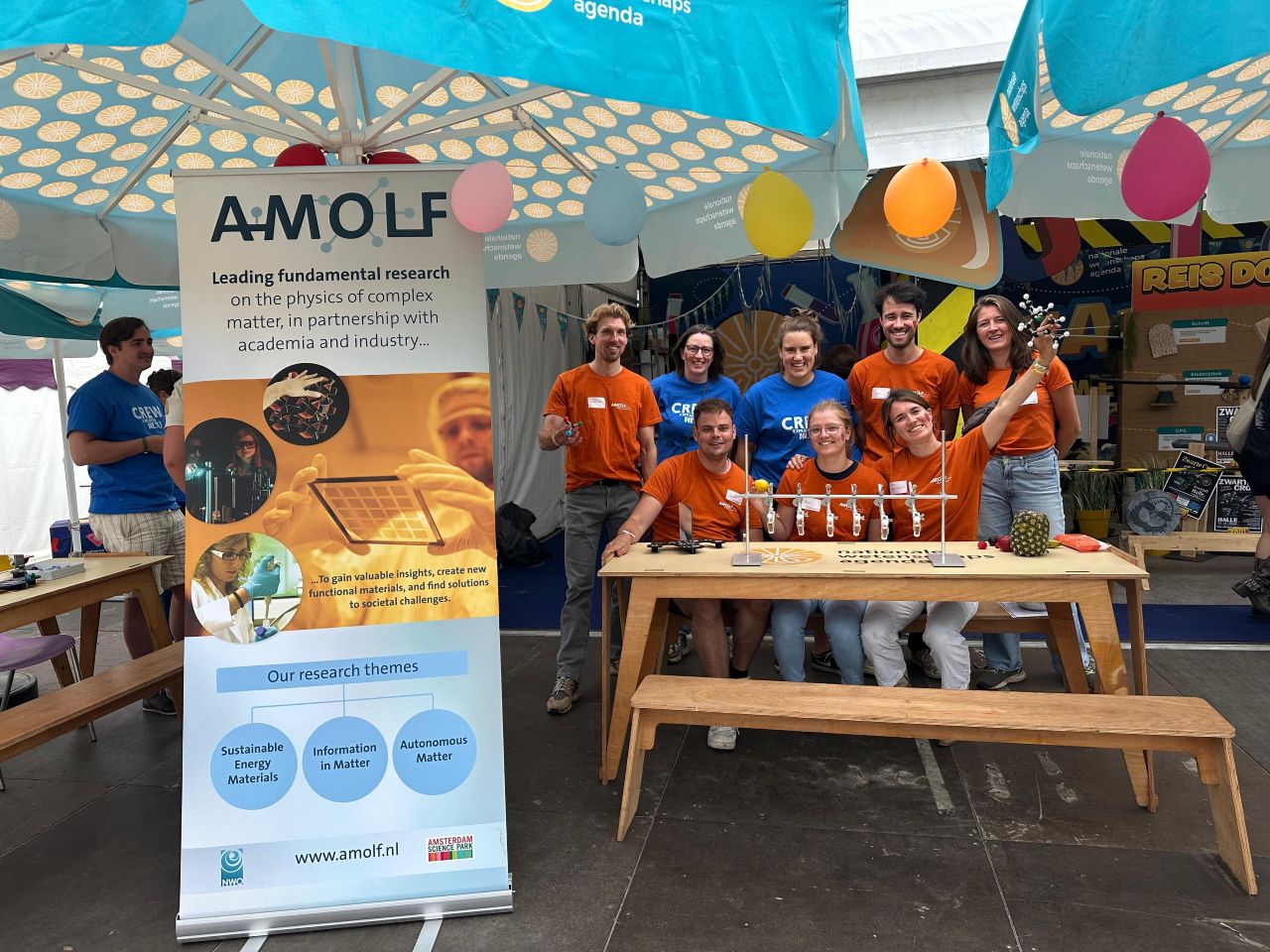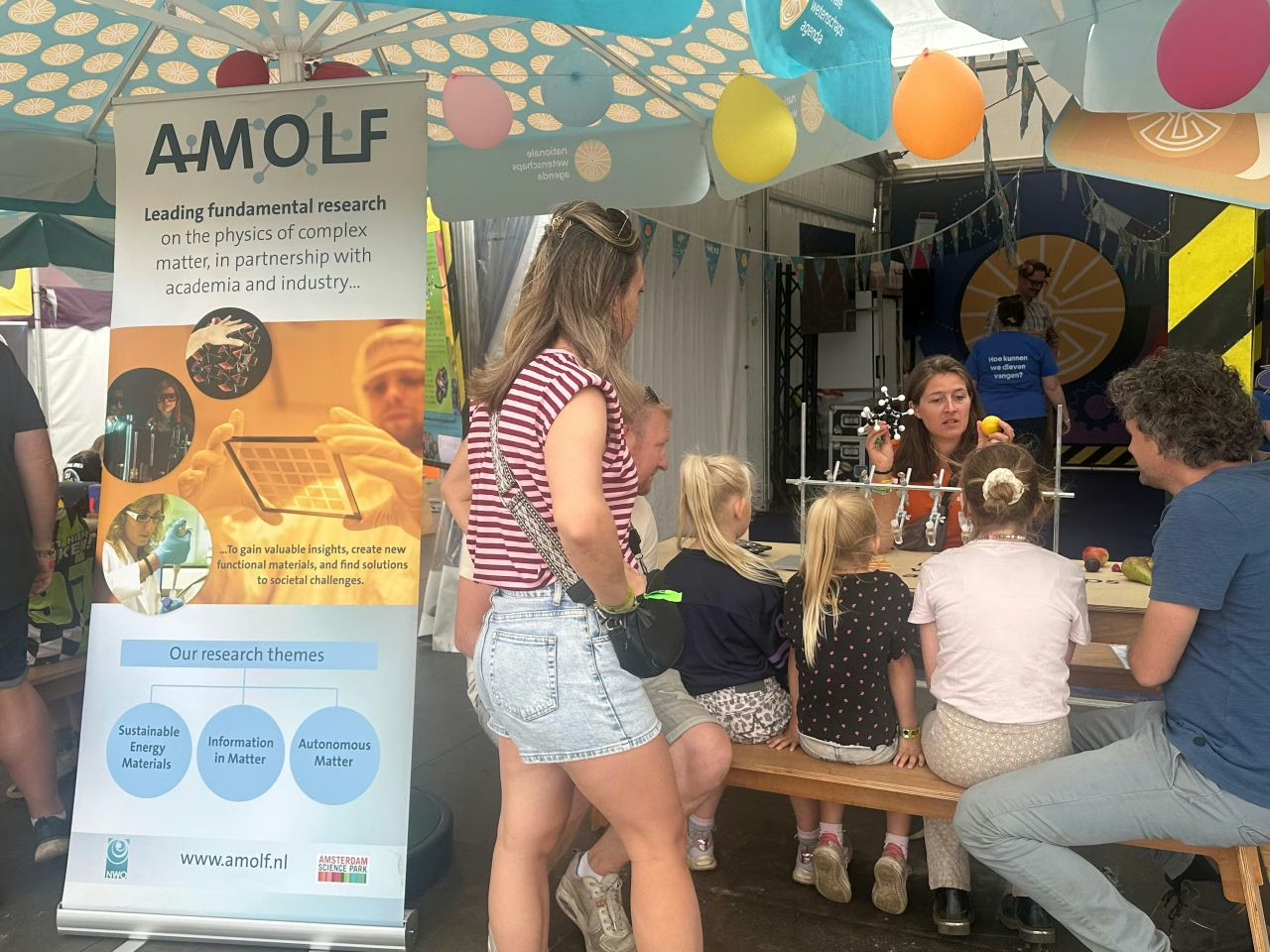
For the first time, AMOLF participated in the Netherlands’ largest summer festival, Zwarte Cross. Together with volunteers from NWO, the AMOLF team introduced children to the fascinating world of molecules. The AMOLF booth was located in the festival’s children’s area, Blagenparadijs, as part of the NWA (National Science Agenda) carried out by NWO.
Smaakmakers (flavor creators)
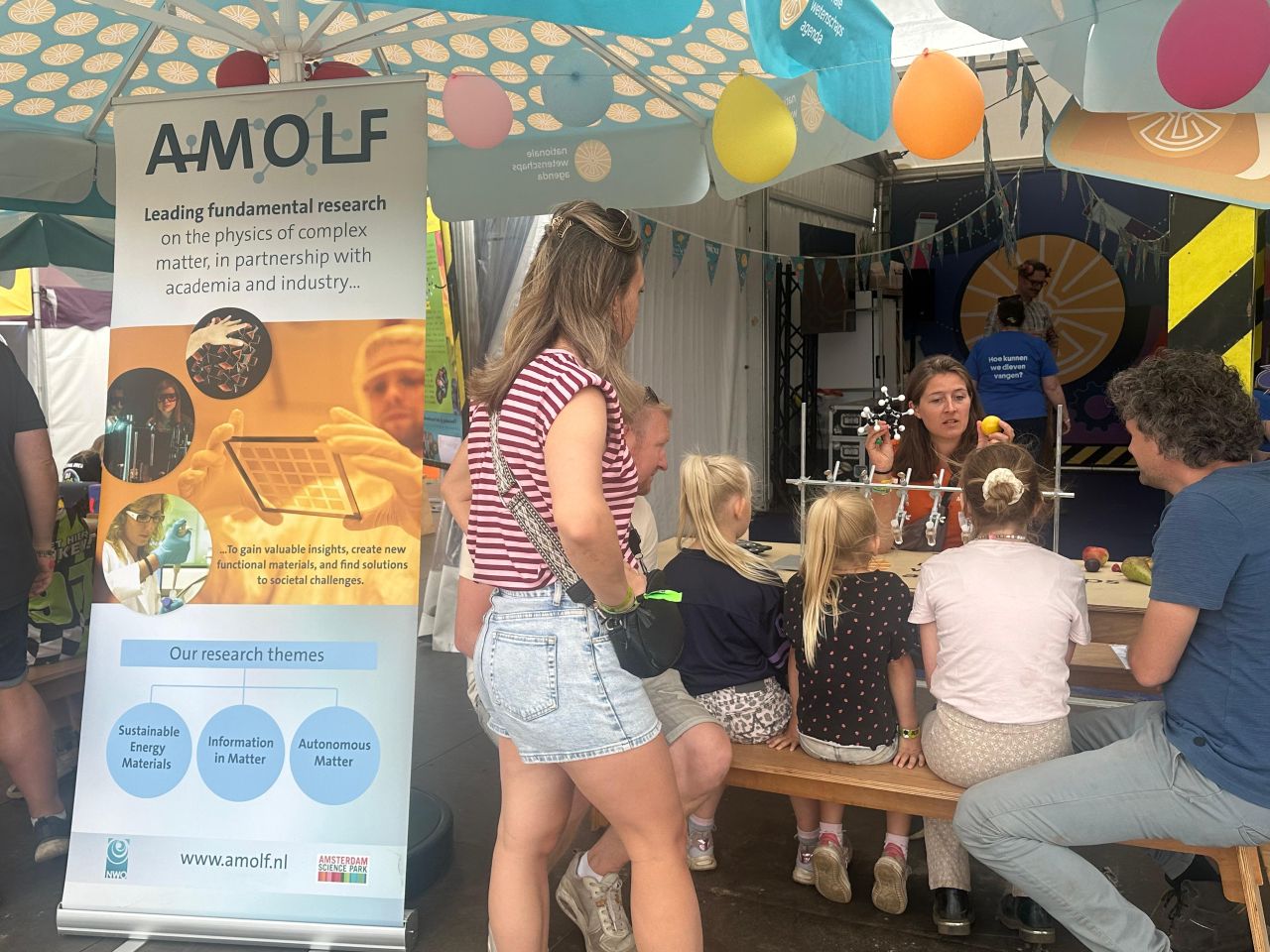 How can you tell the difference between a strawberry and a mango using only your nose? With this question, the AMOLF team took young visitors on a journey into the science of molecules. Children first smelled different aroma molecules and tried to identify the fruits in which these scents are commonly found. They then learned about mirror (chiral) molecules, which resemble each other much like our left and right hands, yet can have very different functions in our bodies.
At the next table, children built their own molecule and discovered whether it was left-handed or right-handed. They did so by seeing if it would fit into a 3D-printed shape, similar to how smell molecules fit into sensors in the nose.
The Smaakmakers workshop was developed by researchers in the AMOLF Self-Organizing Matter group to demonstrate the phenomenon of molecular handedness and its importance, for example in the development and production of medicines.
Science in an unexpected place
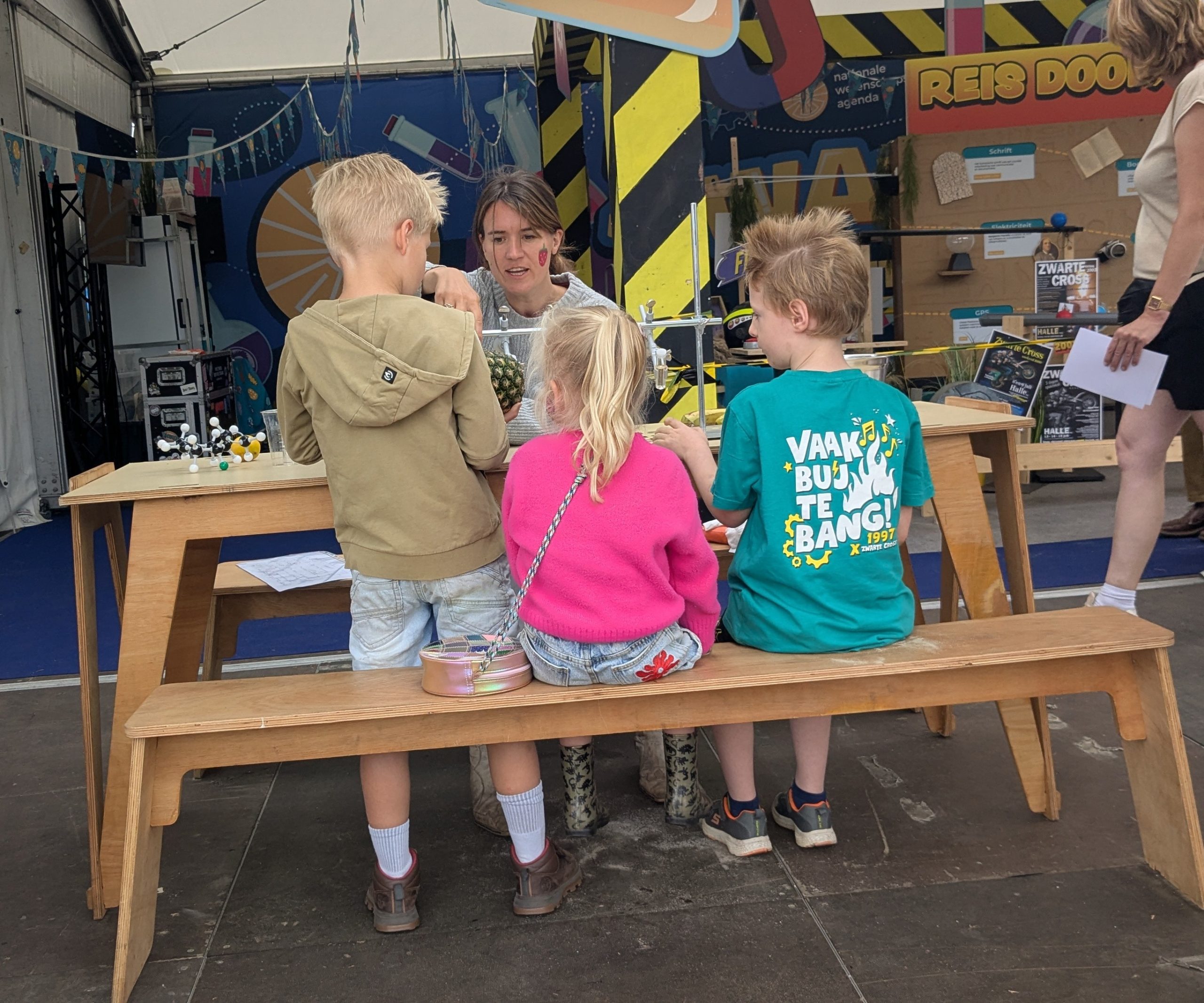
One of the Smaakmakers team members is Tess Heeremans, a PhD candidate in the Self-Organizing Matter group. Looking back on Zwarte Cross, she says it was wonderful to see how pleasantly surprised people were to come across the scientific activities. “Obviously, they weren’t looking for us, but they were eager to participate, and we saw many smiling faces.” In that sense, Zwarte Cross perfectly aligns with the goals of the Nationale Wetenschapsagenda, bringing science and society closer together. Tess also enjoyed interacting with NWO colleagues and learning more about the Dutch research funding system.
Learn more
On October 3rd, the AMOLF Smaakmakers team will be present at the outreach event Wetenschapsdag at Amsterdam Science Park. In addition to this activity, AMOLF will present many other demonstrations, lectures and workshops for children and adults. More information about the Wetenschapsdag can be found on the website.