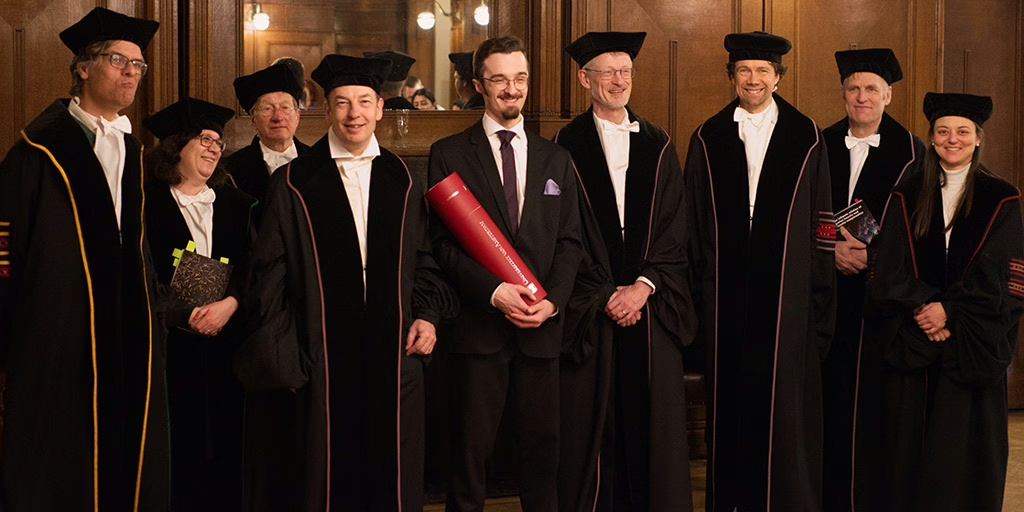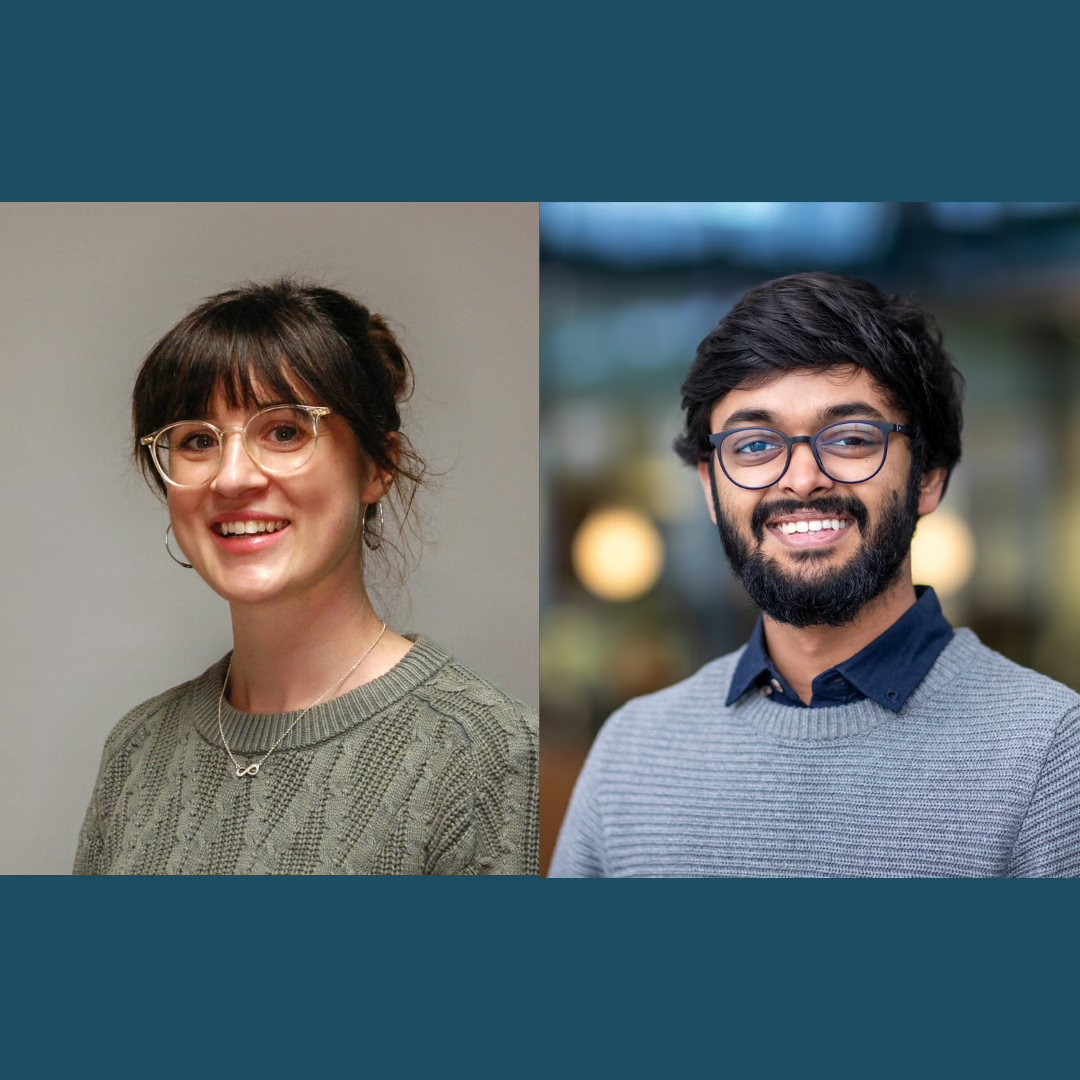
In the past three months, three AMOLF PhD students successfully defended their thesis at a Dutch university. Their names are Christiaan van Campenhout, Susan Rigter and Balázs Antalicz.
Christiaan van Campenhout
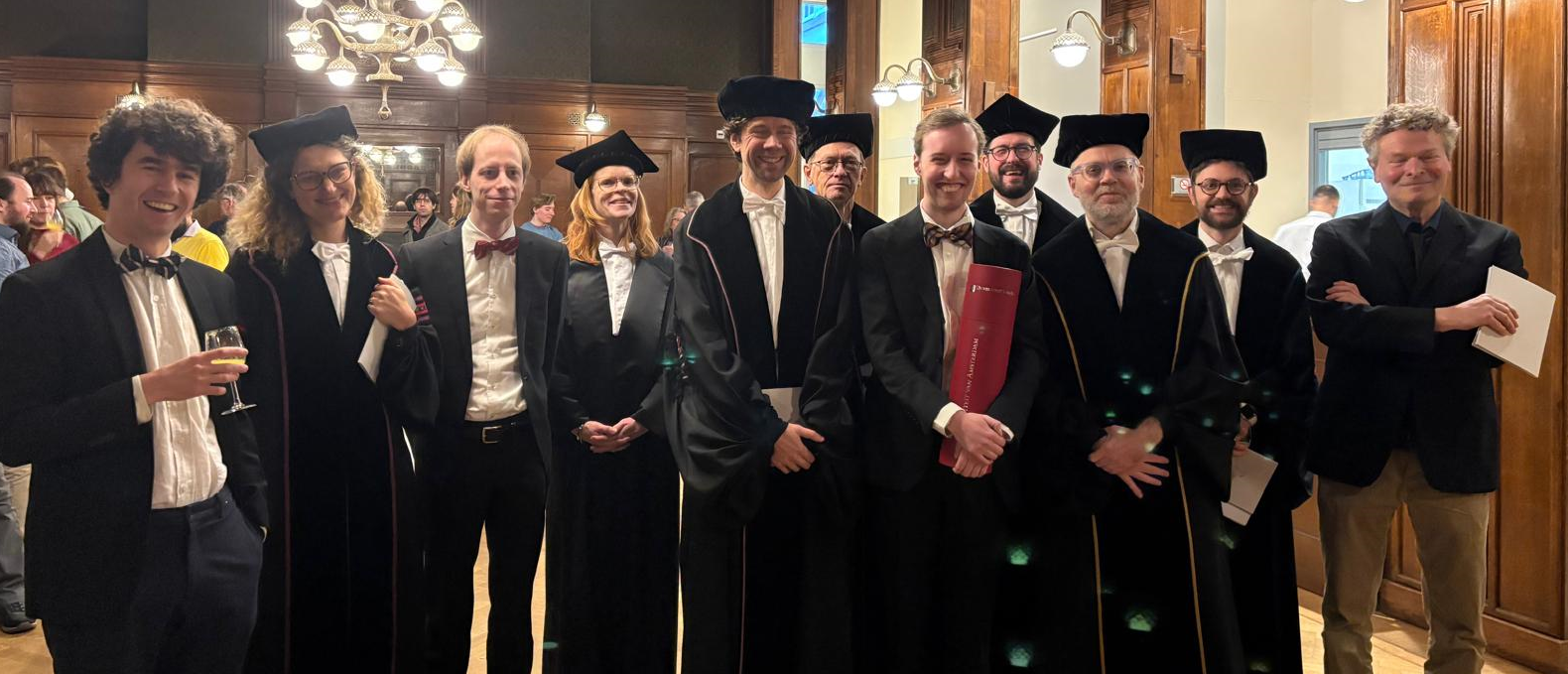
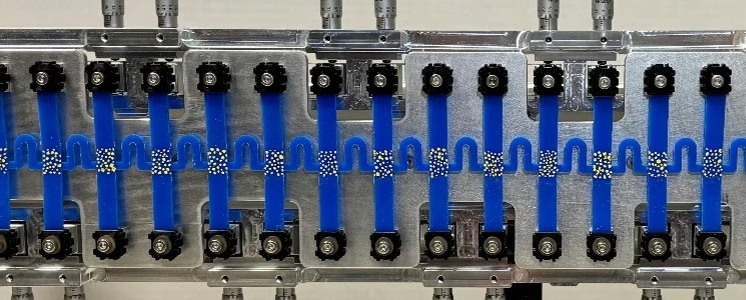
Christiaan van Campenhout was a PhD student in the Self-Organizing Matter group of Wim Noorduin where he introduced groundbreaking strategies – like mechanically responsive hydrogels and immersion-controlled patterning – to overcome limitations in diffusion processes. These methods pave the way for scalable, customizable materials, using post-processing techniques akin to photography. The implications for functional materials design are substantial. On December 11th, Christiaan defended his thesis ‘Guiding Lines: Directing Reaction-Diffusion Processes to Create Functional Materials’ at the University of Amsterdam. To get an idea of the research Christiaan worked on these past four years, have a look the video.
Susan Rigter
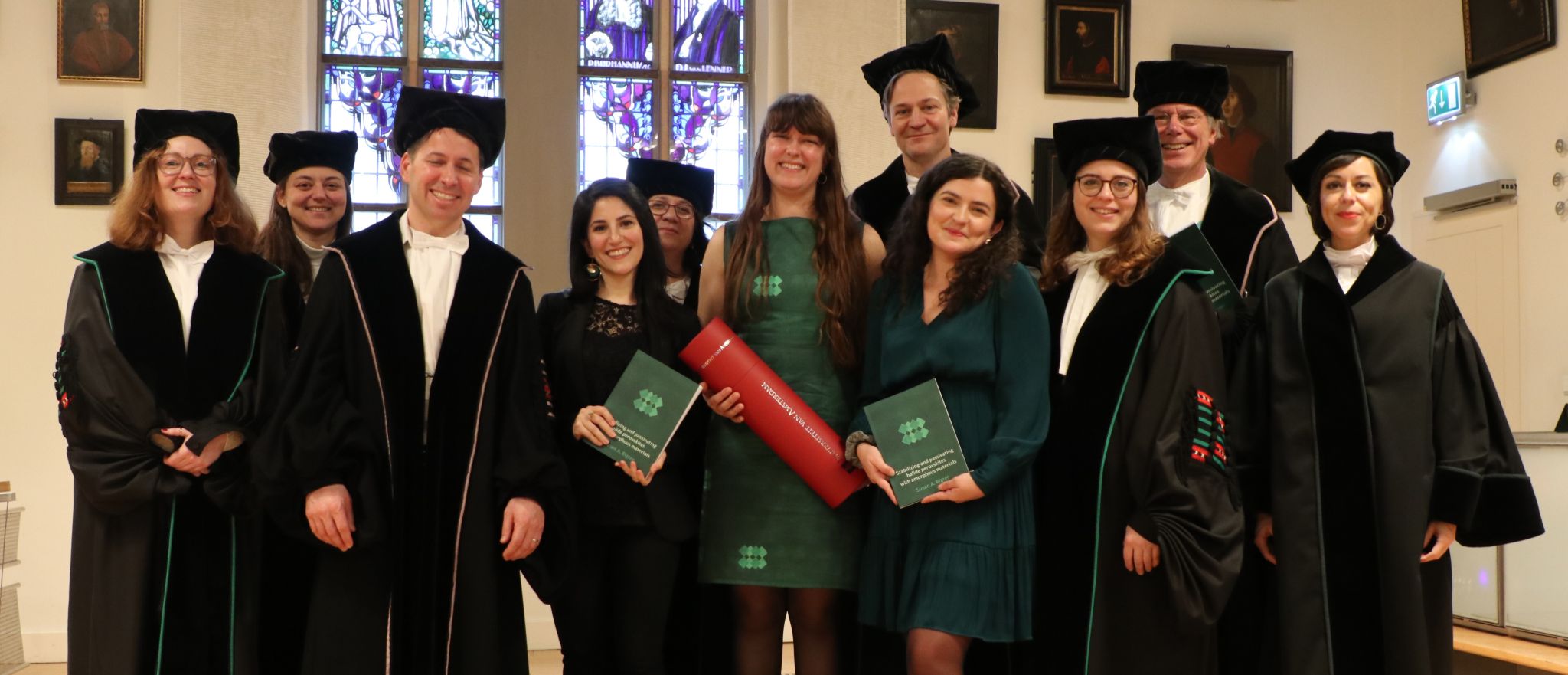
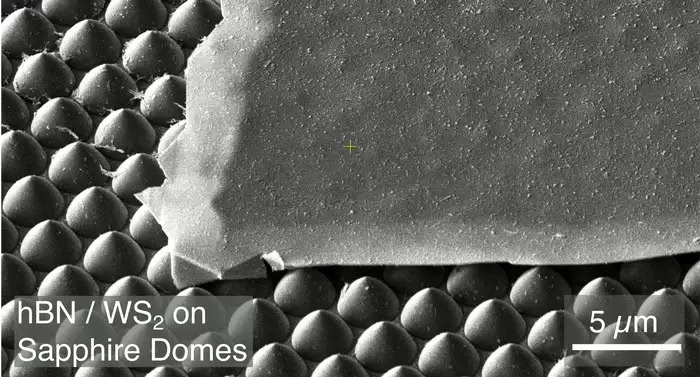
Susan Rigter was a PhD student in the Nanoscale Solar Cells group of Erik Garnett. In this group she worked on stabilizing and passivating halide perovskites. These colorful, semiconducting materials are promising candidates for a wide variety of applications, such as solar cells and lighting. There are many major advantages to this material, but it is also unstable, and it contains lead, which makes it toxic. Susan’s research addressed these issues. On December 19th, she defended her thesis ‘Stabilizing and passivating halide perovskites with amorphous materials’ at the University of Amsterdam. Interested in reading more about Susan’s work?
Balázs Antalicz
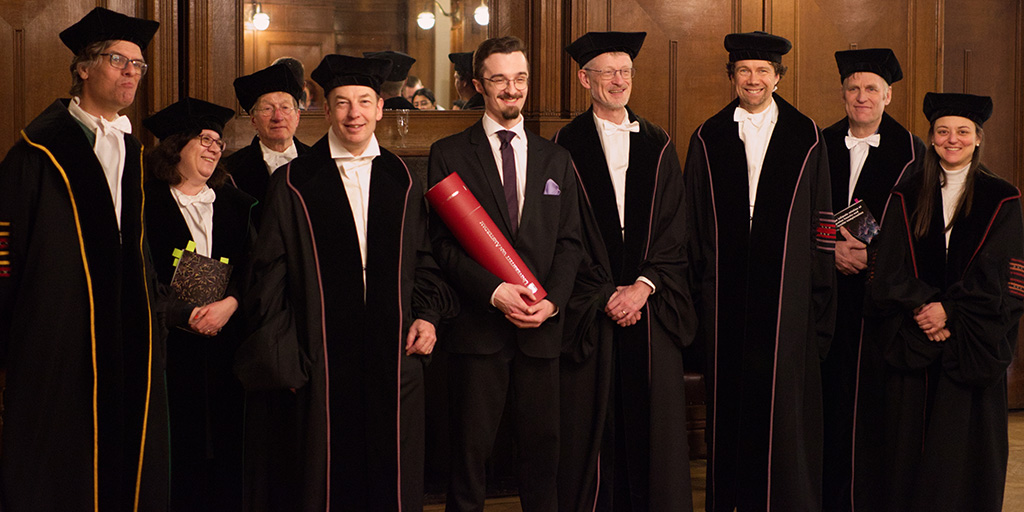
Balázs Antalicz was a PhD student in the Ultrafast Spectroscopy group of Huib Bakker. In his thesis entitled ‘On the intimate relation of proton transfer and molecular complexation’, he describes his research on so-called proton transfer reactions. These reactions happen in water: a proton (H+) is transferred between acid and base molecules.
Proton transfer is a critical step in photosynthesis, when plants harvest energy from light; and also in homeostasis, where such reactions keep the acidity of blood in a very well-defined range.
These reactions happen very quickly. Therefore, Balázs used ultrafast laser pulses to both initiate the reactions, and to observe them at a later point in time. In addition, he also studied how such reactions steer molecular self-assembly at the water/air interface. Are you interested in Balázs’ thesis, then read the thesis of Balazs Antalicz online.