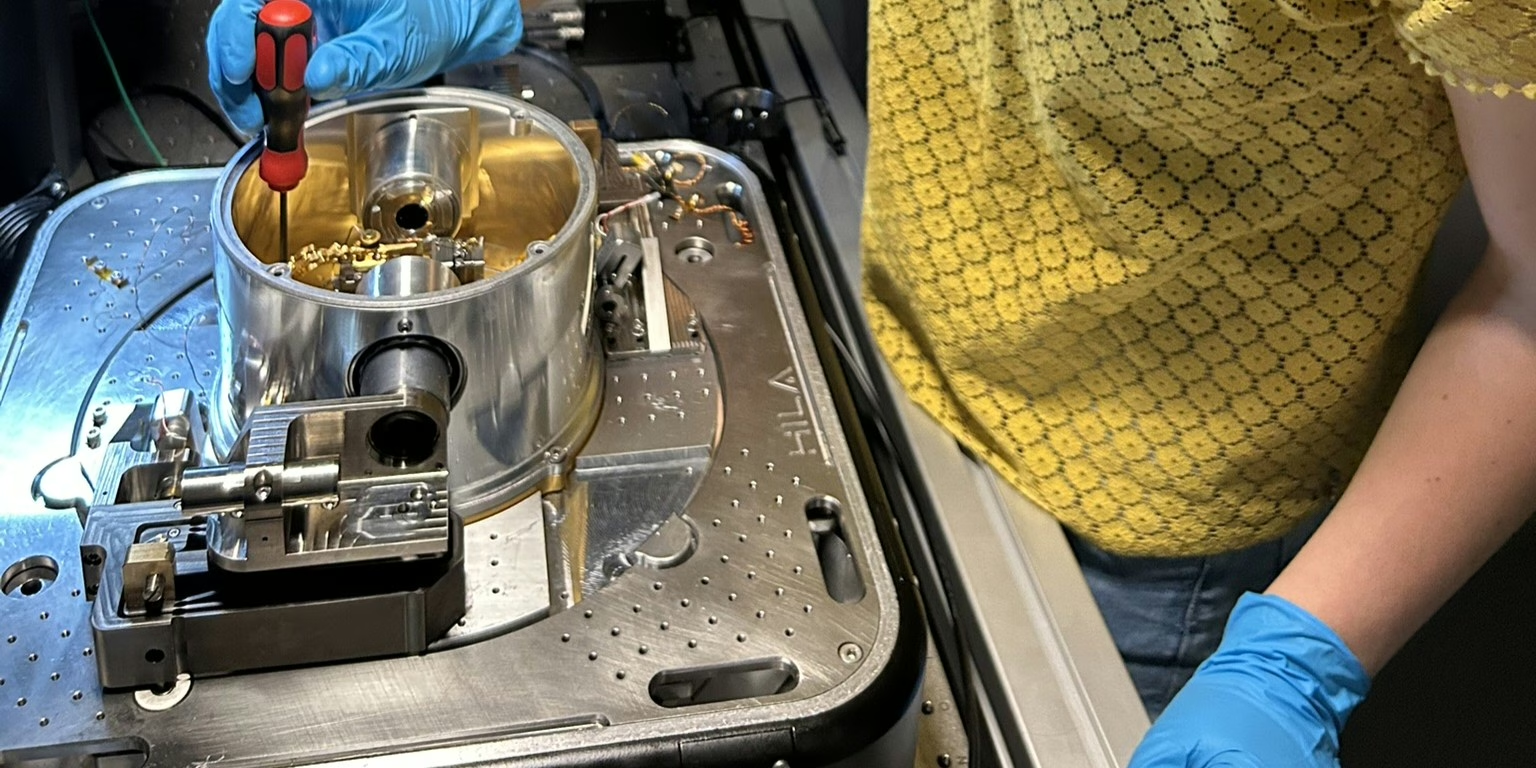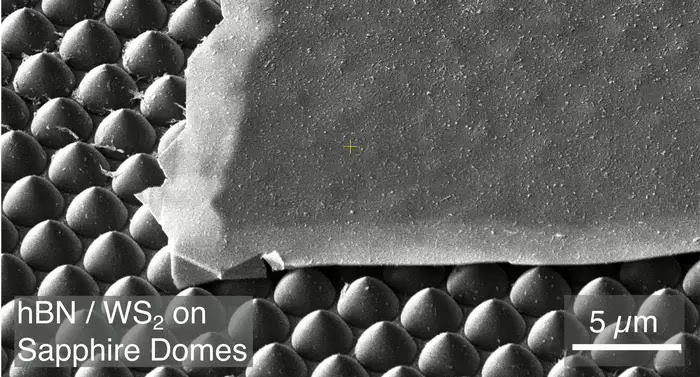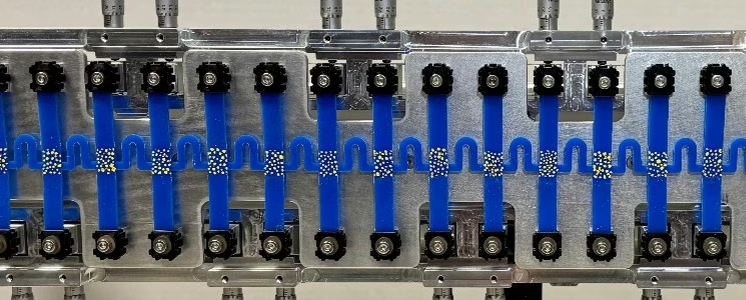
Research in the Interacting Photons group shows that the rules governing how light evolves over time are different from what we might expect. This is not only surprising; its implications could also be significant for the development of energy-efficient information processing systems. The researchers published their findings in the journal Physical Review Letters.
Direction matters
The arrow of time refers to the fact that many processes look different when played forward rather than backward. For example, the breaking of an egg looks natural, but its spontaneous reassembly does not. The researchers demonstrated this effect in an optical cavity, a structure that traps light by reflecting it back and forth between mirrors. They found that the way light jumps between two possible states is not the same when viewed forward in time as when viewed backward in time.
These states are analogous to the 0 and 1 of an information bit. Although switches between the 0 and 1 states may appear reversible at first glance, the measurements show that they are not. The switch from 0 to 1 follows a different path from the switch from 1 to 0. This makes the direction of the switch distinguishable, revealing an arrow of time in the evolution of light.
Evolution matters
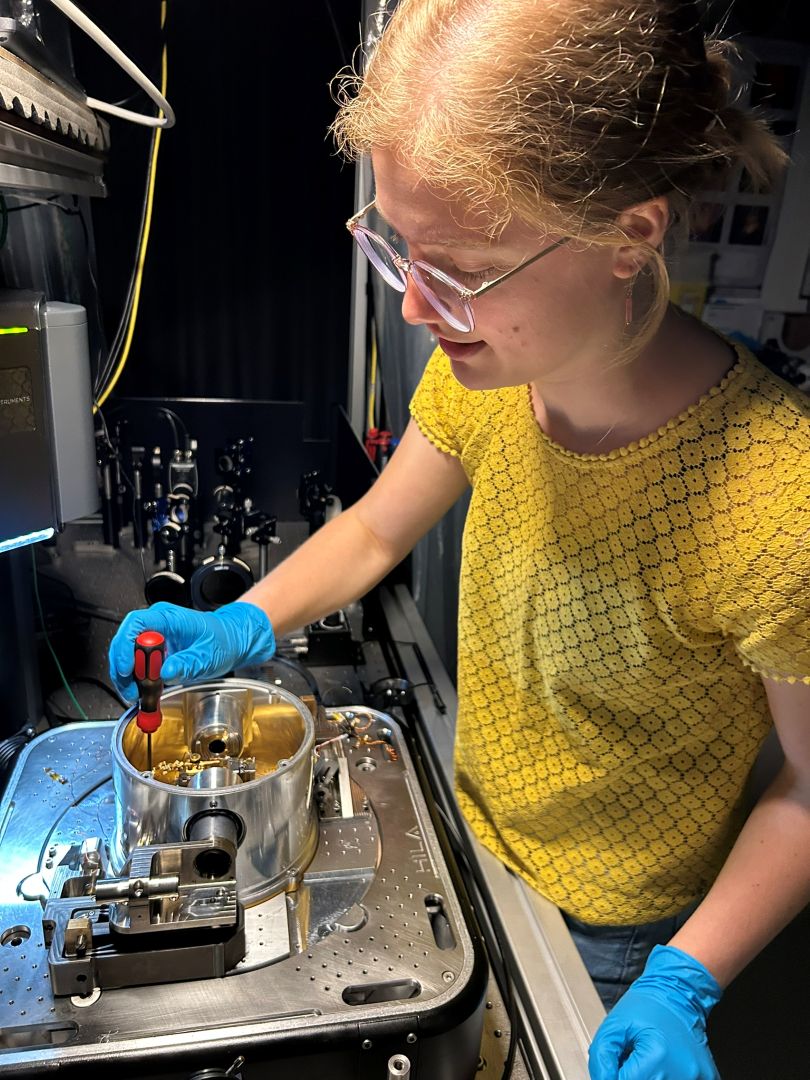
The researchers also show that the arrow of time becomes much clearer when the evolution of light in the cavity depends on its longer-term history rather than only on its immediately preceding state. An example of a system whose evolution depends not only on the current state, but also on where it has been in the past is a sponge. It remembers how much water it absorbed earlier. Two sponges may look equally wet on the surface now, but if one was soaked for an hour and the other only dipped briefly, they may well release water differently later.
Energy cost of information processing
The work not only provides a new understanding of why the arrow of time is more apparent in some systems than in others, but it also explores the fundamental energy cost of information processing with light. Indeed, in view of the laws of thermodynamics, the observed irreversibility is expected to constrain the minimum amount of energy required to switch or erase a single bit of information using light.
How energy efficient we can process information depends on how thermodynamically reversible a process is. Group leader Professor Said Rodriguez says: “The more reversible the process is, the less apparent the arrow of time becomes and the more energy-efficient the system will be. So, understanding what makes the arrow of time clear or not, is absolutely key to designing energy efficient information processing systems.”
Learn more
- To find out more about this research, please contact Said Rodriguez at s.rodriguez@amolf.nl.
- This research was published in Physical Review Letters: Thermodynamic Irreversibility in Optical Bistability.
- Read the full paper