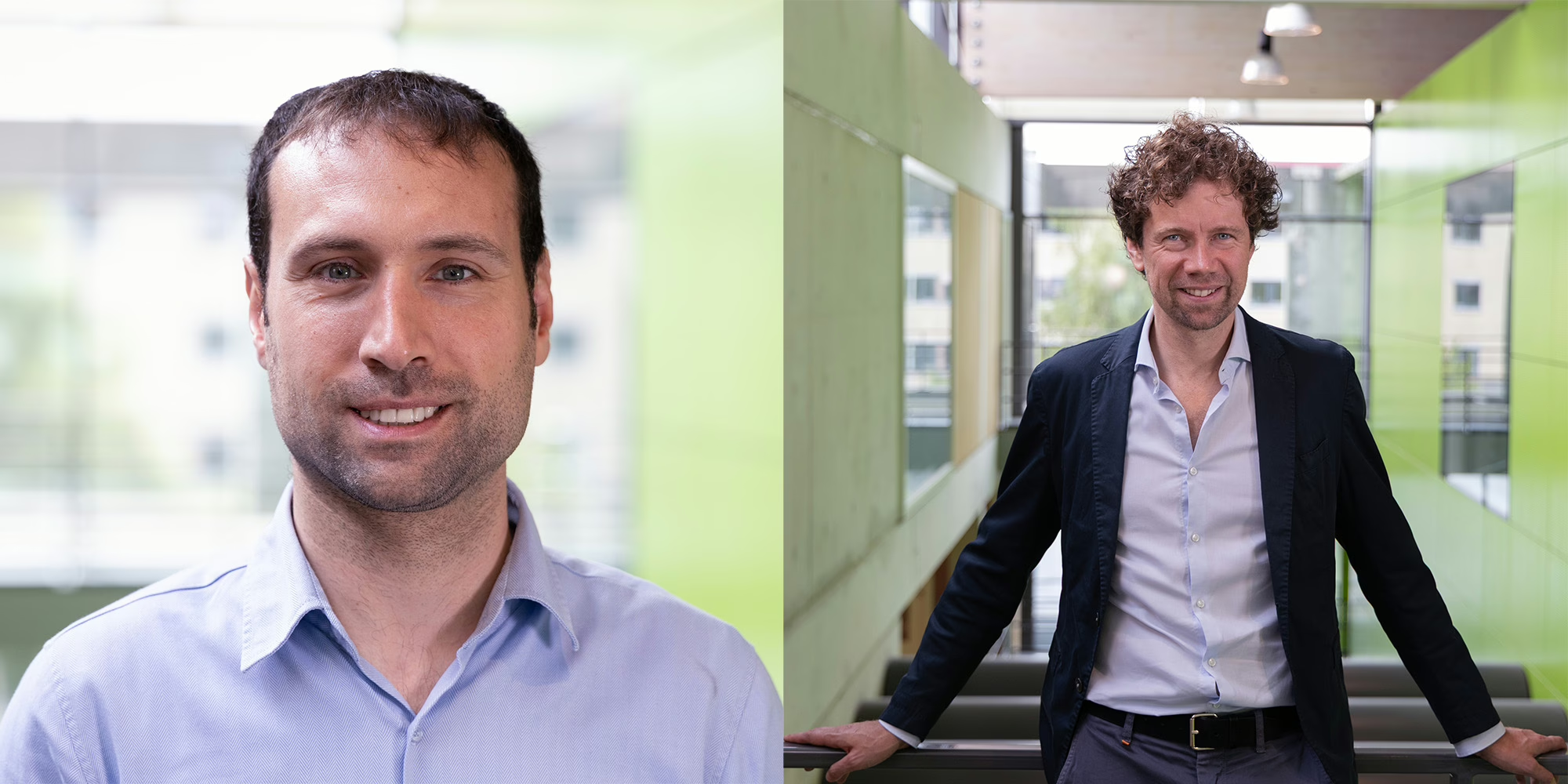
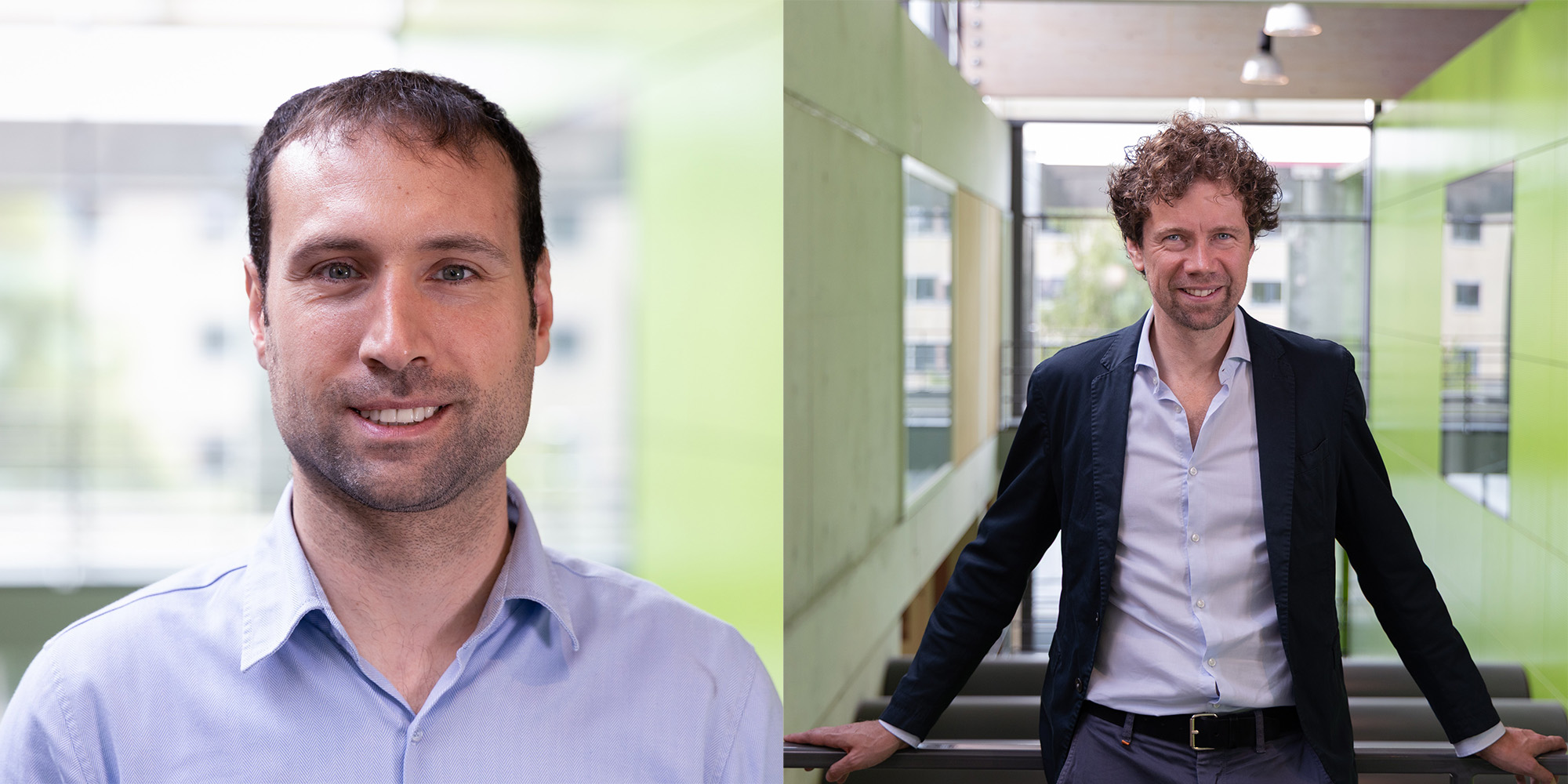
The European Research Council (ERC) announced that AMOLF group leaders Wim Noorduin and Marc Serra Garcia have received an ERC Proof of Concept grant. Together with collaborators they will enable applications that address important societal challenges: the need for single-handed molecules for drug development and a simpler way to monitor damage in wind turbine blades.
Chiral chemistry research (Wim Noorduin)
Together with postdoctoral researcher Susanna Bertuletti, AMOLF group leader Wim Noorduin will develop a faster and more sustainable way to make single handed molecules, a key challenge in modern chemistry and drug development.
Why handedness matters
Left and right handedness is something we recognize instantly in our own bodies, but it also plays a crucial role at the molecular level. Many of the molecules that make up life exist in only one-handed form. This matters because mirror-image molecules can behave very differently: one may be a lifesaving medicine, while its mirror image can be ineffective or even harmful. The challenge is that most chemical reactions create these molecules in a perfectly symmetric way, so left- and right-handed versions form in equal amounts, making it difficult, expensive, and wasteful to isolate the useful one.
From discovery to application
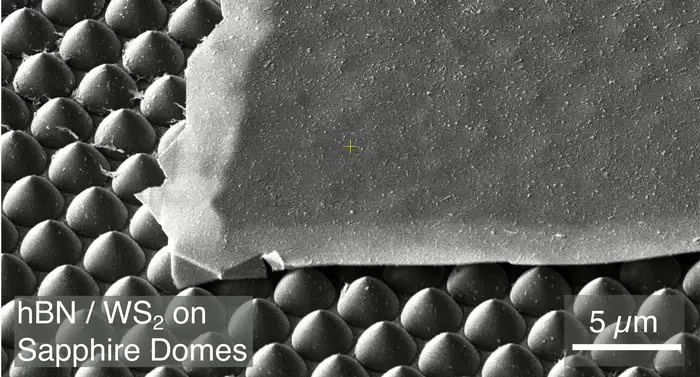
The CHIRAL-MORPHS project builds on a newly discovered crystallization method that rapidly converts mixed molecules into a single-handed form. The researchers will expand the range of compatible compounds, scale the process using standard reactors, and work with industrial partners to enable applications in biologically active molecules, including medicines and agricultural compounds.
Smart wind turbine monitoring (Marc Serra Garcia)
AMOLF group leader Marc Serra Garcia will develop an inexpensive, zero-power sensor that can predict failure in wind turbines. The sensor will reduce maintenance costs by detecting damage early on.
The challenge of early damage detection
In civil structures, from wind turbines to bridges, we can anticipate damage by listening to the sounds emitted as cracks form. However, this type of proactive monitoring is rarely utilized due to cost. Capturing acoustic emission signals traditionally requires thousands of microphones, each connected to a computer, along with the logistical burden of periodic battery replacements.
A zero-power sensing approach
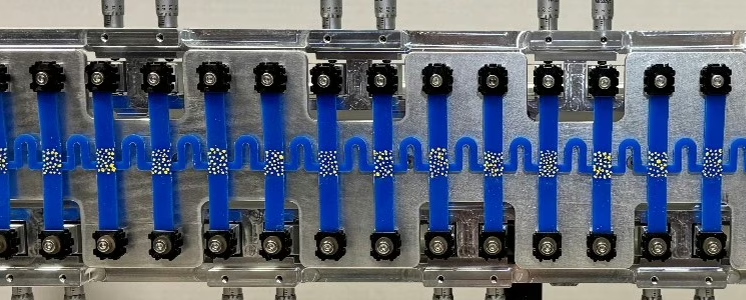
The project Zerowhisper aims to develop ultra-low-cost sensors capable of detecting acoustic damage signatures. The key innovation is the construction of neural networks made of smart vibrating elements. These elements can recognize specific damage signatures using the energy of the sound wave itself, eliminating the need for external computers and batteries. The project’s results will enable infrastructure monitoring at a significantly lower cost, finally making widespread adoption cost-effective.
Experiments with real structures will be conducted in collaboration with the Swiss Federal Laboratories for Materials Science and Technology (EMPA) and ETH Zurich.
Learn more
- For more information about the chiral chemistry project, contact Wim Noorduin via email
- For more information about smart wind turbine monitoring, contact Marc Serra Garcia via email