Physica prize 2014 for Albert Polman

AMOLF group leader Albert Polman has been honored with the prestigious Physica prize of the Netherlands Physical Society (NNV). The NNV grants the prize to Albert Polman for his outstanding…

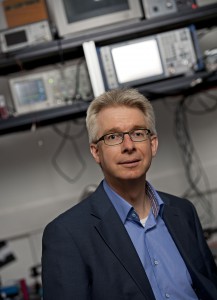
AMOLF group leader Albert Polman has been honored with the prestigious Physica prize of the Netherlands Physical Society (NNV). The NNV grants the prize to Albert Polman for his outstanding contributions, both in the Netherlands and internationally, of the physics of light.

The NNV press release states: ”Lights plays an important role in our modern society. Large quantities of data are transported all over the world through glass fiber networks. Albert Polman is a world leader in the research and application of light. In his work, Polman shows an outstanding timing, making him always stay ahead in new research areas. He was the first to use ion implantation for the optical doping of materials. Not long afterwards, he showed how to control the optical properties of materials by structuring them at the nanoscale, making light behave completely differently. In this manner he recently demonstrated optical metamaterials with properties that do not occur in natural materials: refractive indices that can become zero or negative. A few years ago Albert Polman started a revolution in solar cell research with his suggestion that there is much to win by using light management.”

The Physica prize is granted yearly to an eminent physicist working in the Netherlands. Albert Polman will receive the prize on April 1st at the FYSICA 2014 conference in Leiden. He will then also hold the Physica lecture.
photonic materials albert polman

Albert Polman

Share article
What's happening

Most recent news items

All news items

Adding a scientific flavor to Zwarte Cross

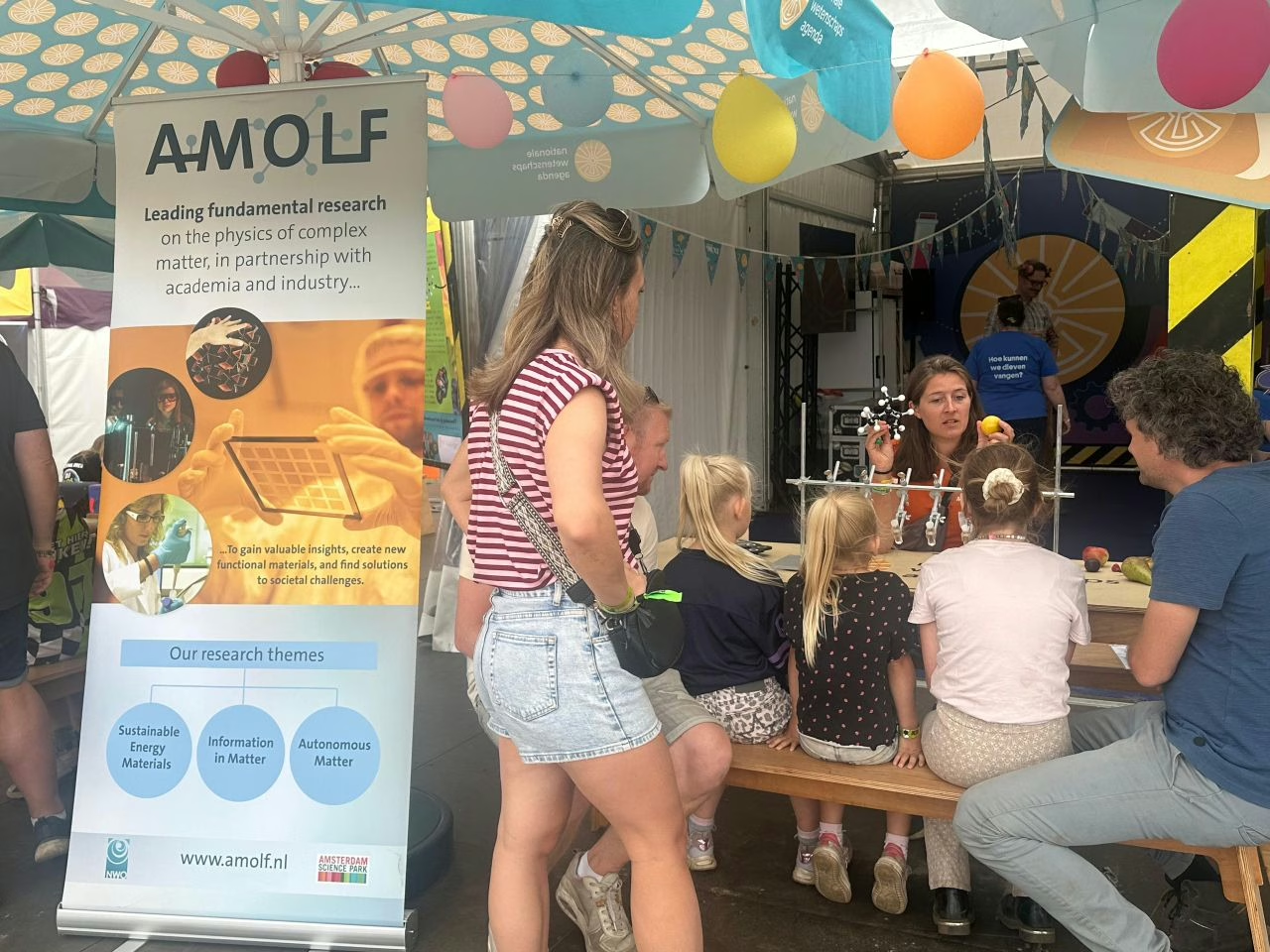
For the first time, AMOLF participated in the Netherlands' largest summer festival, Zwarte Cross. Together with volunteers from NWO, the AMOLF team introduced children to the fascinating world of molecules.…

Read news item

Atom-thin materials: handle with care… and cling film

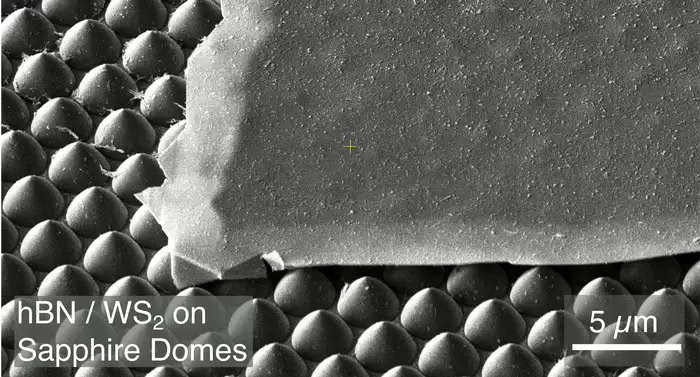
As materials become thinner – now reaching a thickness of single atoms – it has become ever more difficult to create large enough sheets of these materials and transfer them without cracking them into tiny flakes. Recent work by a broad Amsterdam-based team of scientists, published in the journal ACS Nano, presents a new technique that solves this problem – using an unexpected material that can be found in any home kitchen.

Read news item

Two Veni grants awarded for projects on immune system activation and twisted perovskites

Two researchers have been awarded Veni grants from the Dutch Research Council (NWO) for three-year postdoctoral research projects at AMOLF. Dr. Megan Farrell will conduct her project on how immune…

Read news item
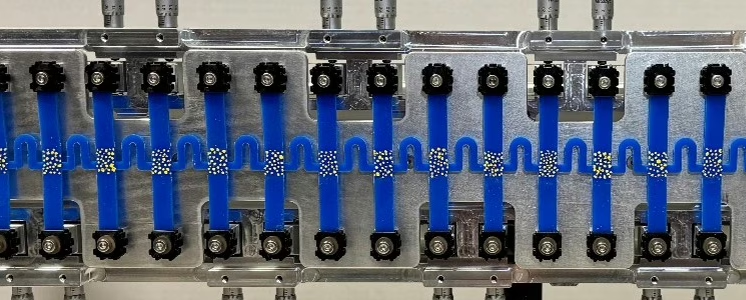
Mechanical-material-that-can-store-move-and-process-information
Stay informed

Get the latest research highlights, events, and news from our institute delivered to your inbox