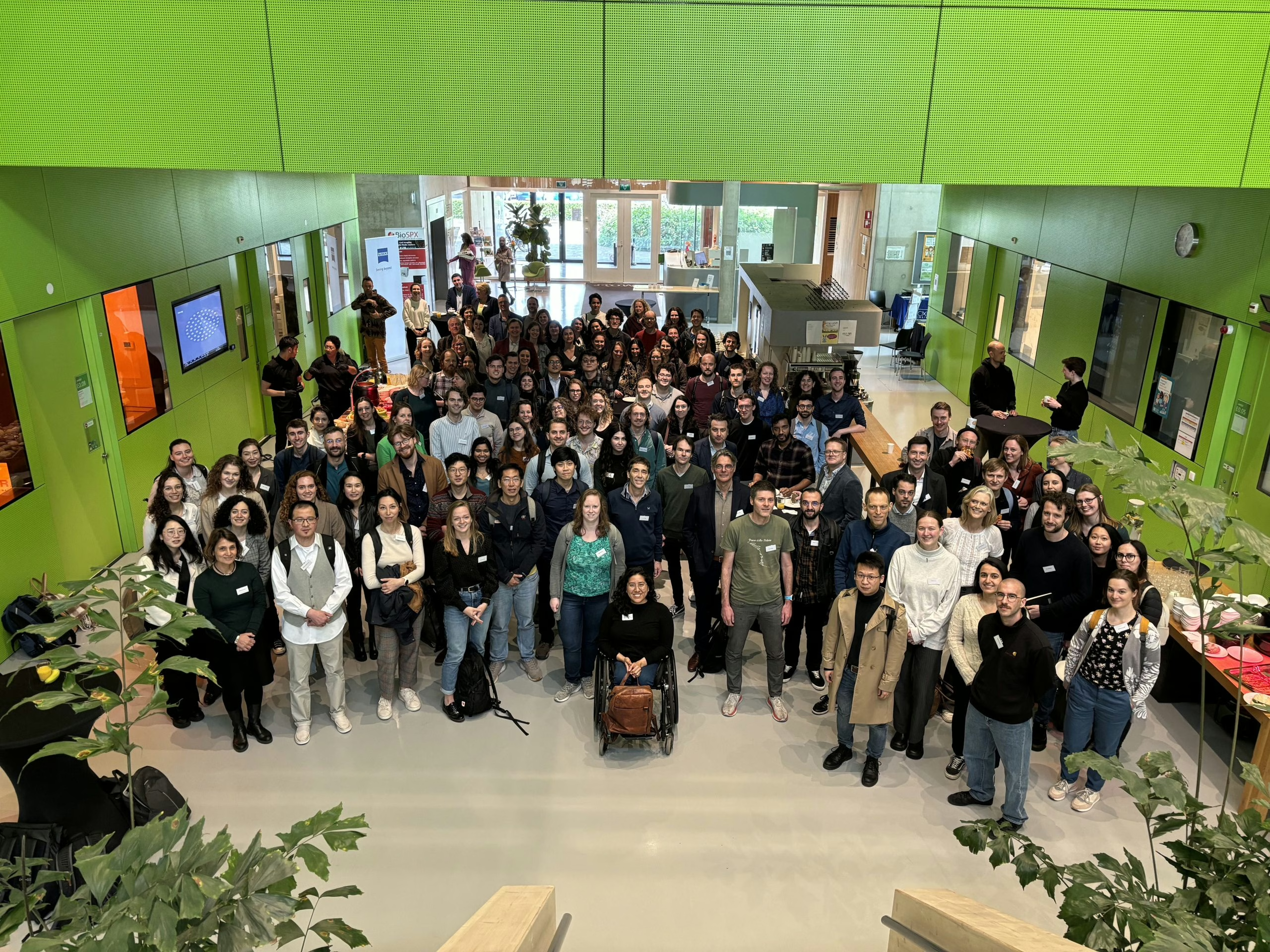
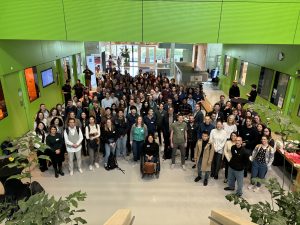
On April 12th, the second edition of the OrganoidNL Conference was held at AMOLF. This one-day event united over 160 researchers from the Netherlands and neighboring countries, all passionate about organoid technology and biology.
Organoid model systems enable the study of fundamental biological processes, from embryo and organ development to disease modelling and treatment optimization. This symposium aims to strengthen the already robust organoid community in the Netherlands by providing a platform for knowledge exchange and initiating new collaborations by bringing together experts in diverse disciplines.
Invited speakers
The symposium featured five invited speakers who are leading experts in the field of organoid research who presented their latest exciting work ranging from fundamental understanding of tissue homeostasis to organoid-based clinical trials. The day was kicked off by Rob Coppes (UMCG, Groningen) who showed clinical advances in one of the most anticipated regenerative medicine trials of the organoid field, where salivary gland organoids are transplanted back in patients that received irradiation therapy against head and neck cancers. Qiuwei Abdulla Pan (Erasmus MC, Rotterdam) demonstrated the use of organoid models for modeling viral infections and associated disease phenotypes, while an introduction into cerebral organoids for the investigation of motor neuron diseases such as ALS was provided by Jeroen Pasterkamp (UMCU, Utrecht). Colinda Scheele (KU Leuven, Belgium) showed the hybrid combination of organoids and mouse models to study hormone-dependent morphogenesis of the breast gland and tumor initiation. The day was finalized by a keynote lecture by Margherita Turco (FMI, Basel, Switzerland) who uses human endometrial and trophoblast organoids to investigate the unique interactions between two individuals at the placenta-uterus interface.
Interspersed between these main talks were five selected talks and nine flash talks by PhD students and post-docs who shared their innovative projects. The poster session featured more than 40 research projects, allowing participants to exchange ideas, initiate and foster collaborations while being inspired by our sponsors about the latest technological developments and equipment for organoid research. The day concluded with a networking session and drinks.
Given the excitement, enthusiasm and maximal attendance that the symposium generated AMOLF will be organizing another OrganoidNL next year. Stay tuned for the OrganoidNL symposium in 2025!
We thank all participants and sponsors, Viventis Microscopy, Nikon, BioSPX, HUB Organoids, Zeiss, Confocal.nl, OXFORD Instruments – Andor, Crown Bioscience and NWO for contributing to another successful event!
The symposium was organized by Sander Tans (AMOLF), Renée van Amerongen (University of Amsterdam), Benedetta Artegiani (Princess Máxima Center), Delilah Hendriks (Hubrecht Institute), Maria Rodriguez Colman (UMC Utrecht), Ina Sonnen (Hubrecht Institute), Saskia Suijkerbuijk (Utrecht University), Hugo Snippert (UMC Utrecht) and Jeroen van Zon (AMOLF).