Off Road grant awarded to study how immune cells know when to stop

We’re excited to announce that Megan Farrell has been awarded the Off Road grant by ZonMW to carry out innovative immunology research in the lab of Kristina Ganzinger. Megan will…

We’re excited to announce that Megan Farrell has been awarded the Off Road grant by ZonMW to carry out innovative immunology research in the lab of Kristina Ganzinger.

Megan will explore one of the immune system’s most important safety mechanisms: its ability to switch itself off. While the immune system is essential for defending us from infections, it must also know when to stop. Otherwise, it can mistakenly attack the body’s own healthy tissues, leading to autoimmune diseases.

Key to this shutdown process are special molecules on immune cells known as inhibitory receptors. These act like brakes, sending “stop” signals when needed. However, despite their importance, we still know surprisingly little about how these receptors work at the molecular level: one reason why many promising drugs targeting them have failed in clinical trials.
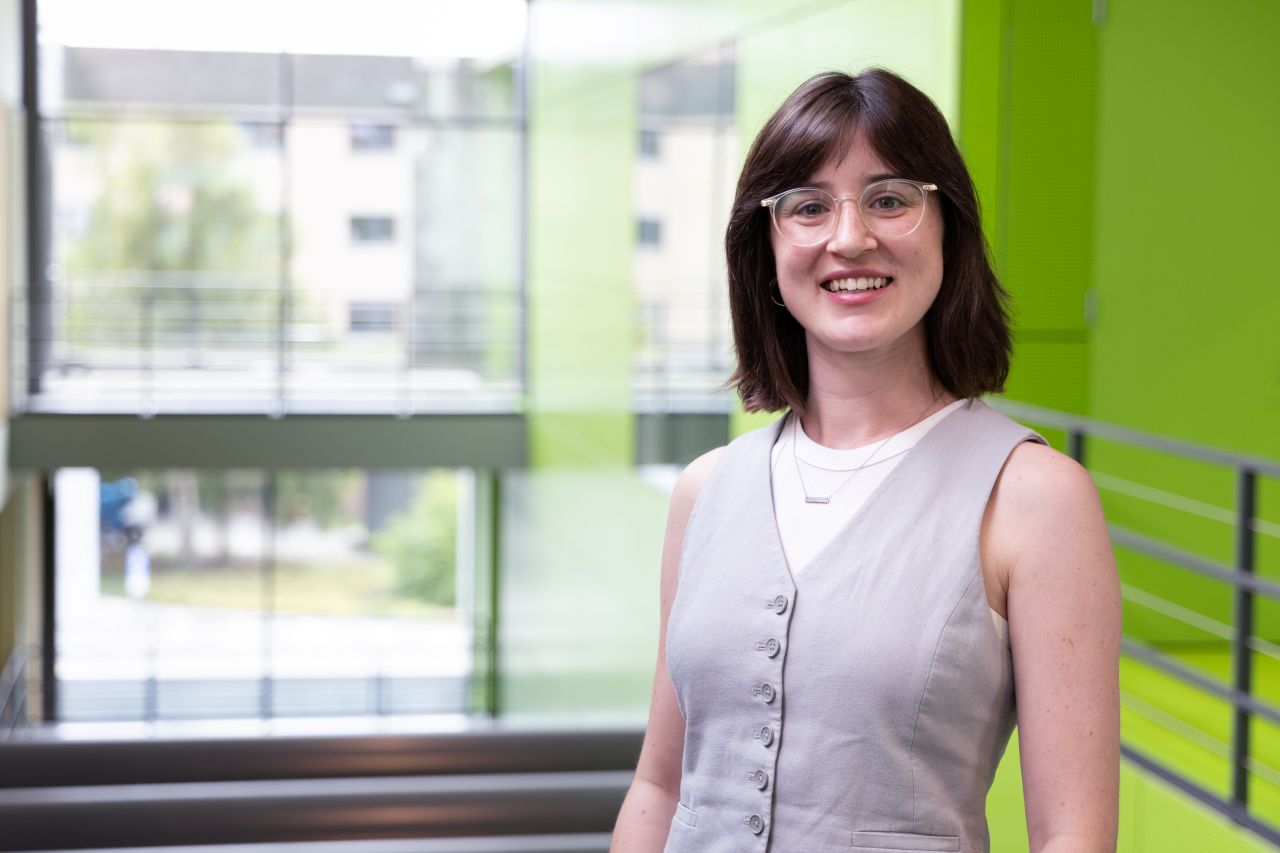
Megan Farrell at AMOLF

To tackle this, Megan will use an out of the box hypothesis and test it using cutting-edge microscopy techniques. She will observe immune cells in their natural 3D environment, and then zoom in to the nanoscale to watch how inhibitory receptors interact with their surroundings. By revealing how these molecular brakes function in real time, on the nanoscale, her research could pave the way for smarter, more effective treatments for autoimmune and inflammatory diseases.

To learn more, visit the webpage of AMOLF’s Physics of Cellular Interaction Group. This group explores the basic physical principles behind cellular signaling: how do cells transmit, process and respond to information, both precisely and unambiguously?

Share article
What's happening

Most recent news items

All news items

Adding a scientific flavor to Zwarte Cross

For the first time, AMOLF participated in the Netherlands' largest summer festival, Zwarte Cross. Together with volunteers from NWO, the AMOLF team introduced children to the fascinating world of molecules.…

Read news item

Atom-thin materials: handle with care… and cling film

As materials become thinner – now reaching a thickness of single atoms – it has become ever more difficult to create large enough sheets of these materials and transfer them without cracking them into tiny flakes. Recent work by a broad Amsterdam-based team of scientists, published in the journal ACS Nano, presents a new technique that solves this problem – using an unexpected material that can be found in any home kitchen.

Read news item

Two Veni grants awarded for projects on immune system activation and twisted perovskites

Two researchers have been awarded Veni grants from the Dutch Research Council (NWO) for three-year postdoctoral research projects at AMOLF. Dr. Megan Farrell will conduct her project on how immune…

Read news item
Mechanical-material-that-can-store-move-and-process-information
Stay informed

Get the latest research highlights, events, and news from our institute delivered to your inbox