A research consortium led by AMOLF group leader Jeroen van Zon has been awarded an NWO ENW-XL grant to combine efforts and elevate curiosity-driven research to the next level. A total of 2.7 million euros has been granted for the project “How developing embryos use noisy clocks to tell time with high precision.”
How do cells keep track of time?
During embryonic development, cells divide and differentiate at precisely the right moment. However, the mechanisms by which cells keep track of time remain largely unknown—primarily because these processes are challenging to observe in most types of embryos.
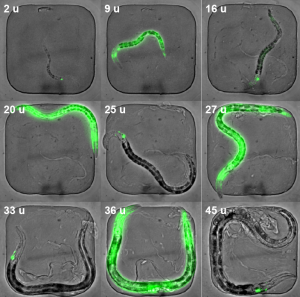
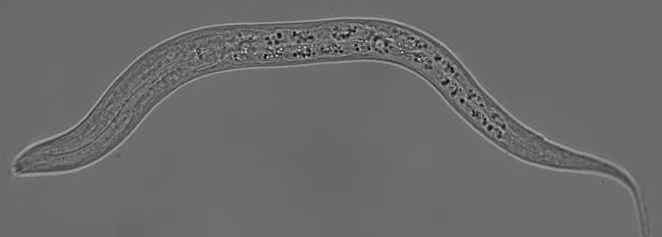
Jeroen explains: “We aim to answer this fundamental question by studying cell timing in the simple nematode worm C. elegans, using innovative biological techniques and theoretical concepts from physics. Interestingly, the molecules that regulate the development of C. elegans are strikingly similar to those guiding human development from embryo to adulthood. This suggests that the mechanisms discovered in C. elegans could also be critical for human development and may help us understand diseases caused by disrupted timing processes.”
Collaboration
 The NWO Open Competition ENW-XL grant fosters fundamental collaboration, and Jeroen is particularly excited about this aspect of the project. He notes: “I am especially looking forward to working with such a talented group of researchers. Each person brings a unique perspective, enabling us to tackle this developmental puzzle together.”
Project Participants
Dr. J.S. van Zon (AMOLF), Dr. M.S. (Marianne) Bauer (TU Delft), Prof. Dr. A. (Alexander) van Oudenaarden (Hubrecht Institute), Prof. Dr. H.C. (Rik) Korswagen (Hubrecht Institute), Dr. J.P. (Jacques) Bothma (Hubrecht Institute), Prof. Dr. M.-A. (Marie-Anne) Félix (ENS Paris)
Are you interested in learning more about C. elegans research?
Read related news item