Future Optical Broadband Systems program funds research in optical sensing technologies

As co-applicant, AMOLF group leader Ewold Verhagen receives funding from the NWO program Future Optical Broadband Systems to break the existing technological and economic barriers in the application of optical…

As co-applicant, AMOLF group leader Ewold Verhagen receives funding from the NWO program Future Optical Broadband Systems to break the existing technological and economic barriers in the application of optical sensing technologies in industrial systems. Andrea Fiore from TU Eindhoven leads the project called BroadSense. A total amount of 923.000 euros is available for the project, from NWO and industrial co-funders.

AMOLF group leader Ewold Verhagen at AMOLF. Credits: Floris Krelage

Ewold and his colleagues aim to push a new paradigm based on broadband optical sensing, optimized photonic and electronic readout and on holistic sensor system design. This allows for highly precise sensing of various physical parameters while correcting for temperature fluctuations. Ewold says he is looking forward to the collaboration, and to seeing how fundamentally new sensing principles can be applied in industrial sensing problems with immediate economic and societal relevance. These applications include the monitoring of static pressure and dynamic vibrations in industrial systems and wind turbines.

Learn more about the Photonic Forces research group

Curious about the group’s research? Explore the projects of the Photonic Forces research group.



Share article
What's happening

Most recent news items

All news items

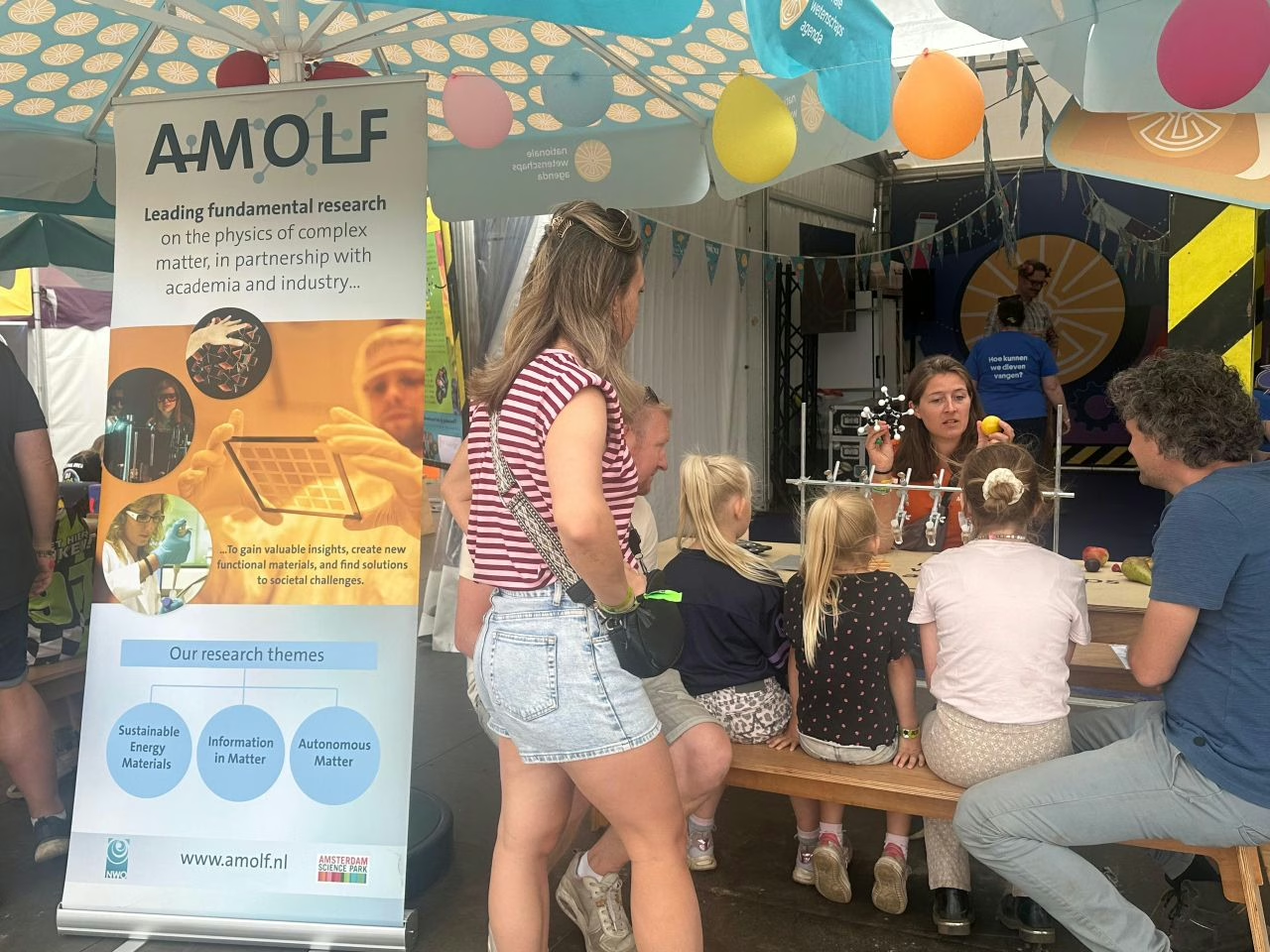
Adding a scientific flavor to Zwarte Cross

For the first time, AMOLF participated in the Netherlands' largest summer festival, Zwarte Cross. Together with volunteers from NWO, the AMOLF team introduced children to the fascinating world of molecules.…

Read news item

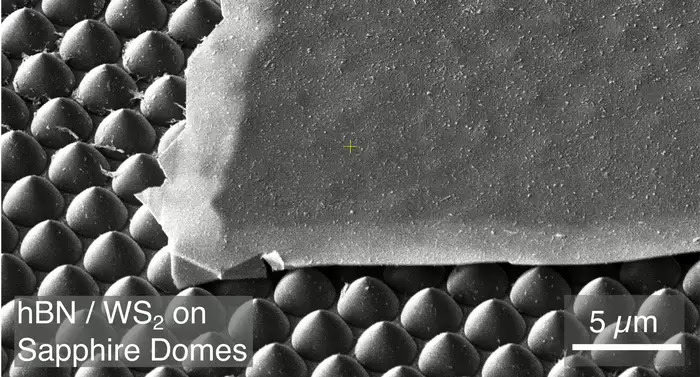
Atom-thin materials: handle with care… and cling film

As materials become thinner – now reaching a thickness of single atoms – it has become ever more difficult to create large enough sheets of these materials and transfer them without cracking them into tiny flakes. Recent work by a broad Amsterdam-based team of scientists, published in the journal ACS Nano, presents a new technique that solves this problem – using an unexpected material that can be found in any home kitchen.

Read news item

Two Veni grants awarded for projects on immune system activation and twisted perovskites

Two researchers have been awarded Veni grants from the Dutch Research Council (NWO) for three-year postdoctoral research projects at AMOLF. Dr. Megan Farrell will conduct her project on how immune…

Read news item
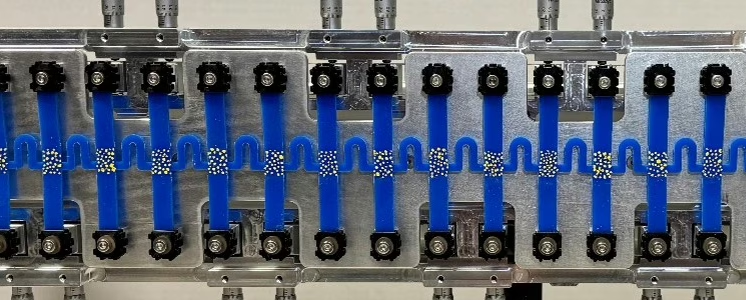
Mechanical-material-that-can-store-move-and-process-information
Stay informed

Get the latest research highlights, events, and news from our institute delivered to your inbox