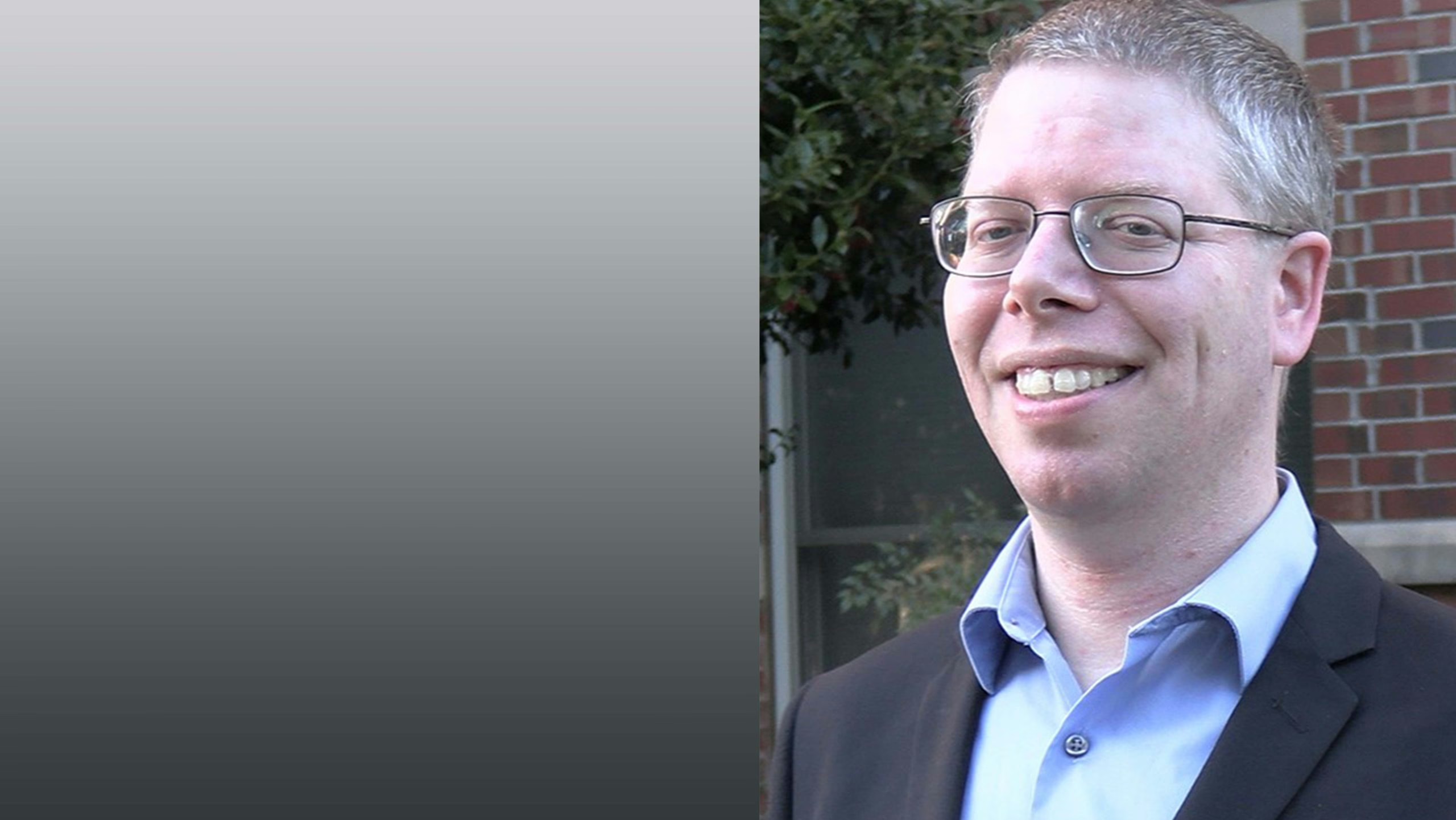
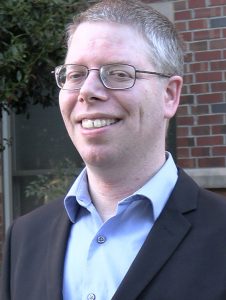
Menachem Stern started at AMOLF as a group leader on August 1st. His research group, Learning Machines, focuses on topics such as power-efficient algorithms for neuromorphic computers. Recently, the Journal of the Association for Computing Machinery (ACM) published an article titled “Controlling AI’s Growing Energy Needs,” which features an interview with Menachem about his work.
Neuromorphic computers are gaining significant attention due to their numerous advantages. Unlike traditional computers, which separate computation from memory, neuromorphic systems mimic the way the brain operates. As a result, they consume considerably less energy—an important benefit given the anticipated increase in global electricity demand.
While learning is generally discussed in the context of computers or the brain, Menachem says, “I think about it in a more physical context that applies to smart materials as well as adaptive biological systems without brains, such as the vascular and immune system in our own bodies.”
Information in Matter
Menachem’s research group is part of the Information in Matter theme at AMOLF. Here, he finds colleagues who share similar research questions but approach them from different perspectives. For example, Marc Serra Garcia’s group, Hyper Smart Matter, aims to design and build complex materials that manipulate sound waves to process information. Additionally, researchers like Tom Shimizu (Physics of Behavior) and Pieter Rein ten Wolde (Biochemical Networks) are likely candidates to explore how Menachem’s ideas can be applied to biological systems.
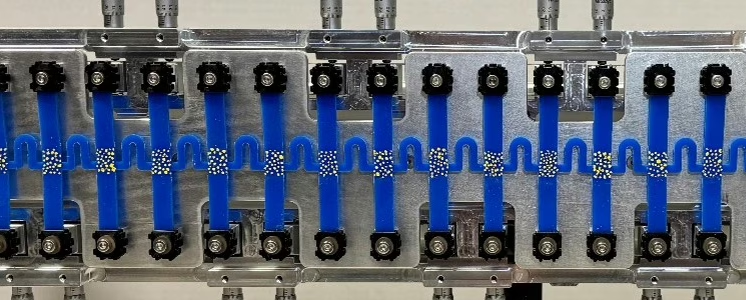
Before joining AMOLF, Menachem worked as a postdoctoral researcher at the University of Pennsylvania. Together with colleagues at the university, he developed a prototype of a neuromorphic computer in the form of an electronic circuit with adaptive resistive elements, which learns without the assistance of any standard computer.
Learn more
For more information, read the interview with Menachem Stern in the Journal of the Association for Computing Machinery (ACM).