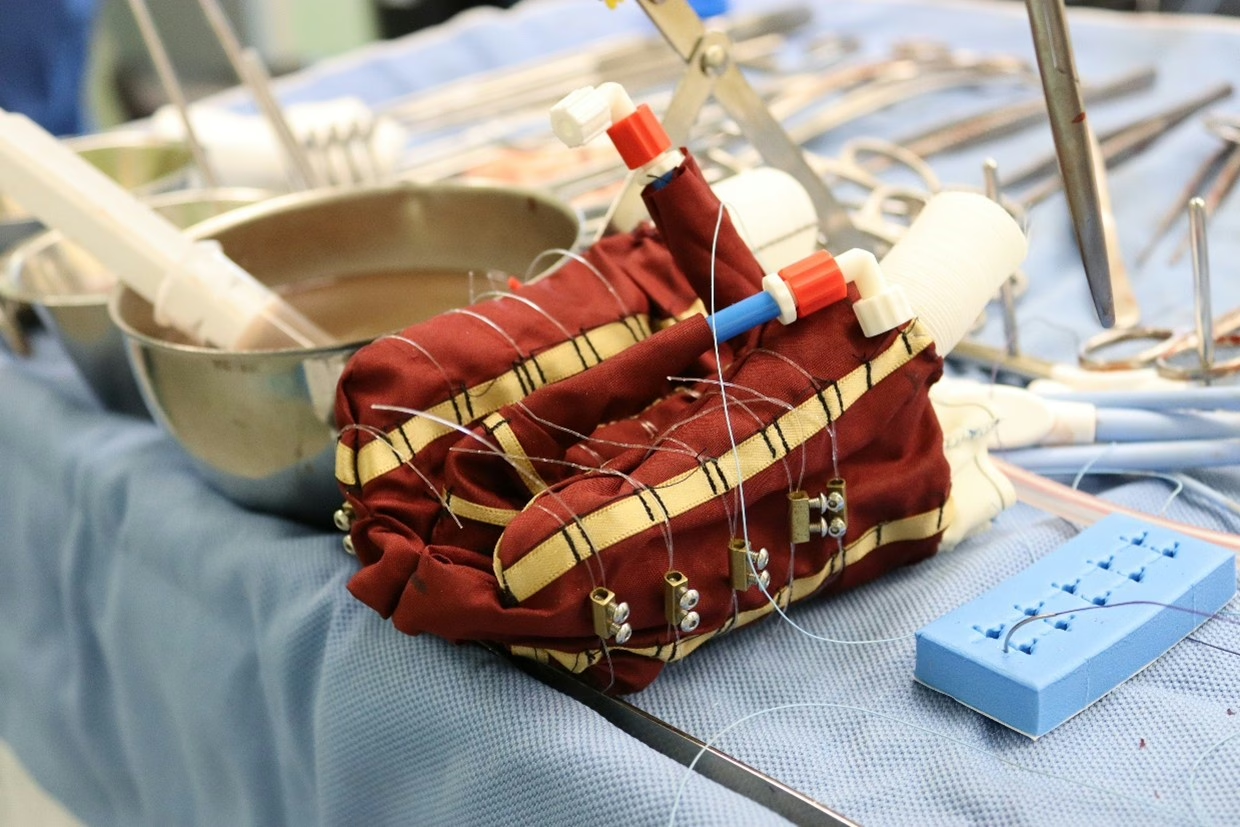
An international team of researchers with AMOLF group leader Bas Overvelde, has taken the first steps towards developing a new type of artificial heart that combines soft robotics with advanced biomaterials. This so-called ‘Hybrid Heart’ has been published in the journal Nature Communications on June 3rd.
A new hope for heart failure patients
The Hybrid Heart is designed for patients suffering from end-stage heart failure and represents a promising alternative to existing artificial hearts, which are often associated with serious complications. The new technology mimics the natural heartbeat through a soft robotic “muscle” (septum) and uses flexible fabric materials. This allows for a much more natural simulation of blood flow compared to current artificial heart devices. The first prototype of the heart has been evaluated in an animal experiment.
AMOLF soft robotics
The Soft Robotic Matter group at AMOLF has been involved in developing and analyzing the shape and mechanics that enable the Hybrid Heart to move. While a natural heart pumps blood using muscle contractions, the Hybrid Heart relies on air pressure to contract artificial muscles that then cause blood to circulate.
Sputtering ketchup bottle
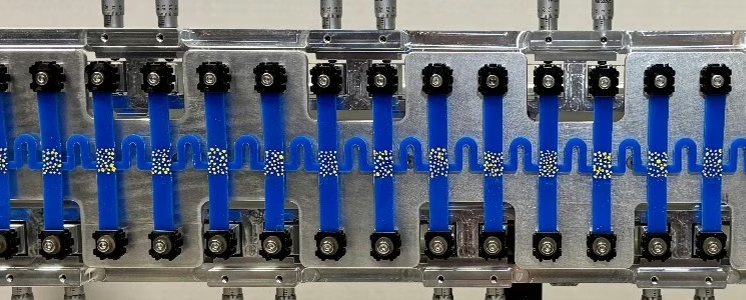
One of the major challenges Bas and his colleagues face, is creating a heartbeat with limited use of electronics and software, with the goal to increase the overall reliability of the device. A promising solution may lie in a mechanism inspired by the valve of a ketchup bottle.
Bas: “The valve allows you to easily control the amount of ketchup dispensed and prevents leakage. But when you turn the bottle upside down and squeeze it wrong, the ketchup sometimes sputters and makes a mess.” This sputtering occurs when the valve opens and closes rapidly in succession.
Bas and his team have redesigned this valve to work with the required pressures and flows to power the pneumatic artificial muscle, and have demonstrated the potential to let the Hybrid Heart beat using a constant airflow from the valve.
To hear more about the hybrid heart project, listen to BNR Beter podcast interview with Bas Overvelde and Jolanda Kluin (Erasmus MC): https://www.bnr.nl/podcast/beter/10577037/hybride-hart-zachte-robot-als-oplossing-bij-hartfalen
Video
Reference
Maziar Arfaee, Annemijn Vis, Paul A.A. Bartels, Lucas C. van Laake, Lucrezia Lorenzon, Dina M. Ibrahim, Debora Zrinscak, Anthal I.P.M. Smits, Andreas Henseler, Matteo Cianchetti, Patricia Y.W. Dankers, Carlijn V.C. Bouten, Johannes T.B. Overvelde, Jolanda Kluin, A soft robotic total artificial Hybrid Heart, Nature Communications, 16, 3 June (2025).