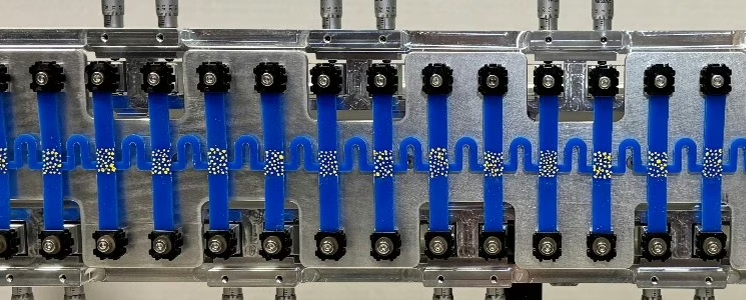
People typically think of robots as hard, metallic objects, but soft robots are on the rise offering many advantages, such as their ability to adapt to the human body and the environment. Alberto Comoretto is a PhD student in the group of Bas Overvelde (Soft Robotic Matter). He shares his experiences of working as a visiting researcher at MIT in Boston for four months.
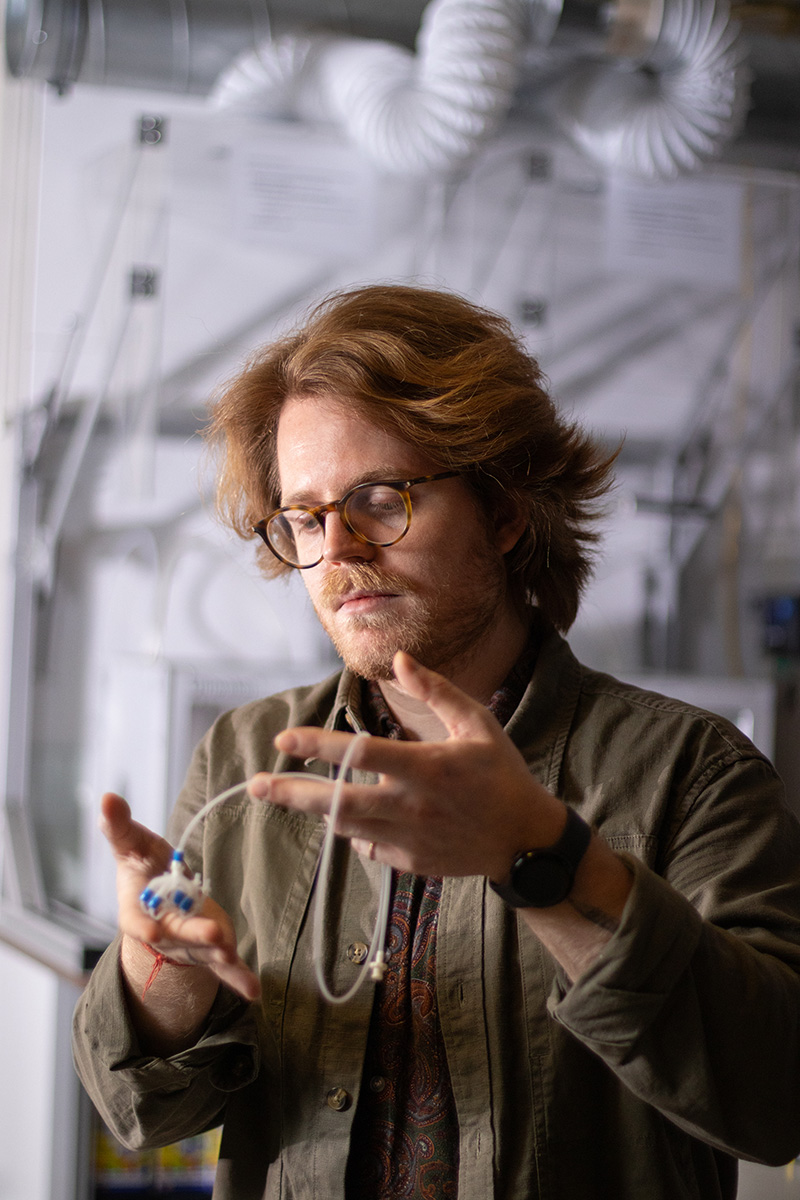
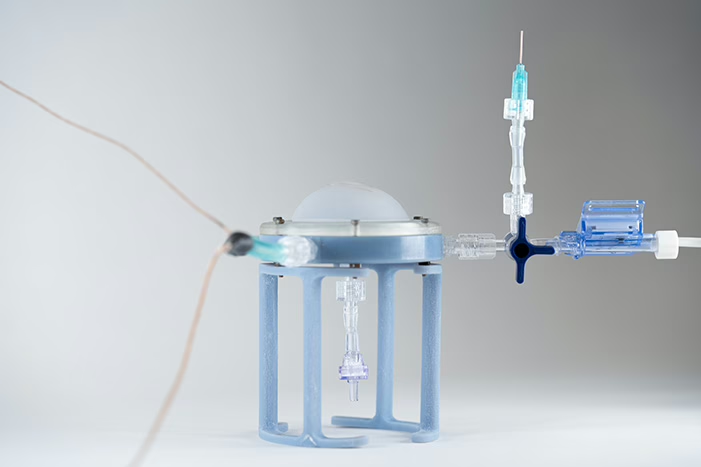
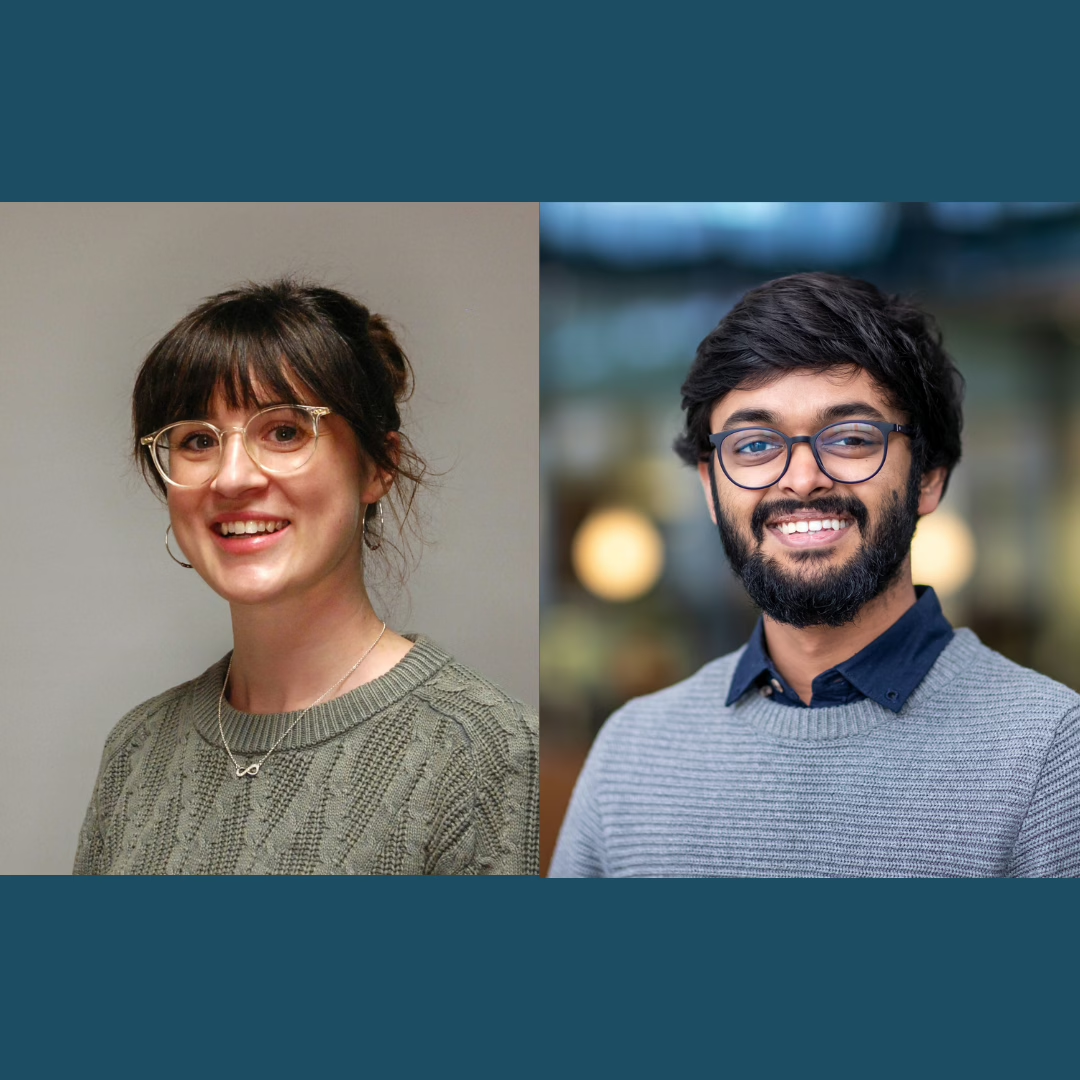
With a background in engineering, Alberto is an expert in embodied intelligence and unconventional mechanics. He investigates how to make robots autonomous using their ‘body’ and the physical interaction with their surroundings. Hence, more like a natural system than a computer. His counterpart at MIT, PhD student Samuel Gollob, is an engineer who knows how to steer chemical reactions that ultimately provide the gases to inflate the robot and make it move effectively. Alberto notes: “it was so nice to have new interactions with somebody who has been on a different trajectory, but with the same topic in mind. Taking the time for knowledge exchange was extremely useful.”
Alberto is proud to have kicked off a collaboration between AMOLF and MIT. He looks back at a time full of new encounters and new insights. “MIT is so much bigger than AMOLF and it is a great location to meet new people. But, it took some time to get used to this, so at first it felt overwhelming. I think that was also the time when I really missed the AMOLF support departments, like our lab technician Niels Commandeur. Quickly, the collaborative environments of the labs led by Ellen Roche and Kaitlyn Becker made me feel welcome, and I fully enjoyed the fun and exciting science that was going on there.”
Back at AMOLF, he is happy to again take part in the frequent interactions with AMOLF researchers at, for instance the Autonomous Matter theme meetings. “The scale at AMOLF is different, but the system allows for plenty of fruitful interactions with researchers in other fields.”
Want to learn more about this group?
Visit the Soft Robotic Matter page