Wiebke Albrecht
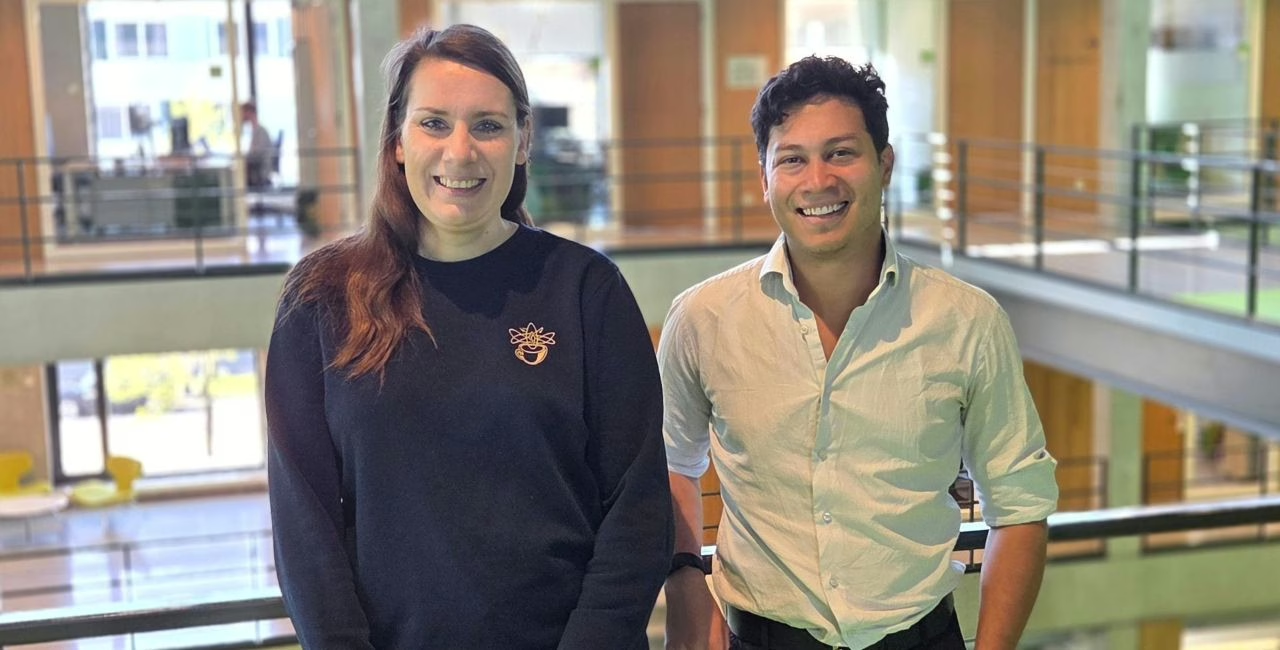
AMOLF group leader Wiebke Albrecht has been awarded an NWO XS grant for the project ‘Mapping nanoscale heat generation and dissipation around plasmonic nanoparticles.’
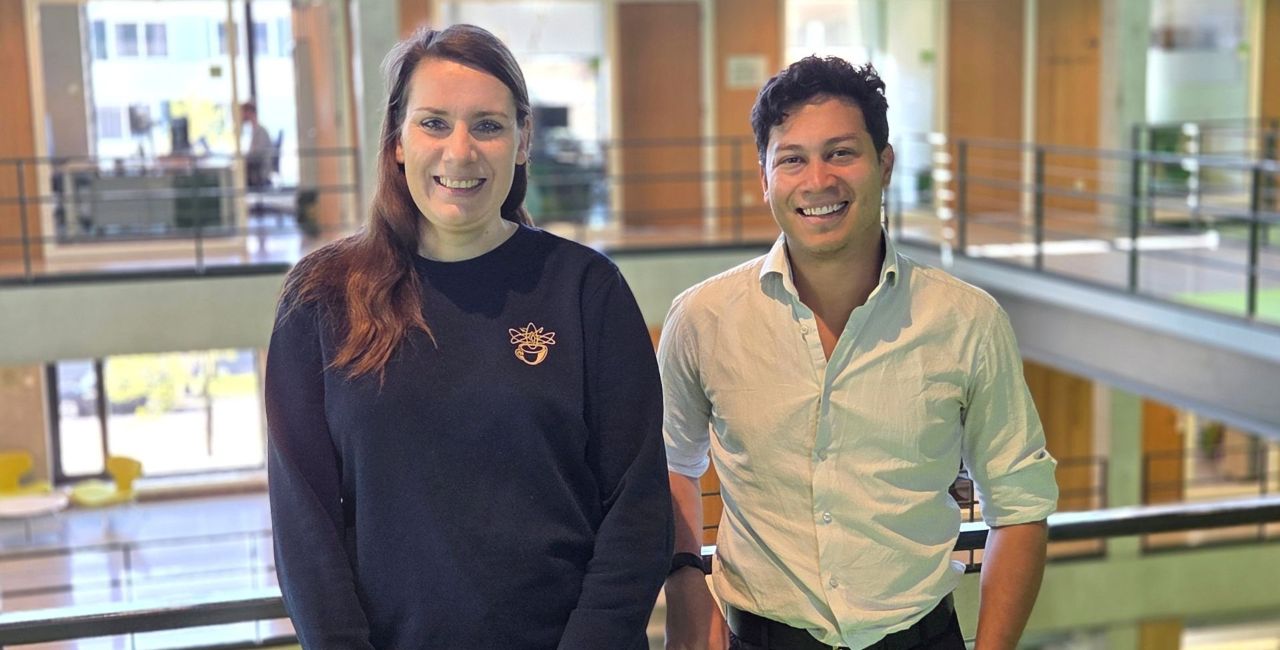
In this project, Wiebke will collaborate with postdoctoral researcher Sergio Rey Puentes to develop a new method for directly measuring how heat is generated and spreads at the nanoscale around tiny particles that respond strongly to light (so-called plasmonic nanoparticles).
This work addresses a key challenge in nanoscience: it is currently very difficult to measure temperature changes directly at such small scales and locations. The results will help us better understand how heat moves at the nanoscale and support the design of more efficient nanoscale heating systems.
Kristina Ganzinger
 Together with fellow researcher Ramon Arens (LUMC), Kristina Ganzinger (AMOLF/Oncode Institute) has received a ZonMw Open Competition grant amounting 800 k€ for research on the immune system. Kristina explains: “By linking fundamental discoveries to practical applications, we hope that this research can contribute to more effective immunotherapies and improved survival outcomes for a larger number of patients.”
In the project “When 1 plus 1 is more than 2”, Kristina and Ramon will investigate how different costimulatory receptors cooperate to enhance T cell function. Using advanced imaging, molecular profiling, and specially engineered T cells, they will study these interactions in detail. This knowledge will then be used to improve adoptive T cell therapies, such as CAR-T cells and patient-specific adoptive T cell transfers, and test whether certain combinations of signals increase their effectiveness.
Sustainable Science Fund
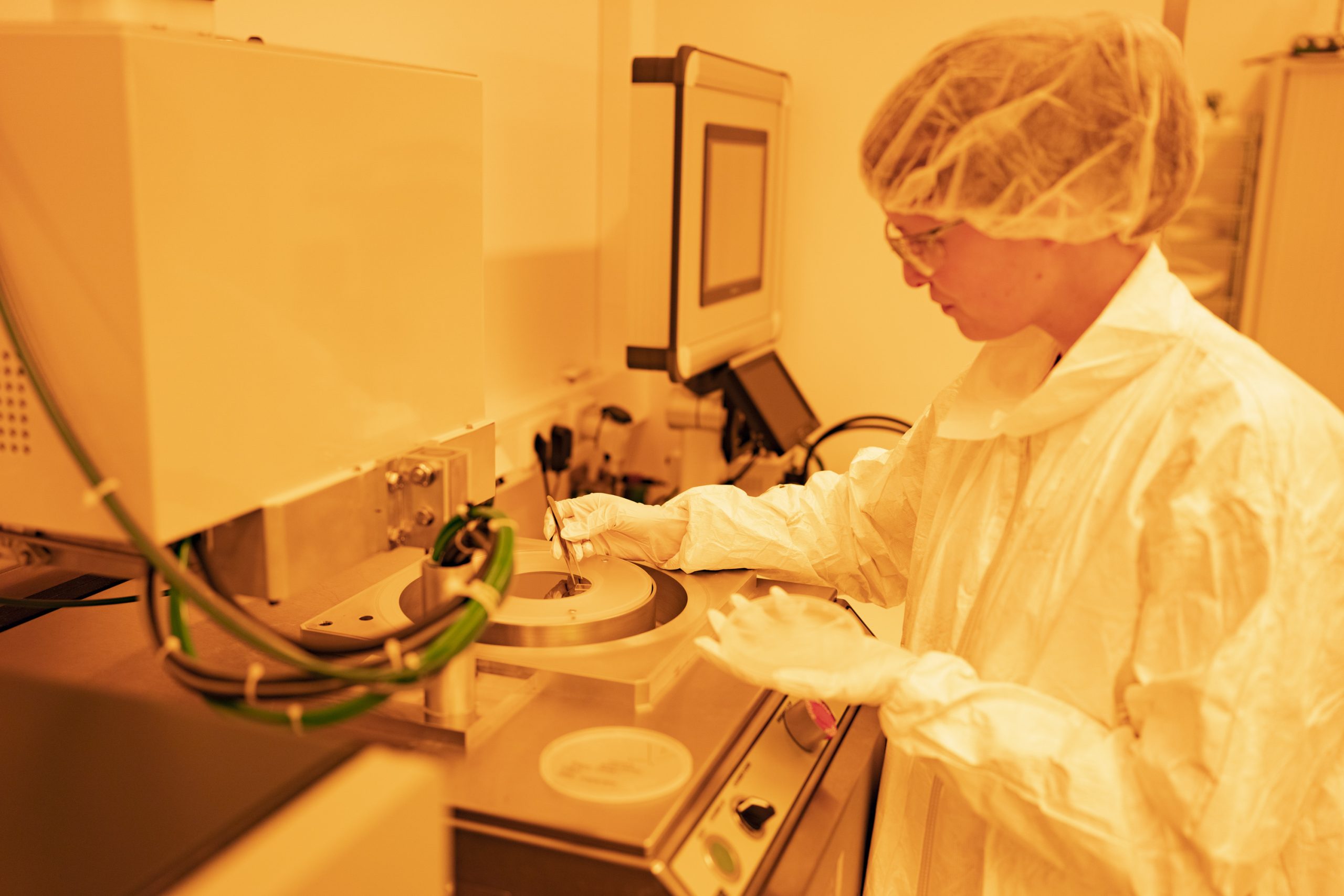
How can we make research at AMOLF more sustainable? One answer to this question is to reduce the amount of liquid nitrogen used for experiments. Recently, AMOLF was awarded a grant of 48.760 euro from NWO and the Dutch Climate Research Initiative (KIN) to purchase equipment that will allow the institute to produce gaseous nitrogen in-house. As a result, AMOLF will purchase less liquid nitrogen, which requires a significant amount of energy to produce.
Research institutes often use large amounts of liquid nitrogen, even though for many applications neither the liquid form nor ultra-high purity is required. Turning nitrogen into a liquid is an energy intensive process, as it must be cooled to extremely low temperatures (−196 °C). In addition, the transport and storage of liquid nitrogen require further energy and complex logistics, resulting in a substantial environmental impact.
The project, titled ‘Fit for purpose nitrogen: reducing liquid nitrogen use through local nitrogen generation in research laboratories,’ involves the purchase of equipment to produce gaseous nitrogen from pressurized ambient air. The NanoLab within AMOLF is a strong candidate to launch this project because it uses substantial amounts of liquid nitrogen for its daily operation.
Learn more through the AMOLF Newsletter
Stay up to date with the latest research, events, and news from AMOLF. Subscribe to the newsletter and receive updates directly in your inbox.