NWO XS grant awarded to Wiebke Albrecht

AMOLF group leader Wiebke Albrecht has been awarded an NWO XS grant for the project “Mapping nanoscale heat generation and dissipation around plasmonic nanoparticles.” In this project, Wiebke will collaborate…

AMOLF group leader Wiebke Albrecht has been awarded an NWO XS grant for the project “Mapping nanoscale heat generation and dissipation around plasmonic nanoparticles.”
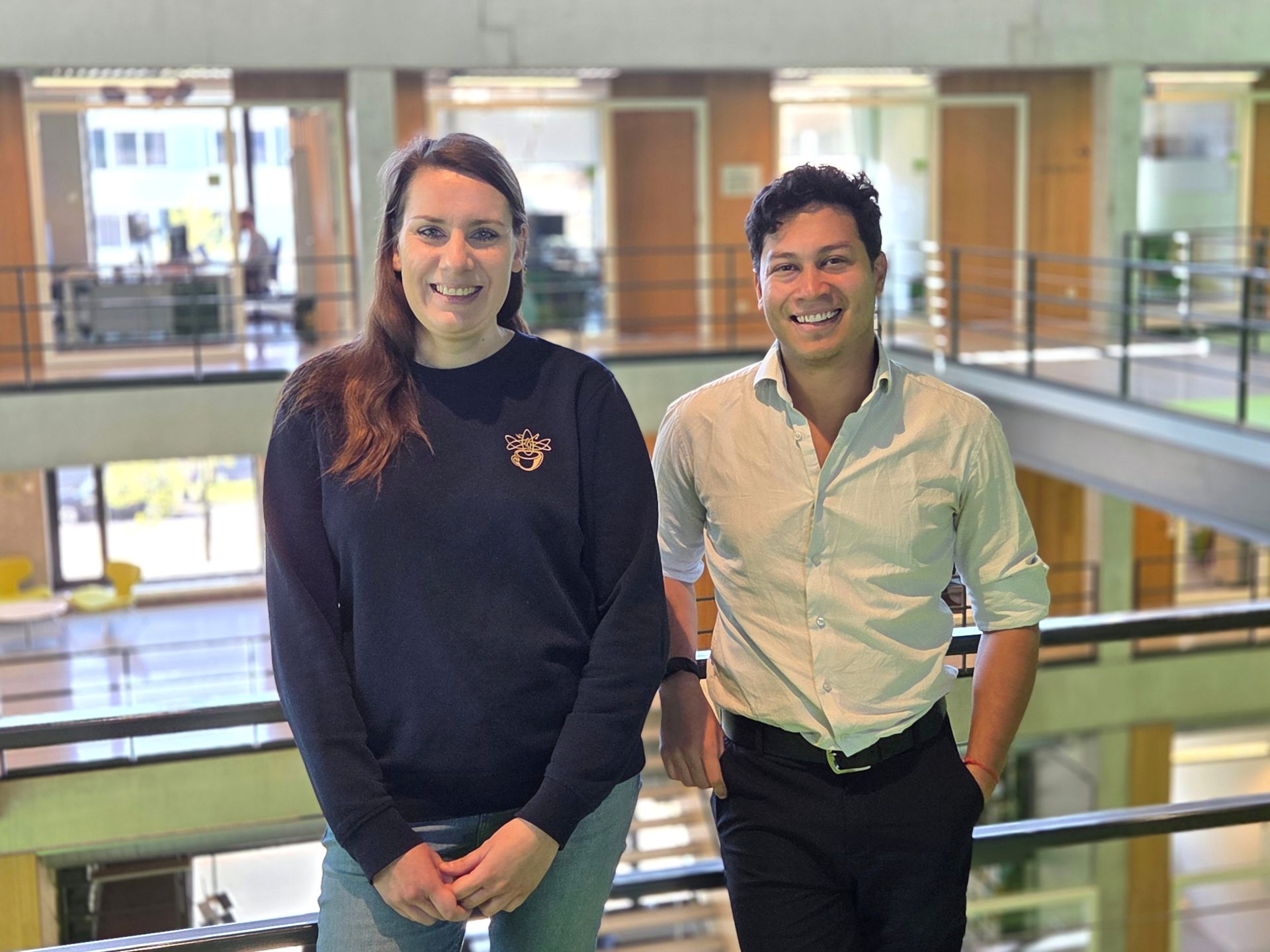
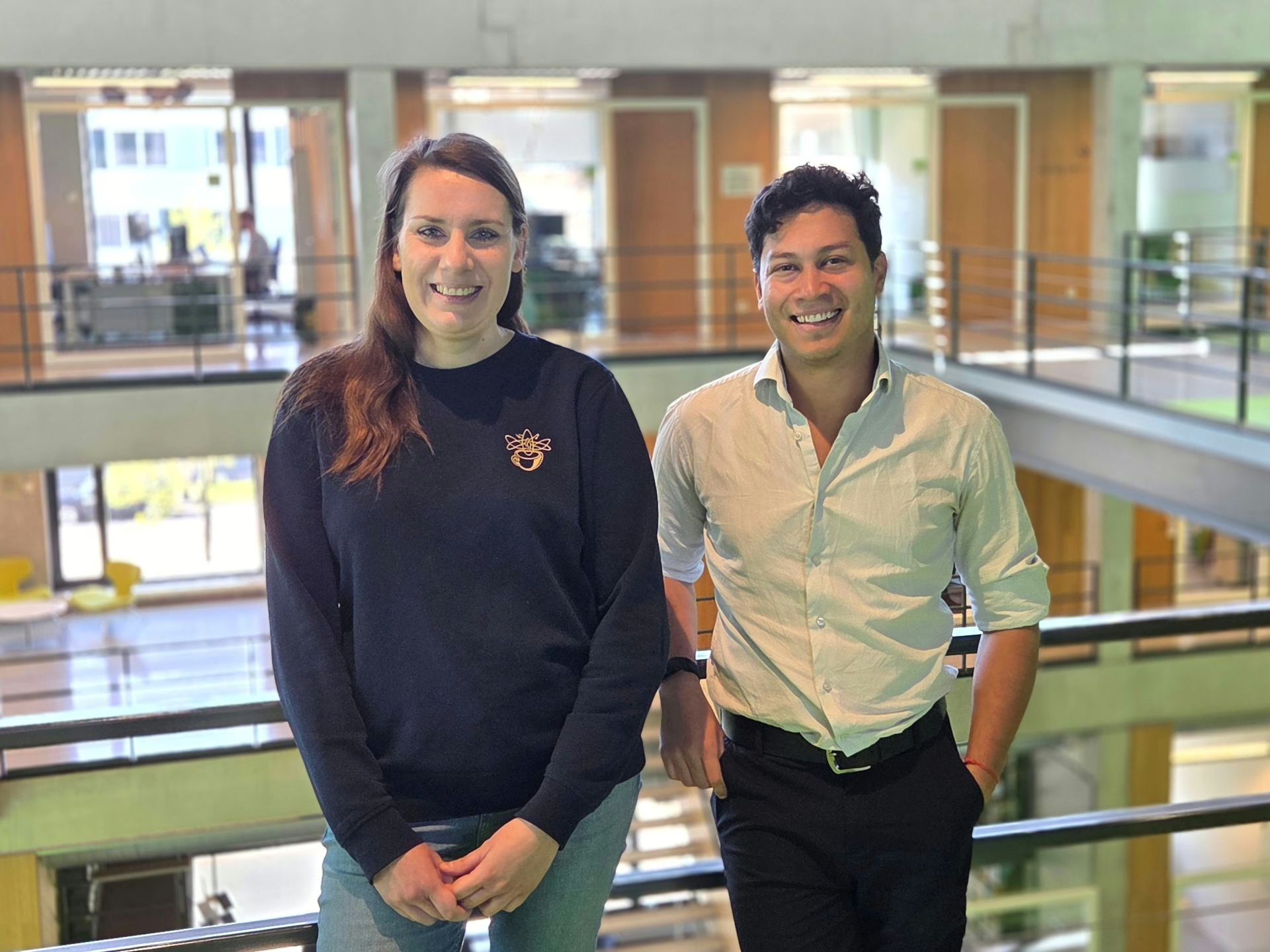
Wiebke Albrecht & Sergio Rey Puentes at AMOLF

In this project, Wiebke will collaborate with postdoctoral researcher Sergio Rey Puentes to develop a new method for directly measuring how heat is generated and spreads at the nanoscale around tiny particles that respond strongly to light (so-called plasmonic nanoparticles).

The method combines in situ laser experiments inside an electron microscope with a technique called cathodoluminescence-based thermometry, which uses special light-emitting atoms (rare-earth ions) to measure temperature. This allows researchers to quantitatively map temperature at very small scales, both in space (down to nanometers, a billionth of a meter) and in time (down to picoseconds, a trillionth of a second).

This work addresses a key challenge in nanoscience: it is currently very difficult to measure temperature changes directly at such small scales and locations. The results will help us better understand how heat moves at the nanoscale and support the design of more efficient nanoscale heating systems.

The impact spans multiple fields, including improved light-driven catalysis, targeted biomedical therapies, and more efficient electronic and energy devices, where controlling heat at the nanoscale is essential.

If you want to learn more, visit Hybrid Nanosystems on our website.
Share article
What's happening

Most recent news items

All news items

Adding a scientific flavor to Zwarte Cross

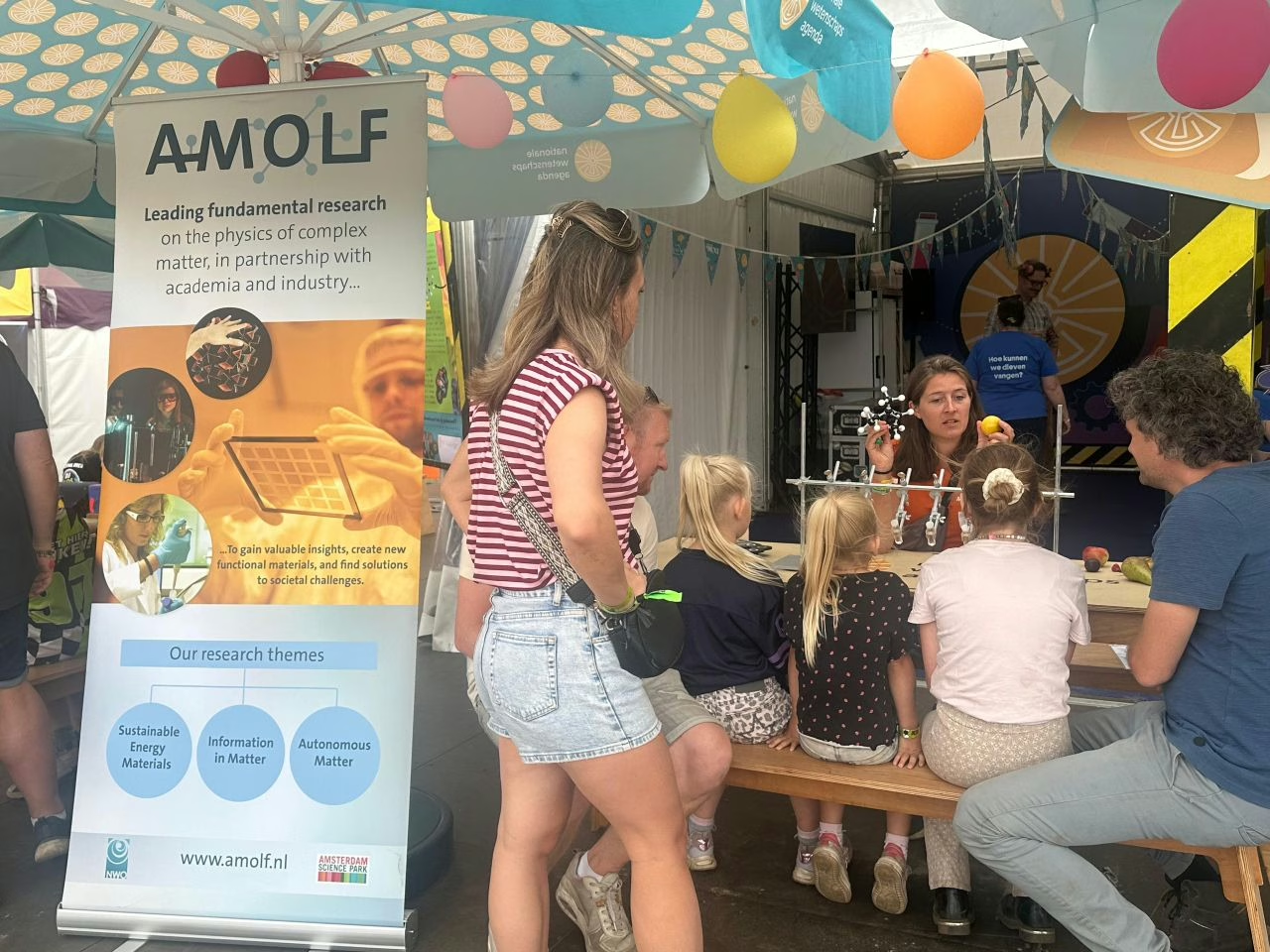
For the first time, AMOLF participated in the Netherlands' largest summer festival, Zwarte Cross. Together with volunteers from NWO, the AMOLF team introduced children to the fascinating world of molecules.…

Read news item

Atom-thin materials: handle with care… and cling film

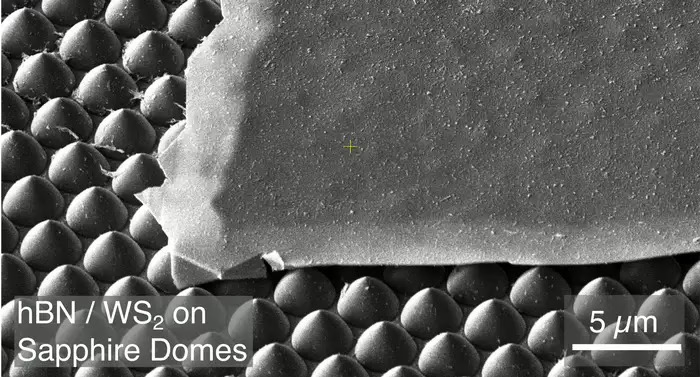
As materials become thinner – now reaching a thickness of single atoms – it has become ever more difficult to create large enough sheets of these materials and transfer them without cracking them into tiny flakes. Recent work by a broad Amsterdam-based team of scientists, published in the journal ACS Nano, presents a new technique that solves this problem – using an unexpected material that can be found in any home kitchen.

Read news item

Two Veni grants awarded for projects on immune system activation and twisted perovskites

Two researchers have been awarded Veni grants from the Dutch Research Council (NWO) for three-year postdoctoral research projects at AMOLF. Dr. Megan Farrell will conduct her project on how immune…

Read news item
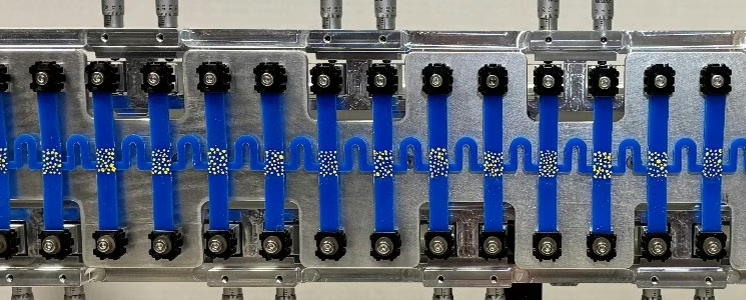
Mechanical-material-that-can-store-move-and-process-information
Stay informed

Get the latest research highlights, events, and news from our institute delivered to your inbox