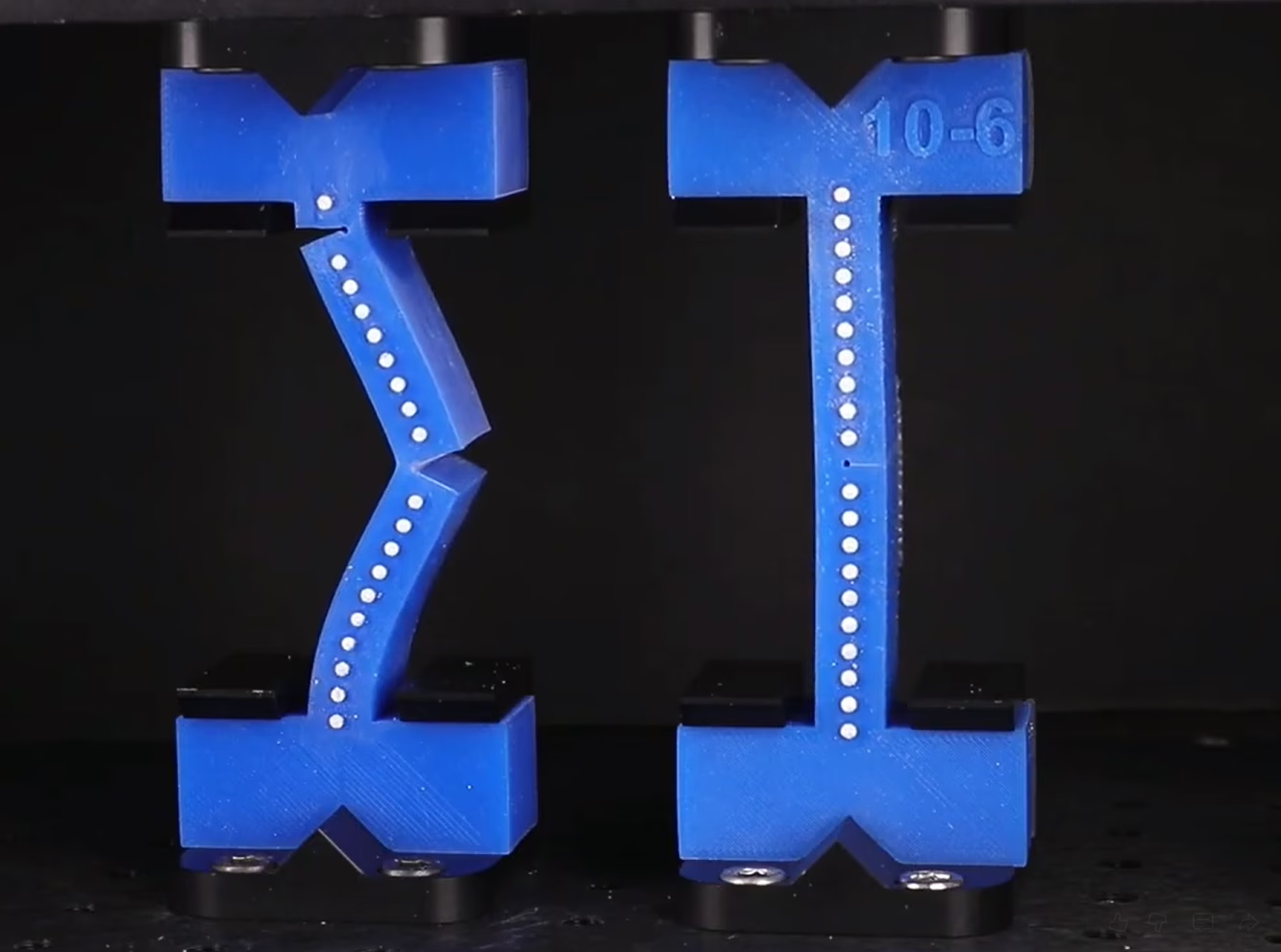
When a slender object, like a card, column or beam, is compressed, it buckles and curves in one of two directions – as described by the scientist Leonhard Euler in 1744. This behavior prompted researchers in the Mechanical Metamaterials group at AMOLF to ask themselves: can we change this? Together with collaborators from Leiden University, they show how partial cuts in beams can fundamentally alter their buckling (deformation) behavior. The researchers published their findings in the journal Science Advances on February 13, 2026.
Snapping beams
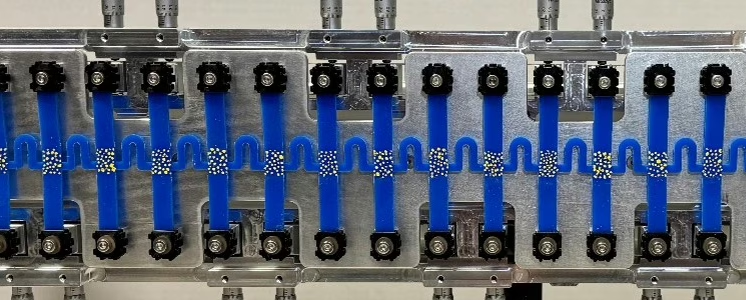
One of the materials the researchers used for their studies is a compressed rubber beam. A single cut can cause a compressed rubber beam to snap violently rather than buckle smoothly, and the beam then takes on three – rather than two – configurations. The researchers also designed beams with more cuts, for functions such as changing shapes in multiple steps, maximizing energy dissipation and storing information.
First author Bernat Dura Faulí says: “In technical terms, patterns of cuts allow us to tailor the elastic instabilities of slender structures. While such instabilities were traditionally viewed as failures, they are increasingly exploited in soft robots, metamaterials, and smart structures – and our cutting strategy provides an easy-to-use toolbox to control, program and extend the functionality of buckling.”
Watch it happen
Learn more
- If you have questions about this research, please contact Martin van Hecke at email: m.v.hecke@amolf.nl.
- The findings are published in the journal Science Advances: Hysteretic slit-snapping and multistability in buckled beams with partial cuts
- Read the full paper in Science Advances
- To learn more about buckling behavior in metamaterials