Infomatter symposium: taking advantage of information in a system

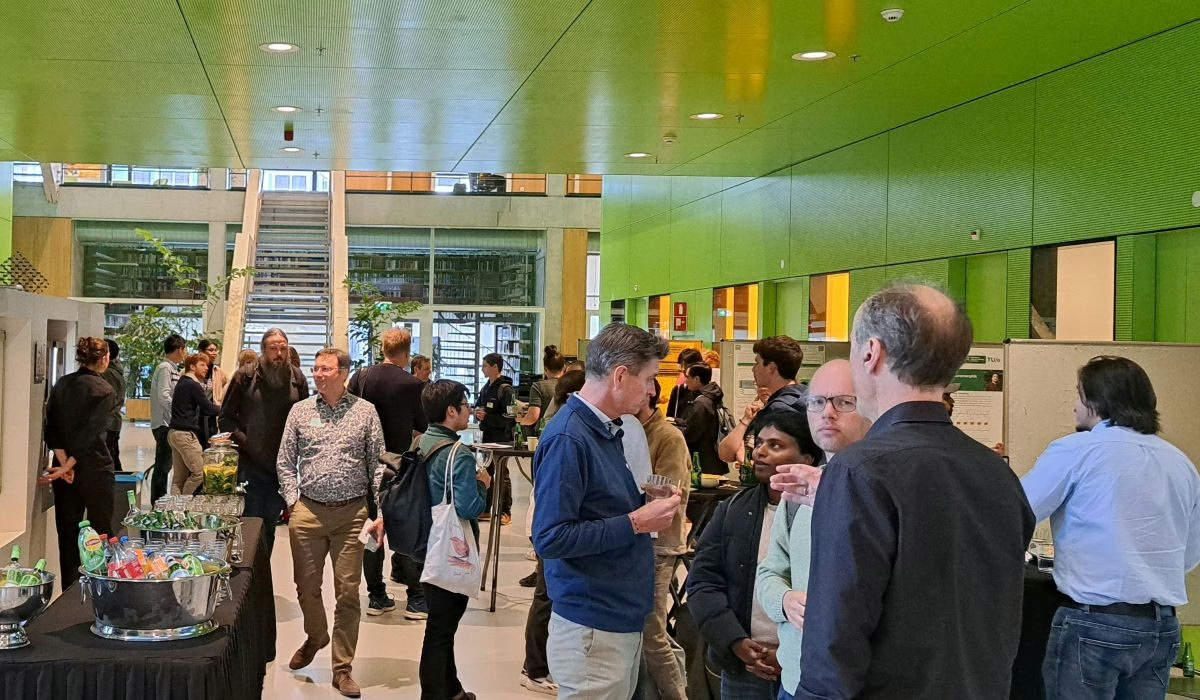
On Thursday, May 22nd, AMOLF organized the Infomatter Symposium to discuss exciting developments in information processing — ranging from biochemical to mechanical and optical systems. What these systems share is…

On Thursday, May 22nd, AMOLF organized the Infomatter Symposium to discuss exciting developments in information processing — ranging from biochemical to mechanical and optical systems. What these systems share is that they do not rely on conventional computers. This is a significant advantage, given that the energy cost of computing is rising much faster than that of energy production. 
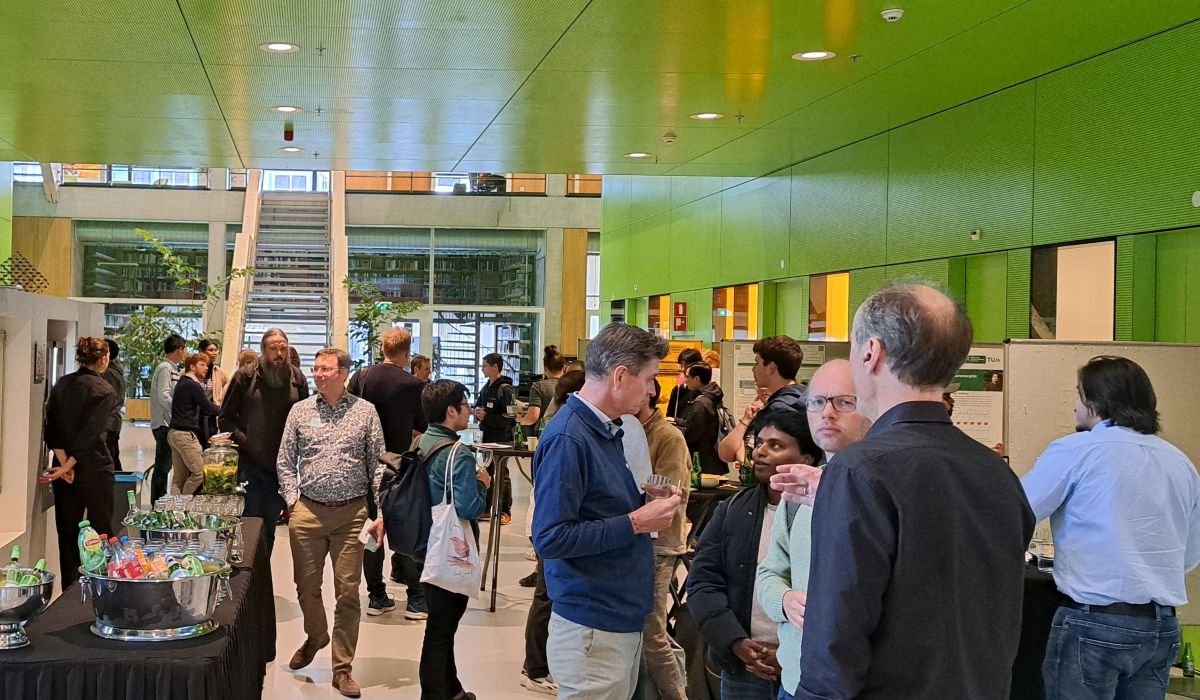
Infomatter symposium at AMOLF

Among the AMOLF PhD students attending was Daan Mulder (Biochemical Networks) who studies a basic system: a bit that exists in two conditions. He says: “The challenge is to get the system to switch from one condition to the other using very little energy.” 

Daan is happy to see that the symposium brings together a variety of researchers working on different systems. For instance, a researcher from Enschede who works on electronics, one from Delft who works on chemical reactions in flies that allow the organism to register stimuli from its environment and others that study systems in test tubes. “What unites us is the nature of the questions we ask: How does a system process information? And how can we make a system perform a task?” 

Corentin Coulais (University of Amsterdam), another attendee, focuses on the physics of robotic materials, which are flexible and active. He has a strong interest in pushing the limits of system complexity. For instance, he recently demonstrated how physical principles can be used to create trainable robots, such as a snake-like robot that learns how to take on the shapes that spell the word ‘learn’. 
Share article
What's happening

Most recent news items

All news items

Adding a scientific flavor to Zwarte Cross

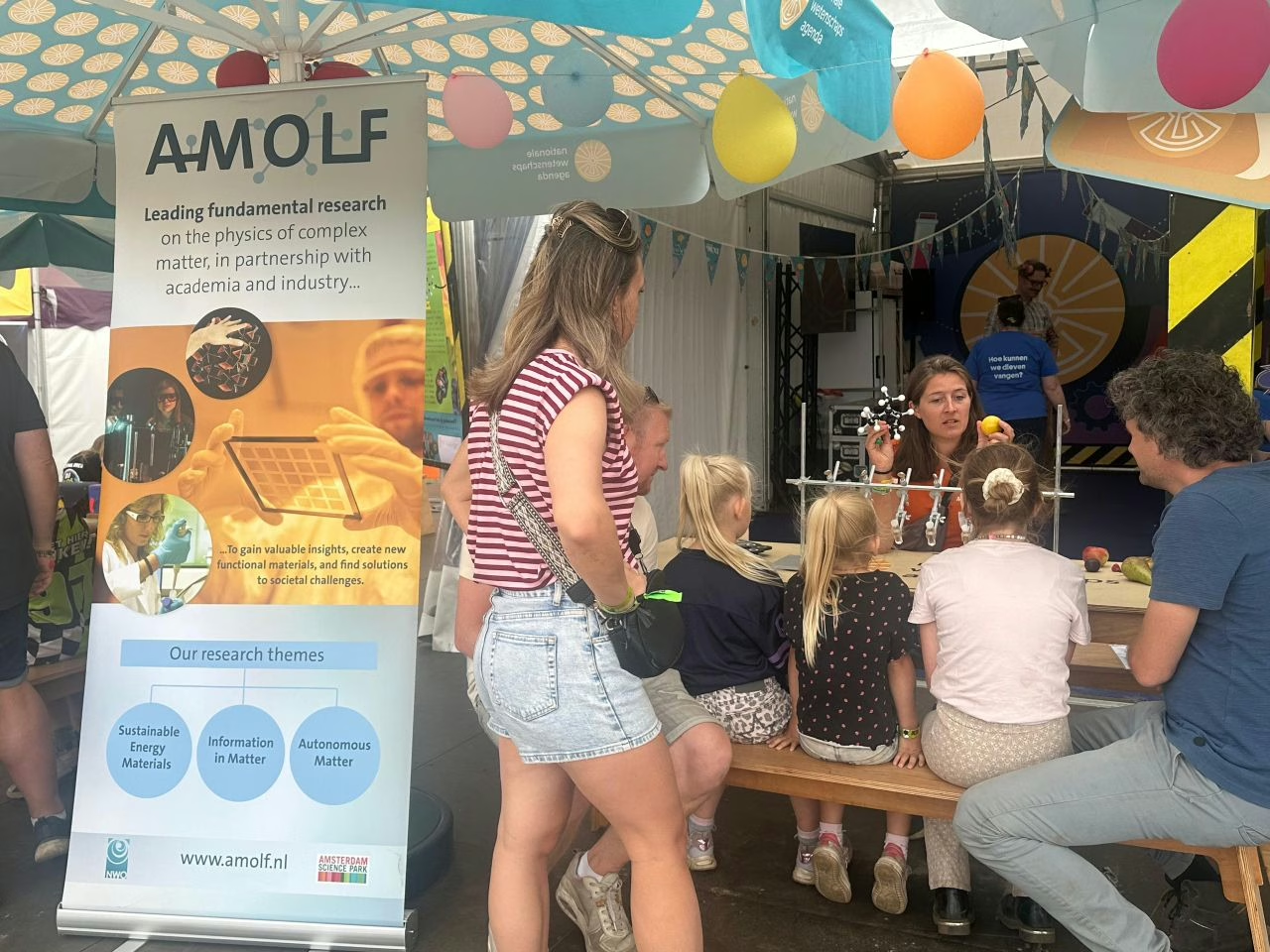
For the first time, AMOLF participated in the Netherlands' largest summer festival, Zwarte Cross. Together with volunteers from NWO, the AMOLF team introduced children to the fascinating world of molecules.…

Read news item

Atom-thin materials: handle with care… and cling film

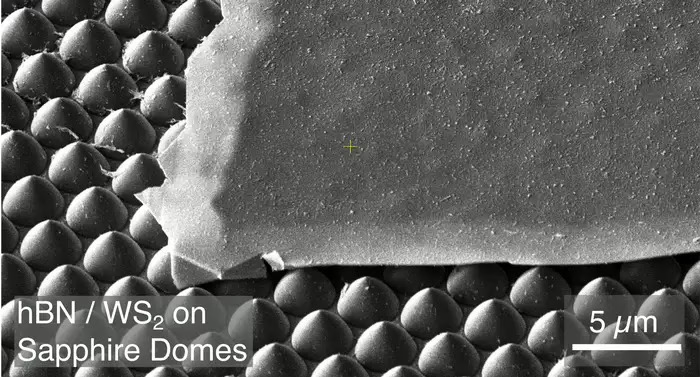
As materials become thinner – now reaching a thickness of single atoms – it has become ever more difficult to create large enough sheets of these materials and transfer them without cracking them into tiny flakes. Recent work by a broad Amsterdam-based team of scientists, published in the journal ACS Nano, presents a new technique that solves this problem – using an unexpected material that can be found in any home kitchen.

Read news item

Two Veni grants awarded for projects on immune system activation and twisted perovskites

Two researchers have been awarded Veni grants from the Dutch Research Council (NWO) for three-year postdoctoral research projects at AMOLF. Dr. Megan Farrell will conduct her project on how immune…

Read news item
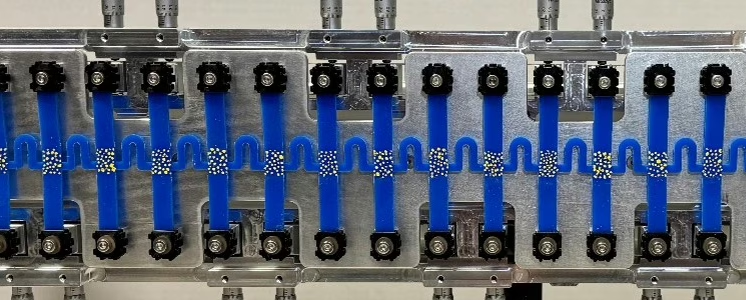
Mechanical-material-that-can-store-move-and-process-information
Stay informed

Get the latest research highlights, events, and news from our institute delivered to your inbox