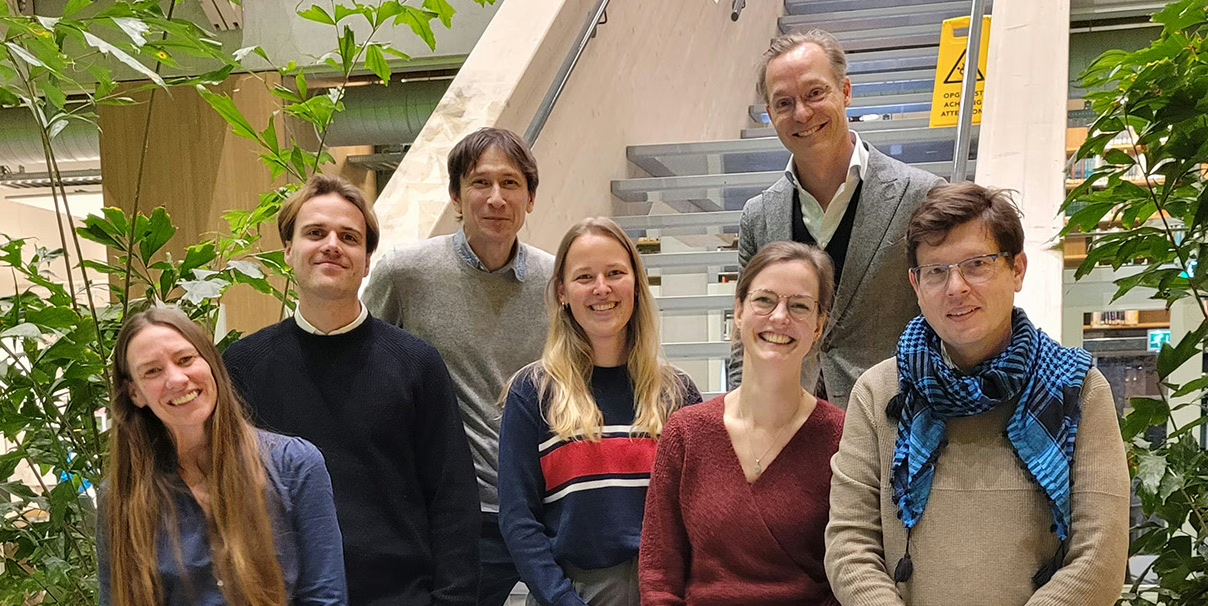
On January 8th, a delegation led by the Netherlands’ Climate Envoy, Jaime de Bourbon de Parme, visited the AMOLF lab of Tom Shimizu. Researchers in Tom’s group are developing new robotic imaging technologies to study fungal networks. Over the past few years, Tom and his collaborator Toby Kiers from Vrije Universiteit Amsterdam and The Society for the Protection of Underground Networks (SPUN) have made significant progress in understanding how these networks function.

Protecting underground fungal networks is one of the measures we can take to help control CO2 levels in the atmosphere. These microbes interact with plant roots underground to form an extensive network of nutrient exchange and transport. A key part of this underground system involves transferring carbon from plant roots into the soil through fungal networks. Healthy fungal networks can play a critical role in controlling rising CO2 levels, as the carbon they transport into the soil remains there longer compared to other sources, such as decomposed leaves.
When asked for a first impression, Jaime de Bourbon de Parme expressed excitement that researchers in the Netherlands are playing a world-leading role in pioneering this new field of climate-relevant research. Upon live demonstrations of fungal nutrient flows in the AMOLF lab, he also expressed surprise at the complexity of fungal behaviors. “I didn’t realize how complex and dynamic these underground organisms are. It’s an unknown world with big implications for global climate.”
To get a sense of how nutrients are transported in fungal networks, click on this video with real-time footage of carbon flows in fungi, acquired on microscopy set-ups in the AMOLF lab:
More information about this research group?
[button type=”readmore” url=”https://amolf.nl/research-groups/physics-of-behavior/”]Visit the Physics of Behavior Research Group page[/button]