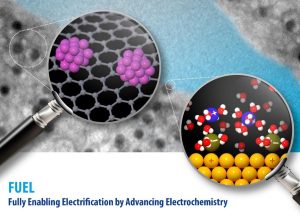
 The consortium Advanced Nano electrochemistry Institute Of the Netherlands (ANION) receives a Graviation subsidy of 23,6 million euro for research on the fundamental properties of electro chemical processes. The consortium is being led by Leiden University. AMOLF is one of the main participants.
Research plan ANION
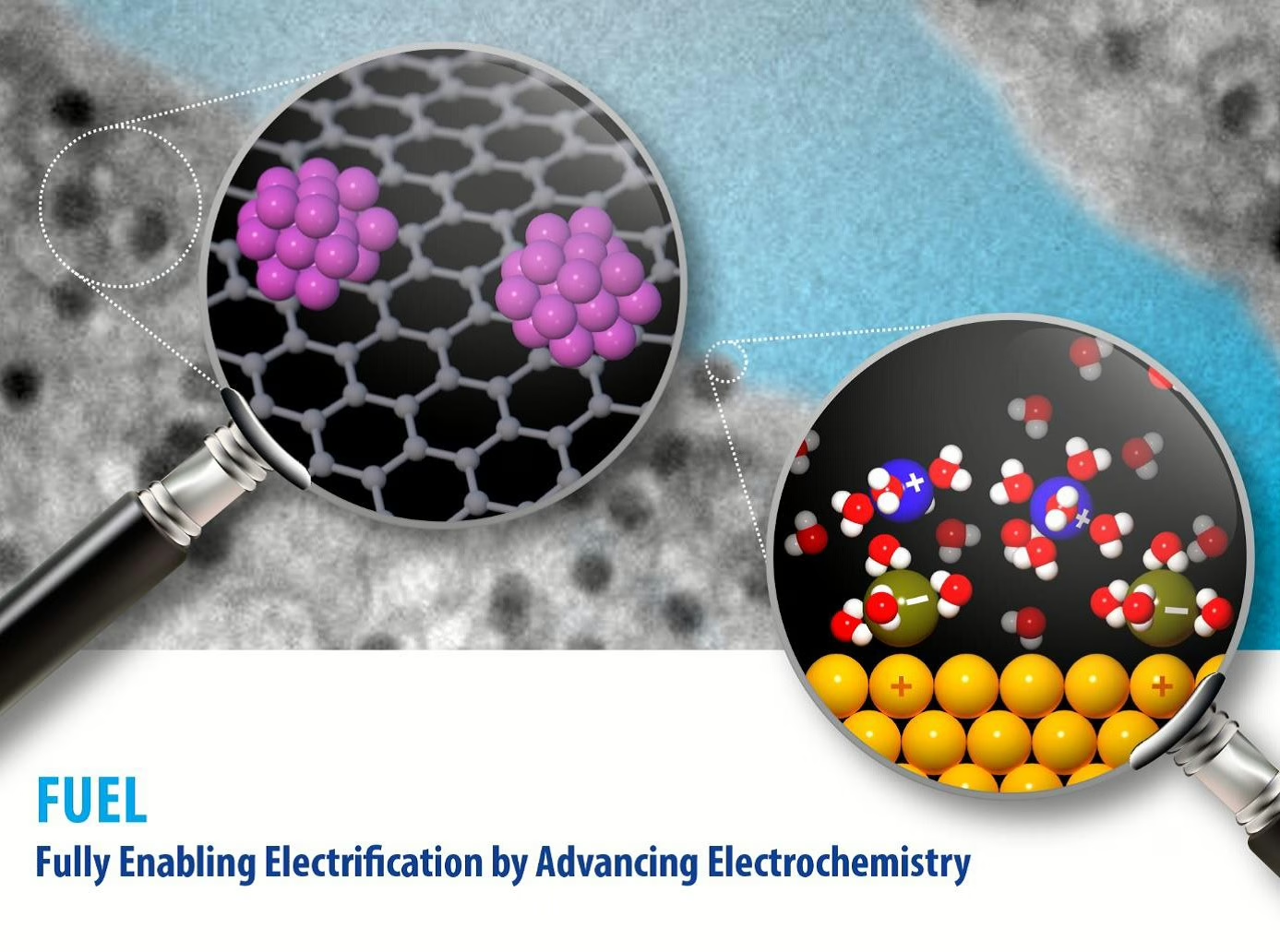
A large-scale energy transition of society requires efficient electrochemical processes for generating, converting, and storing sustainable energy. Unfortunately, existing electrochemical processes have serious limitations and are inadequate to meet the grand challenges ahead. At present there is insufficient knowledge of the processes occurring in electrochemical systems at the smallest scale to fundamentally improve these processes. In this multidisciplinary fundamental research program, chemists and physicists lay the foundation for new efficient electrochemical technologies designed to dramatically reduce humanity’s carbon footprint.
About the gravitation program
In this current round NWO honors the proposals of 7 consortia with scientists from Dutch universities. The goal of the Gravitation program is to stimulate top research and collaboration among the best scientists in their field.
Read more on NWO website