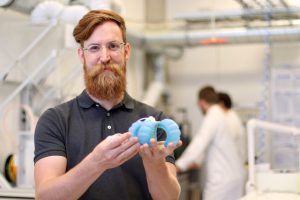
The consortium Holland Hybrid Heart (HHH), which includes Soft Robotic Matter group leader Bas Overvelde (AMOLF and TU/e), has received 10 million euro in funding from the Dutch Research Agenda (NWA-ORC). The total budget for the project is 11 million euro. The team will use the funding to take a new step in the development of a soft robotic heart for people with severe heart failure. In the consortium, universities and universities of applied sciences, companies, and patient organizations collaborate on developing a soft robotic heart that can be implanted in patients’ chests to take over from the real heart. Worldwide, there are over 23 million people with heart failure, for which the best treatment is receiving a donor heart, of which there is a severe shortage.
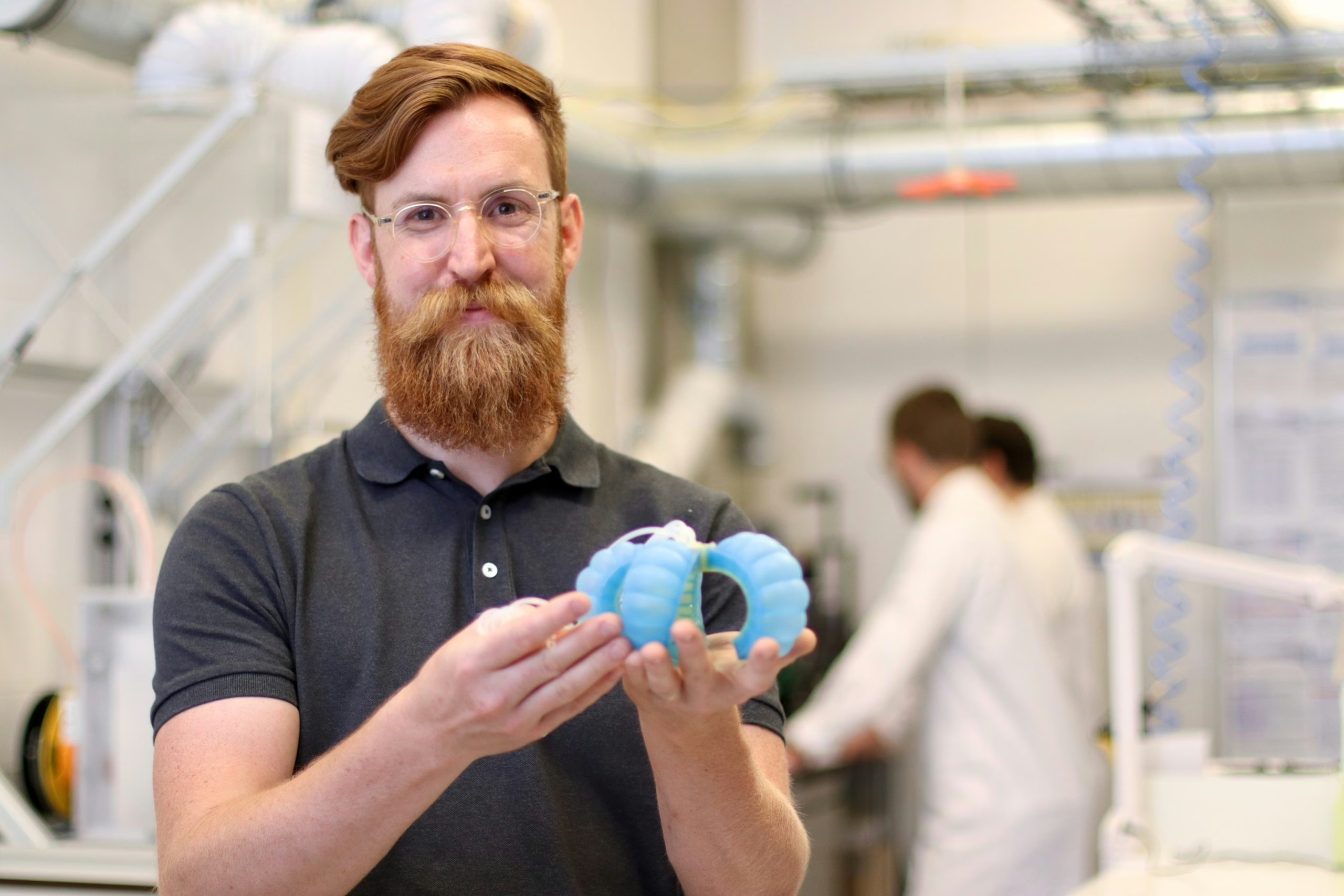
Cardiothoracic surgeon Jolanda Kluin (Erasmus MC Thorax Center) got the idea of a soft robotic heart when she saw Overvelde’s work in the media. “He works with robots made of soft and flexible materials that can respond to changes in their environment. Think, for example, of a robot resembling an octopus or a starfish,” Kluin says. “When I saw the soft robot, I thought: we should be able to create a heart with this!” Overvelde explains, “these types of artificial muscles, made of soft materials, are ideal for building an artificial heart that mimics the functioning of a natural heart.” Since the inner lining of the hybrid heart consists of cells from the patient, it becomes even more similar to a real heart.
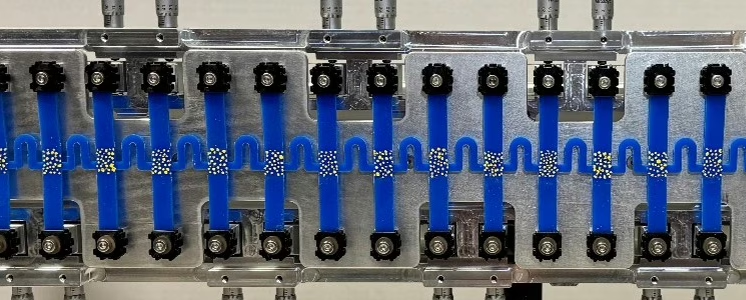
In the summer of 2022, Overvelde’s group announced that they had succeeded in designing a valve that enables soft robots to respond to the environment in a smart and simple way. The valve operates without a computer, which makes the technology attractive for applications such as the hybrid heart. The research group will further develop this knowledge for the Hybrid Heart project. Read more about this research.
Holland Hybrid Heart has been made possible in part by the Dutch Heart Foundation, which provided a subsidy of 700,000 euro. Additionally, several organizations/companies collectively contribute 700,000 euro by donating services: SBMC, TrailBlazers, evos GmbH, DCVA, and EE Labels.
The participants in the HHH consortium are: Erasmus MC (project leader), Eindhoven University of Technology, AMOLF, University of Twente, Saxion University of Applied Sciences, TU Delft, Maastricht University, Dutch Heart Foundation, Dutch Cardiovascular Alliance (DCVA), TrailBlazers, EE labels, Evos GmbH, Freelance/ZZP, Harteraad, Dutch Pulmonary Hypertension Association (PHA).
Read more on the NWO website.