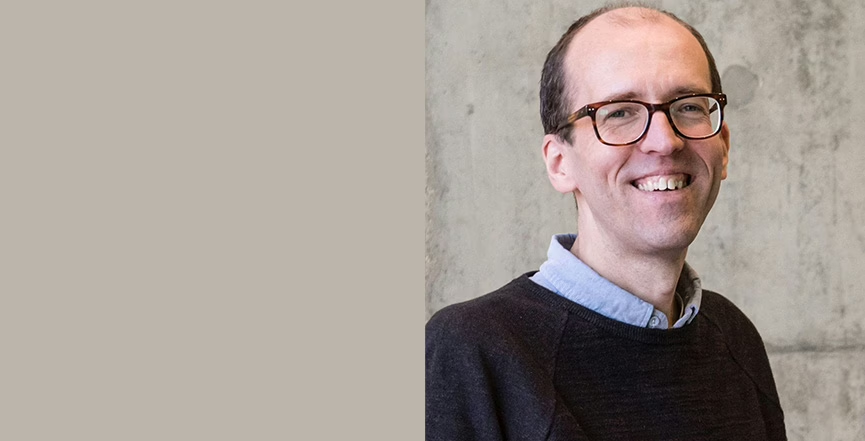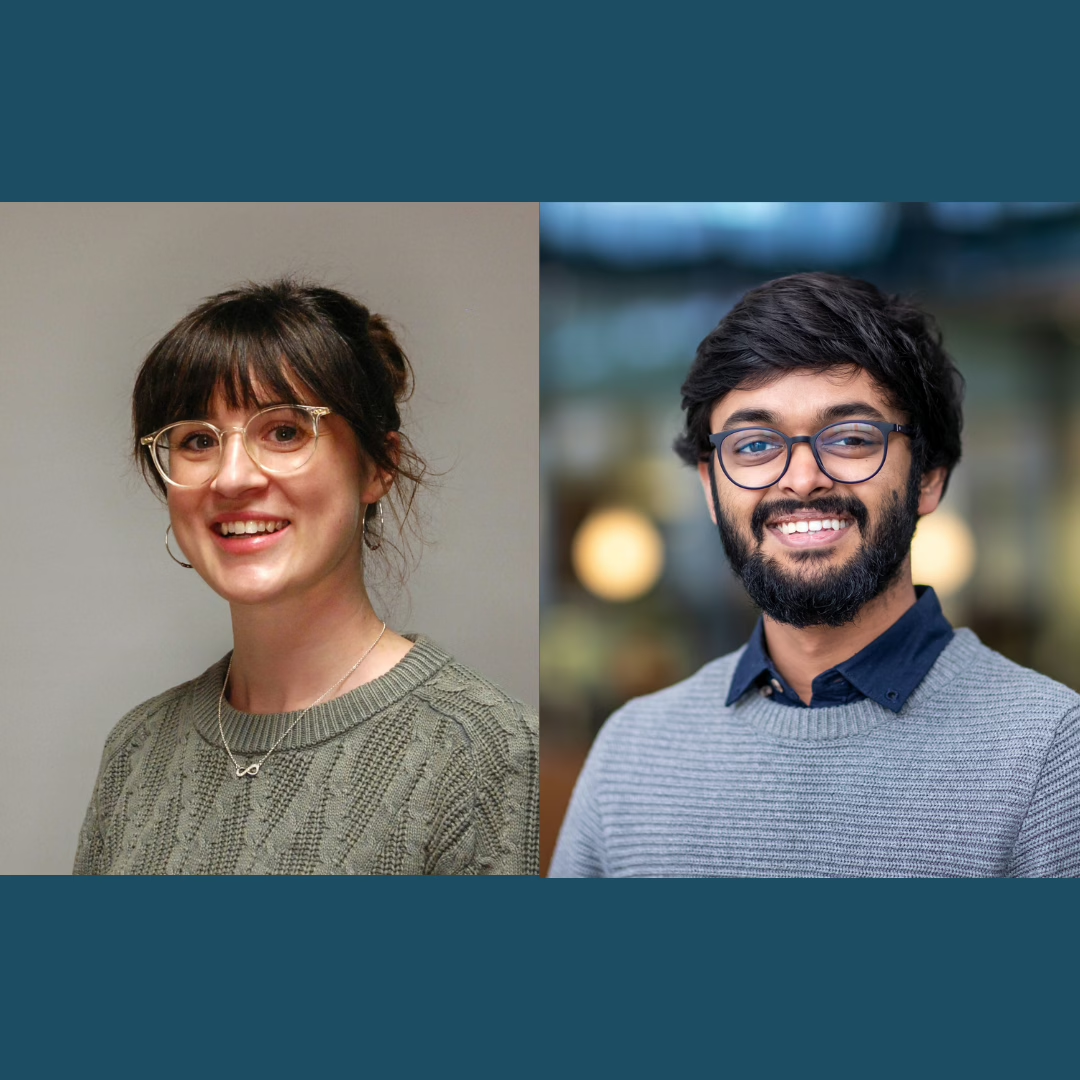
A prestigious ERC Synergy Grant worth 9.4 million euros has been awarded to the research groups of Sander Tans (AMOLF), Bernd Bukau (Heidelberg University) and Nenad Ban (ETH). The team aims to elucidate a new mechanism to explain how protein complexes are formed – the complex molecules that execute all main biological functions. Sander Tans also holds a professorship at Delft University of Technology.
Protein complexes are essential to all cellular processes, yet their formation is also an extremely sensitive process that is prone to failure. Indeed, protein misfolding and aggregation are thought to underpin most non-infectious diseases and ageing. Rapidly accumulating findings now suggest that multiple ribosomes actively work together to orchestrate when and where different proteins come together. The research team expects that this coordinated process enables unprecedented protein production capabilities and indicates a wide spectrum of yet unknown regulatory mechanisms in cells.
To elucidate how protein complexes are produced, the team will combine a range of cutting-edge methods: RNA deep sequencing approaches to map out ribosome interactions throughout the genome, single-molecule methods that provide a direct view on how the ribosomes move along the mRNA and how proteins assemble into complexes. Finally, (tomography) Cryo-EM to visualize the internal structures of the highly complex multi-ribosome assemblies within cells will be used.
This ambitious program aims to reveal mechanisms that impact a vast spectrum of protein complexes and to uncover unknown layers of control in protein biogenesis. These insights will be useful for diverse applications, such as the design of mRNA vaccines and therapies, and to provide new hypotheses for the causes of various medical conditions.