Dick Stufkens Prize 2017 awarded to Sven Askes

The Dick Stufkens Prize 2017 for the best PhD thesis of the Holland Research School of Molecular Chemistry (HRSMC) is awarded to AMOLF postdoc Sven Askes. In his thesis 'Upconverting…

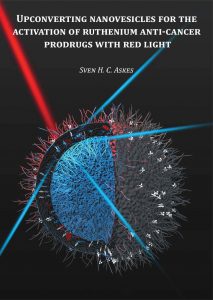
The Dick Stufkens Prize 2017 for the best PhD thesis of the Holland Research School of Molecular Chemistry (HRSMC) is awarded to AMOLF postdoc Sven Askes. In his thesis ‘Upconverting Nanovesicles for the Activation of Ruthenium Anti-Cancer Prodrugs with Red Light’, Askes describes a clever combination of materials and techniques for a new approach in photochemical cancer therapy. The jury was impressed by the quality, the originality and the interdisciplinary character of Sven Askes’s PhD thesis and expects that the work will have considerable impact on future development of photochemical cancer therapy.

The Dick Stufkens Prize is awarded annually to the best thesis defended in the period July 1 to July 1 of the next year by a Ph.D. student belonging to the Holland Research School of Molecular Chemistry (HRSMC). The prize – first awarded in 2008 – consists of a certificate and an amount of 1000 euro.
Sven Askes performed the research for his thesis at the University of Leiden in the Institute of Chemistry. Askes is now a postdoc researcher at the Nanoscale Solar Cells group at AMOLF. He uses plasmonic nanostructures for the light-driven assembly of photocatalytic devices with sub-wavelength precision. Such devices can eventually be used to produce solar fuels like molecular hydrogen.

Read the HRSMC press release: Dick Stufkens Prize 2017 awarded to chemist Sven Askes



Share article
What's happening

Most recent news items

All news items

Adding a scientific flavor to Zwarte Cross

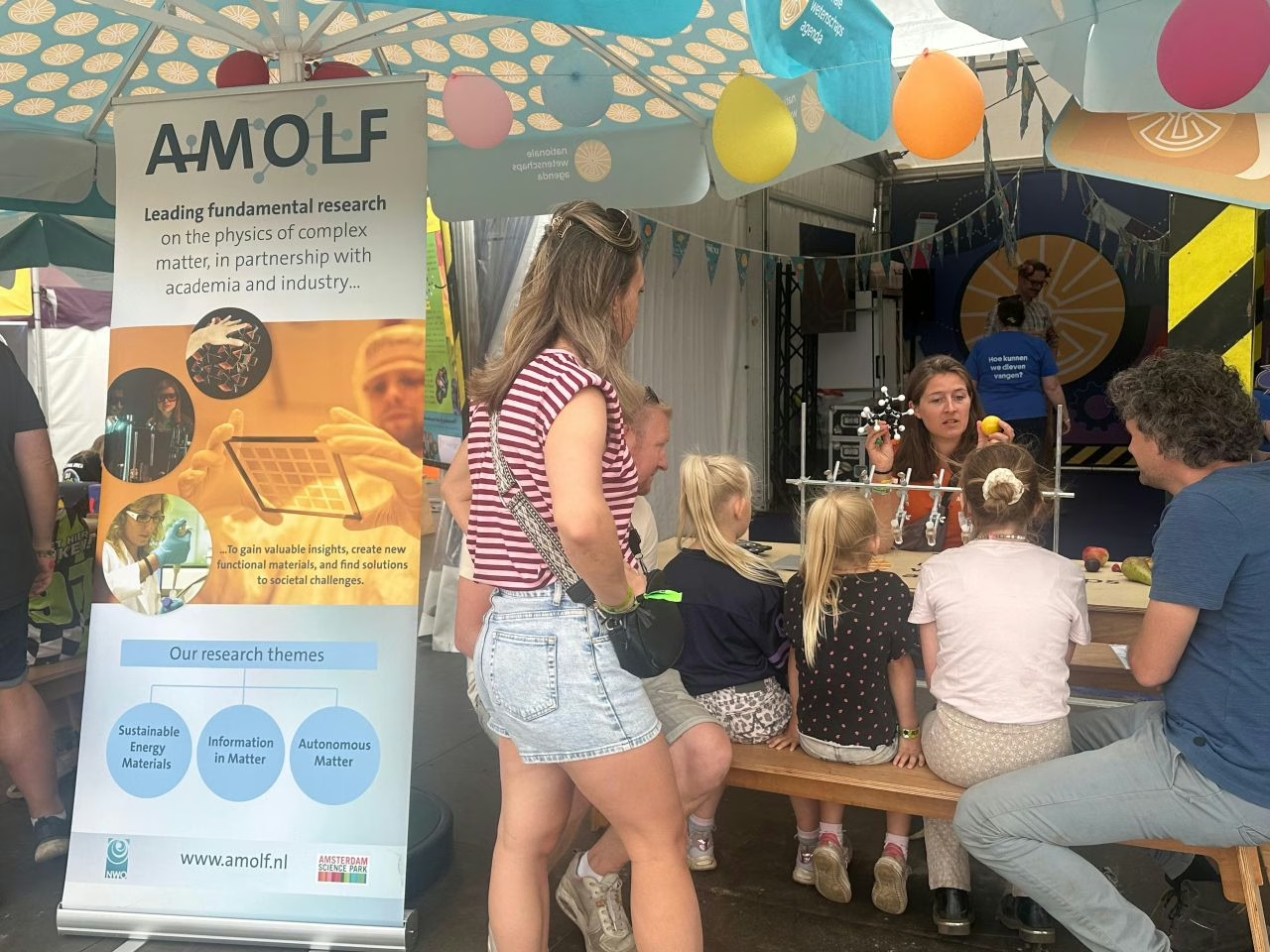
For the first time, AMOLF participated in the Netherlands' largest summer festival, Zwarte Cross. Together with volunteers from NWO, the AMOLF team introduced children to the fascinating world of molecules.…

Read news item

Atom-thin materials: handle with care… and cling film

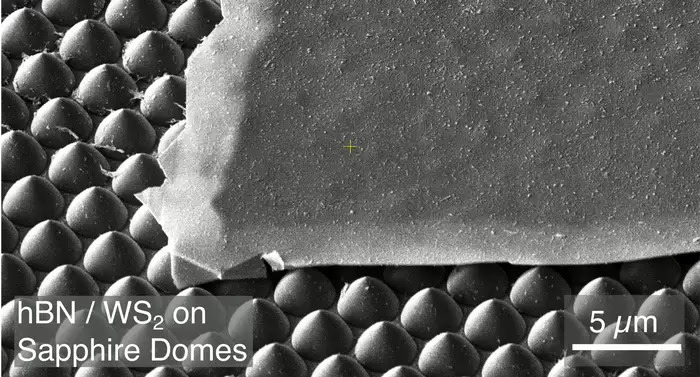
As materials become thinner – now reaching a thickness of single atoms – it has become ever more difficult to create large enough sheets of these materials and transfer them without cracking them into tiny flakes. Recent work by a broad Amsterdam-based team of scientists, published in the journal ACS Nano, presents a new technique that solves this problem – using an unexpected material that can be found in any home kitchen.

Read news item

Two Veni grants awarded for projects on immune system activation and twisted perovskites

Two researchers have been awarded Veni grants from the Dutch Research Council (NWO) for three-year postdoctoral research projects at AMOLF. Dr. Megan Farrell will conduct her project on how immune…

Read news item
Mechanical-material-that-can-store-move-and-process-information
Stay informed

Get the latest research highlights, events, and news from our institute delivered to your inbox