Visiting professor Andrea Alù wins Alan T. Waterman Award

The U.S. National Science Foundation (NSF) has named Andrea Alù as the recipient of this year's Alan T. Waterman Award. Professor Alù (University of Texas in Austin) is currently KNAW…

The U.S. National Science Foundation (NSF) has named Andrea Alù as the recipient of this year’s Alan T. Waterman Award. Professor Alù (University of Texas in Austin) is currently KNAW visiting professor at AMOLF’s Center for Nanophotonics.

“The Waterman Award was created 40 years ago to recognize outstanding young researchers,” NSF Director France A. Córdova said. “Alù’s research is an example of the type of pioneering spirit the award seeks to identify. His research has already advanced our understanding of man-made materials and their most exotic wave interactions, and it promises to yield further significant results.”

Alù is a leading innovator in metamaterials, or artificial materials with properties and wave interactions not found in nature. He is best known for his pioneering research in metamaterial theory and applications, and in plasmonics. Among the many accomplishments he and his team have achieved are “cloaking” technologies capable of “bending” waves around objects, with the overall effect of rendering those objects invisible to sensors. Read more on Alù’s research group web page.

The Waterman Award will be presented to  Alù at a dinner ceremony held in Washington, D.C., on May 5. He will also deliver a lecture at NSF on May 7.

Read the NSF press release

resonant nanophotonics femius koenderink andrea alu

Andrea Alù

Share article
What's happening

Most recent news items

All news items

Adding a scientific flavor to Zwarte Cross

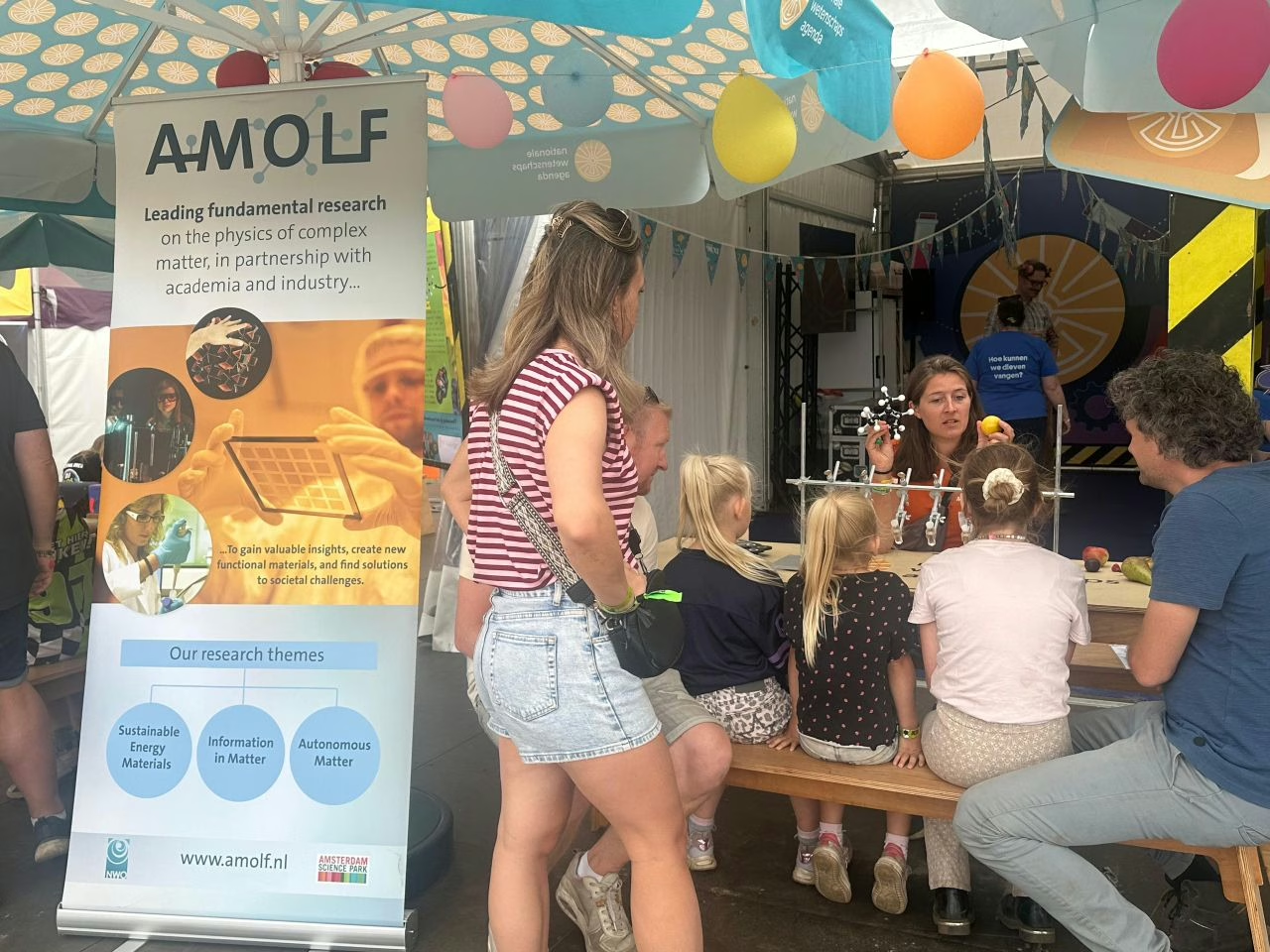
For the first time, AMOLF participated in the Netherlands' largest summer festival, Zwarte Cross. Together with volunteers from NWO, the AMOLF team introduced children to the fascinating world of molecules.…

Read news item

Atom-thin materials: handle with care… and cling film

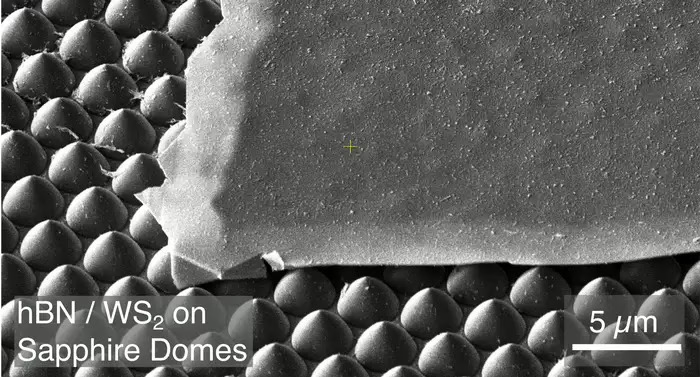
As materials become thinner – now reaching a thickness of single atoms – it has become ever more difficult to create large enough sheets of these materials and transfer them without cracking them into tiny flakes. Recent work by a broad Amsterdam-based team of scientists, published in the journal ACS Nano, presents a new technique that solves this problem – using an unexpected material that can be found in any home kitchen.

Read news item

Two Veni grants awarded for projects on immune system activation and twisted perovskites

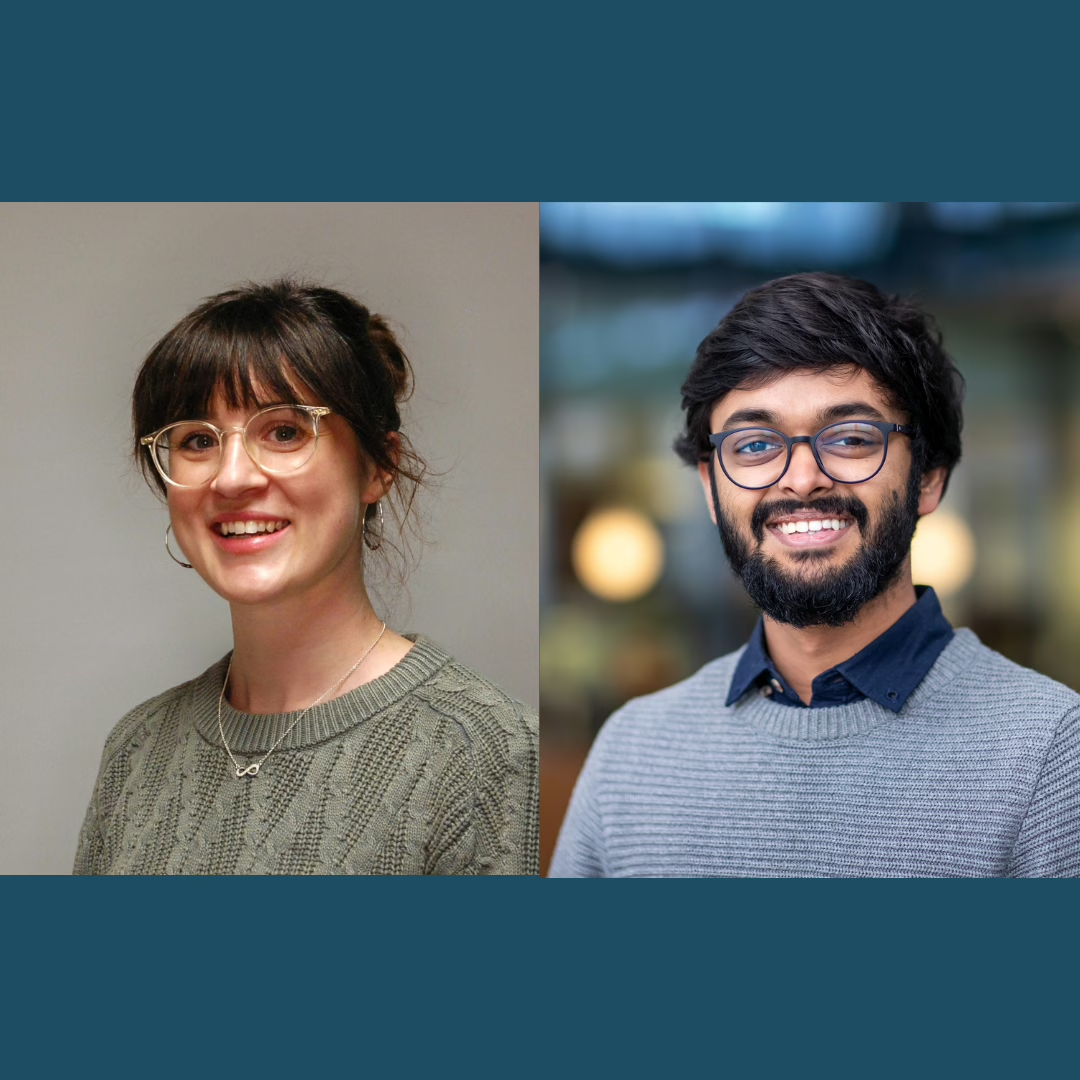
Two researchers have been awarded Veni grants from the Dutch Research Council (NWO) for three-year postdoctoral research projects at AMOLF. Dr. Megan Farrell will conduct her project on how immune…

Read news item
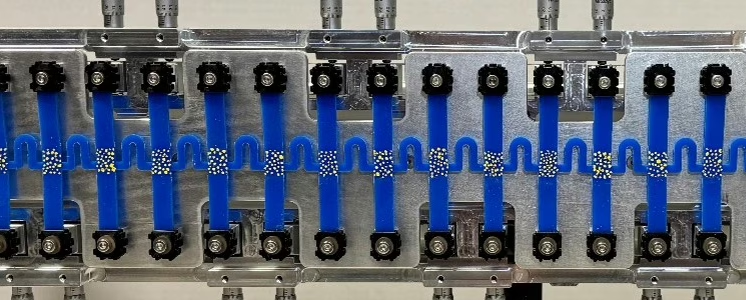
Mechanical-material-that-can-store-move-and-process-information
Stay informed

Get the latest research highlights, events, and news from our institute delivered to your inbox