Research groups

Four PhD candidates close their AMOLF chapter

The catalyst, engineered at the nanoscale, enables highly selective photochemical reactions using only a fraction of the material normally required for such processes.

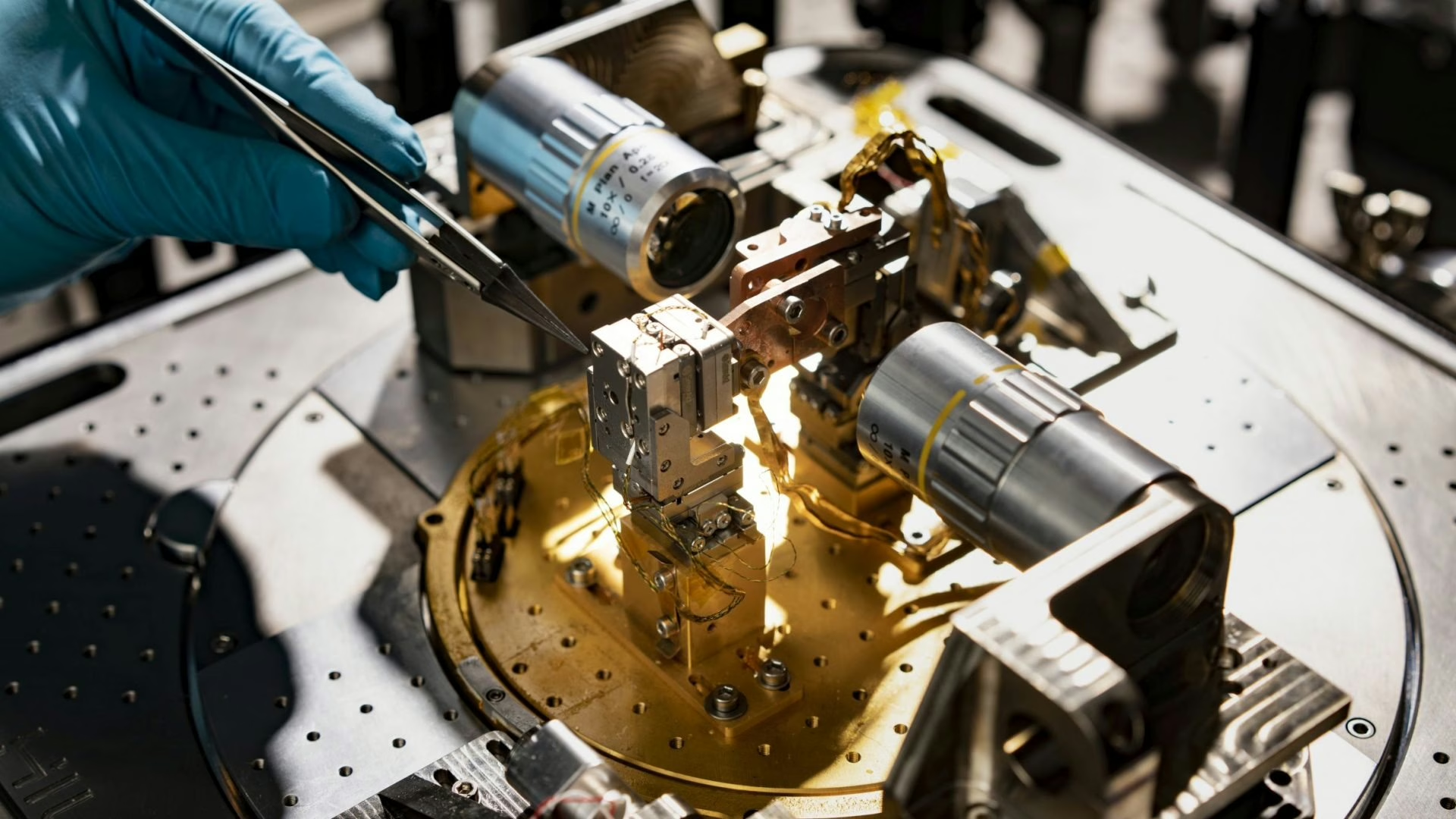
Close-up van een hand met pincet die een onderdeel manipuleert in een mechanisch apparaat met glanzende metalen componenten
Electric motor

Nanoscale Design, High Impact

Developed by the Hybrid Solar Cells Group in collaboration with the Photonic Materials Group, the catalyst leverages nanoscale light–matter interactions to enhance electron transfer and minimize energy loss. Because only a tiny amount of material is needed, the design is highly scalable and resource-efficient.

Promising Results for CO2 Conversion

Early experiments indicate that the catalyst can support selective CO2-to-hydrocarbon conversion under mild conditions. This makes it a strong candidate for future solar-powered chemical and fuel production systems.

“By engineering light–matter interactions at the nanoscale, we enable reactions that were previously inefficient or impossible,”

dr. elena rossi
dr. elena rossi
Lead researcher

Next steps

The team will now focus on improving long-term stability and fine-tuning the catalyst for industrially relevant reactions.
Share article
What's happening

Most recent news items

All news items

Adding a scientific flavor to Zwarte Cross

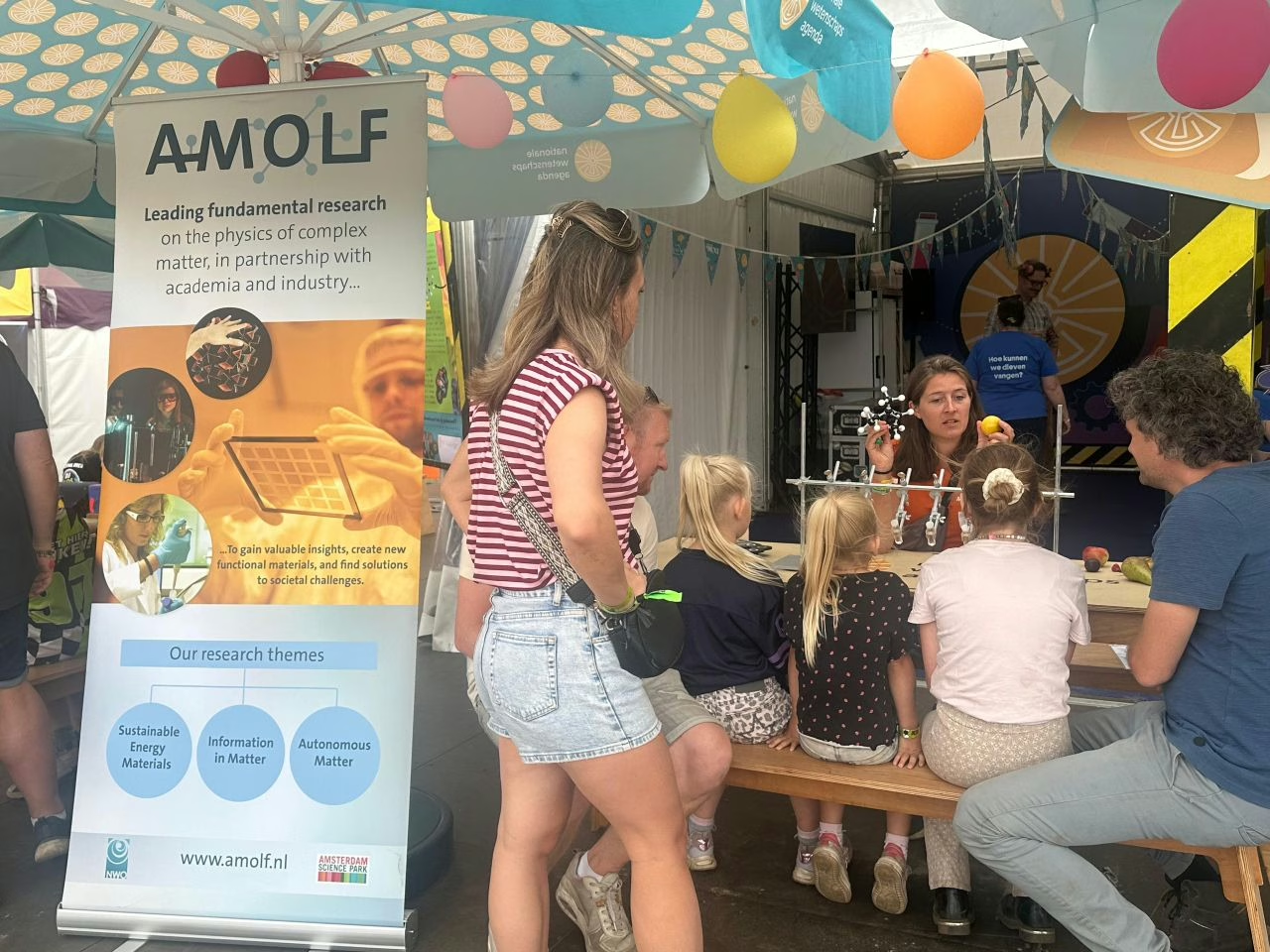
For the first time, AMOLF participated in the Netherlands' largest summer festival, Zwarte Cross. Together with volunteers from NWO, the AMOLF team introduced children to the fascinating world of molecules.…

Read news item

Atom-thin materials: handle with care… and cling film

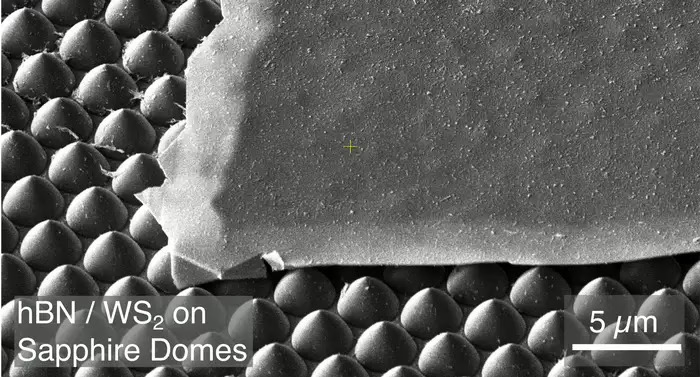
As materials become thinner – now reaching a thickness of single atoms – it has become ever more difficult to create large enough sheets of these materials and transfer them without cracking them into tiny flakes. Recent work by a broad Amsterdam-based team of scientists, published in the journal ACS Nano, presents a new technique that solves this problem – using an unexpected material that can be found in any home kitchen.

Read news item

Two Veni grants awarded for projects on immune system activation and twisted perovskites

Two researchers have been awarded Veni grants from the Dutch Research Council (NWO) for three-year postdoctoral research projects at AMOLF. Dr. Megan Farrell will conduct her project on how immune…

Read news item
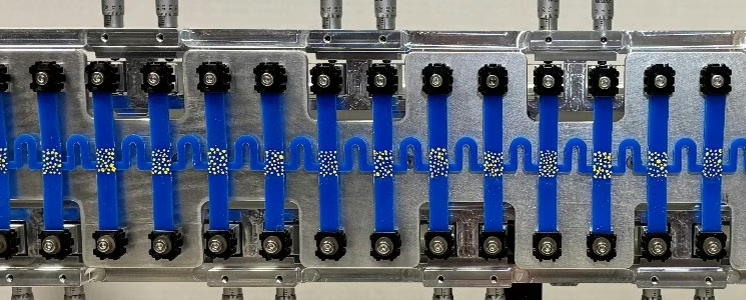
Mechanical-material-that-can-store-move-and-process-information
Stay informed

Get the latest research highlights, events, and news from our institute delivered to your inbox