About us
About AMOLF
AMOLF is a national research institute that initiates and conducts leading fundamental research on the physics of complex matter, in partnership with academia and industry. This leads to valuable insights and opportunities to create new functional materials and to find solutions to societal challenges in renewable energy, green ICT, and healthcare.
Our scientists combine advanced experimental methods, theory, and design to understand how the structure of materials gives rise to their function. In a collaborative environment, AMOLF brings together talented researchers from around the world, supported by state-of-the-art facilities and strong partnerships with universities, industry, and other knowledge institutes.
AMOLF plays a key organizing role in the national science landscape, renewing scientific directions, coordinating research networks, and expanding collaborations. This translates into a constant influx of new talent and an outflow of high-quality researchers and technicians into society.
We are a non-profit, academic research institute of the Dutch Research Council NWO.
Our mission
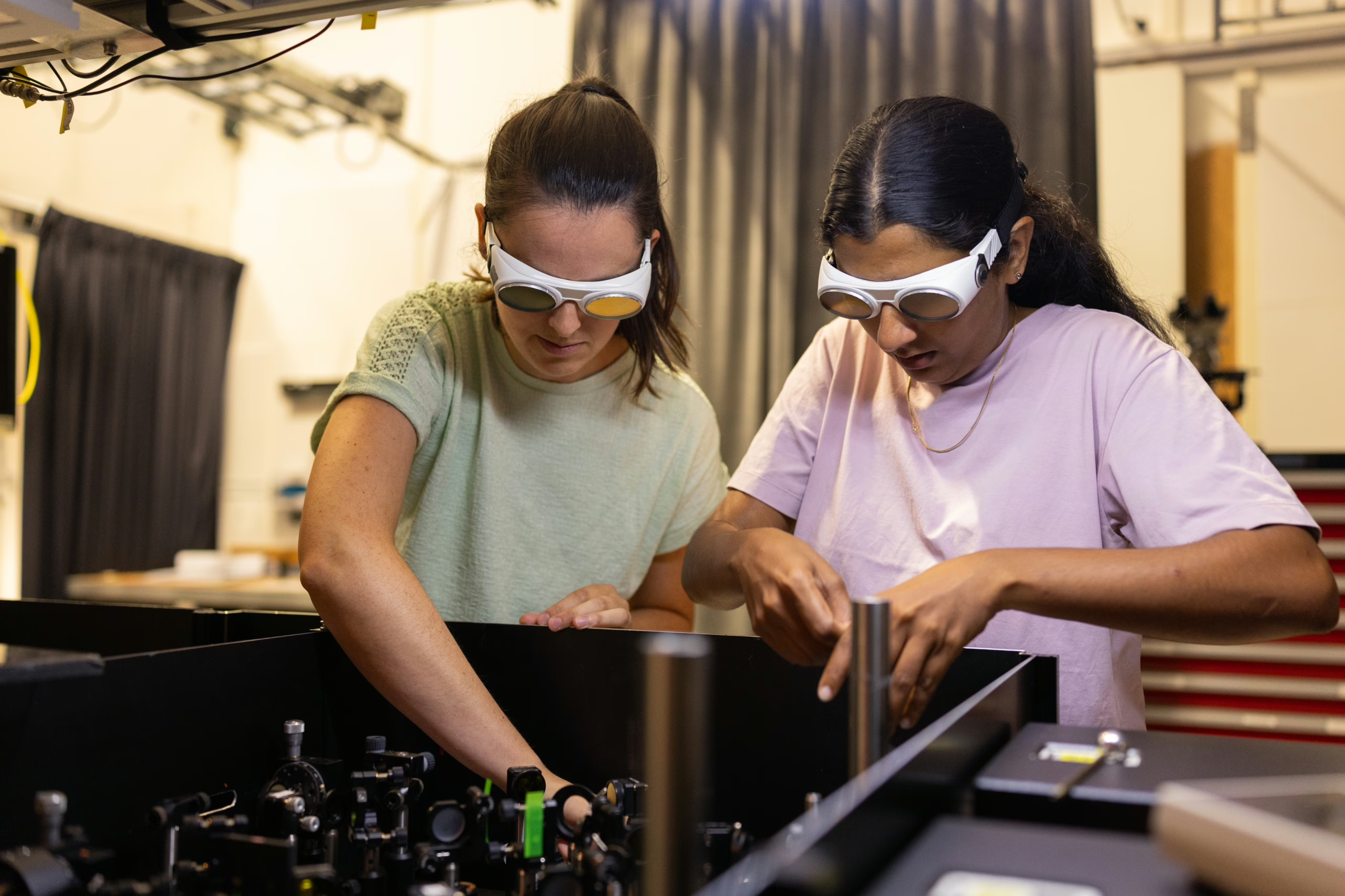
Our mission is to understand the fundamental physics and design principles of natural and human-made functional complex matter, and to initiate and develop new research in this field in the Netherlands, in partnership with academia and industry.
Researchers at AMOLF investigate the fundamental relationship between the architecture and interactions of complex molecular and material systems, with the goal of understanding their properties and functions. Our research generates fundamental insights and creates opportunities to develop new functional materials and address societal challenges in renewable energy, green ICT, sustainable energy materials, and healthcare.
To achieve this, we combine advanced physics with insights from chemistry, biology, engineering, and materials science. Our work sits at the interface of fundamental discovery and real-world applications, carried out in close collaboration with universities, research institutes, and industrial partners.
“Fundamental research is about understanding what is not yet understood. At AMOLF, we combine disciplines, ideas, and partnerships to uncover the principles that govern complex matter and use those insights to create new possibilities for science, technology, and society.”

Our research
Our research
Research at AMOLF is organized into 18 research groups that investigate the fundamental relationship between the architecture and interactions of complex molecular and material systems, ranging from nanophotonic structures to multicellular organisms, with the goal to understand their properties and functions. AMOLF also aims to initiate excellent new research in this field. The obtained knowledge and insights are used to create novel functional materials and to find new solutions to important societal problems.
The AMOLF research program comprises three strongly connected research themes:
- Sustainable Energy Materials: developing new insights, materials and devices to efficiently convert sunlight to electricity and chemicals
- Information in Matter: exploring information gathering, processing and utilization in inanimate and living matter, novel learning and adaptive materials
- Autonomous Matter: understanding and creating materials with embodied autonomy that can sense, adapt, and act on their own
The research in these themes is strongly interdisciplinary in character and is supported by four disciplinary Research Expertise Centers: Chemistry and Spectroscopy, Living Systems, Modern Mechanics, and Nanophotonics.
For exploring novel fields of research, our researchers need unique advanced equipment, electronics, and software that often cannot be obtained commercially. Therefore, this is specially designed and made by our technical departments.
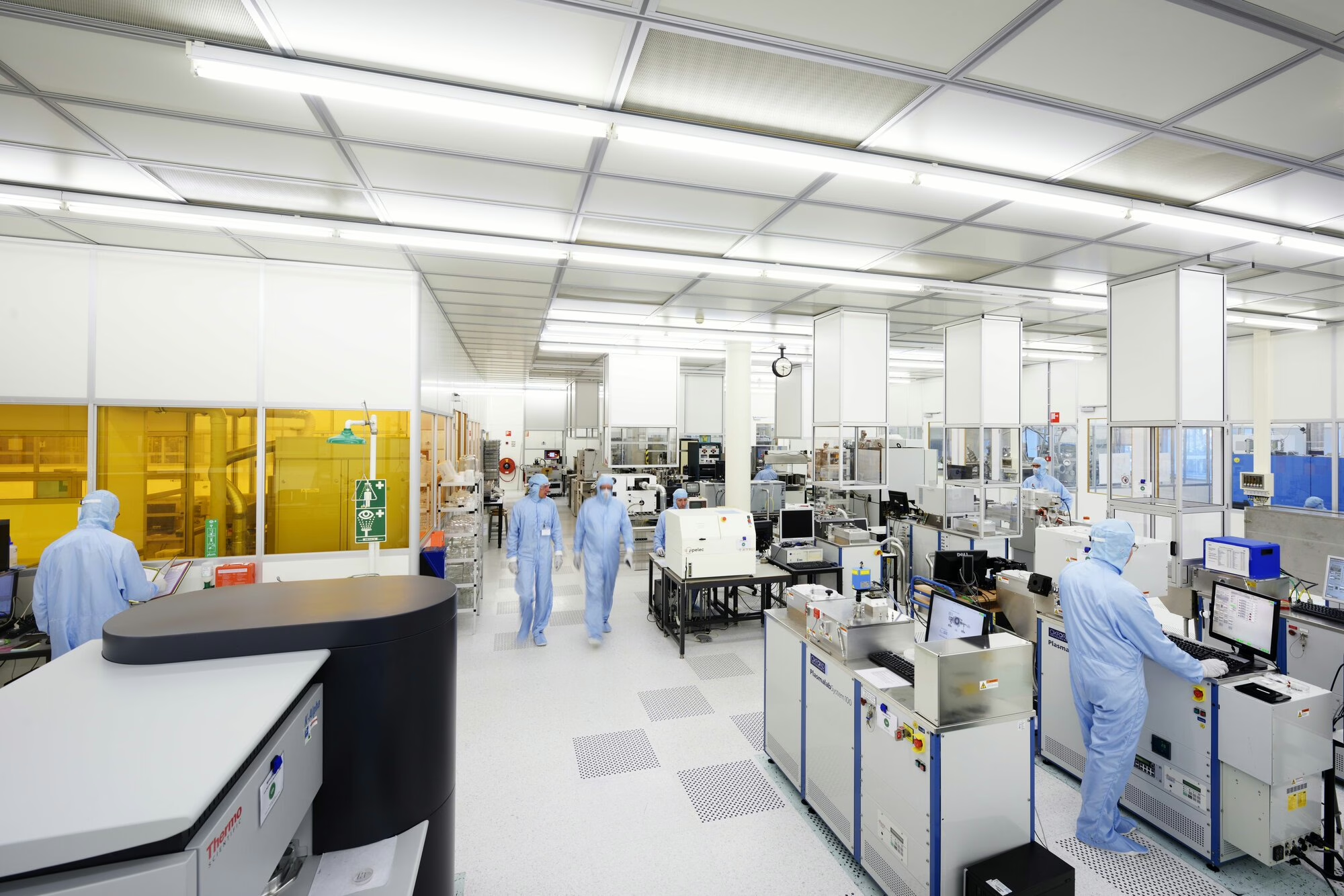
In addition, AMOLF houses the NanoLab Amsterdam cleanroom facility for nanofabrication and nanocharacterization, and a Transmission Electron Microscope (TEM) that allows researchers to study materials at the atomic scale and see what is happening over time and under the influence of light.
The AMOLF way
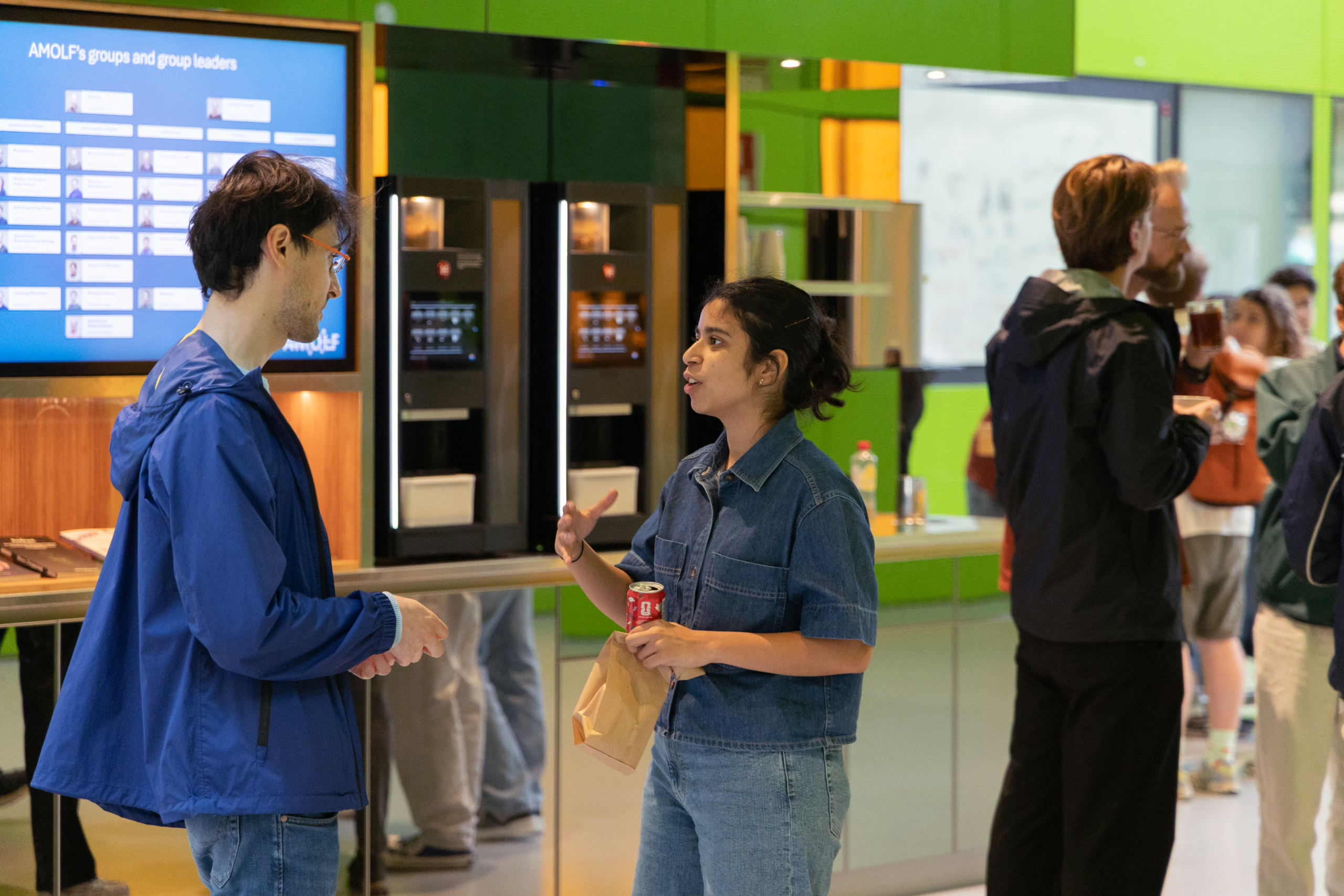
AMOLF is known for its distinctive scientific culture and organizational model, often described as “the AMOLF way”. We believe that ambitious, curiosity-driven science thrives in a focused and collaborative environment. The institute brings together compact research groups in a small-scale, open setting where daily interaction across disciplines is the norm.
AMOLF’s philosophy is guided by six principles: scientific excellence, strong technical infrastructure, early development of new research topics, compact research groups, close collaboration with academic and industrial partners, and a strong sense of community.
This approach creates room for early-career group leaders to develop independent research lines and encourages interdisciplinary innovation. Training the next generation is central to AMOLF’s mission. PhD candidates and postdocs receive advanced scientific training, career development, and mentorship, supported by expert technicians and state-of-the-art facilities.
Our strategy
AMOLF’s strategy for 2023–2028 focuses on advancing three interdisciplinary research themes: Sustainable Energy Materials, Information in Matter, and Autonomous Matter. By combining expertise in physics, chemistry, biology, and engineering, the institute aims to develop new materials and concepts with an impact on energy, technology, and society. Collaboration across disciplines and research groups is central to this approach.
A key priority is attracting and developing world-class scientific talent. AMOLF supports early-career group leaders, PhD candidates, and postdocs through strong mentoring, competitive start-up packages, and extensive training opportunities.
The institute will also strengthen its national and international role by coordinating major research networks, expanding partnerships with Dutch universities, and deepening collaborations with leading institutes. Significant investments in infrastructure underpin the strategy to support research growth and long-term innovation.
Industry collaborations and academic partnerships
Collaboration is at the heart of AMOLF’s research. We work closely with industry partners, consortia and innovation networks in the Netherlands and abroad to explore how fundamental insights can contribute to advances in sustainability, materials innovation, energy, and health. These collaborations allow us to translate scientific discoveries into applications that benefit society.
AMOLF also has strong academic ties with many universities and academic research institutions. Our academic partnerships translate, for example, into joint research projects and part-time guest researcher positions that connect our institute with university research groups. This program strengthens long-term partnerships and supports the exchange of knowledge and talent, and we aim to expand it further in the coming years.
Diversity and inclusion
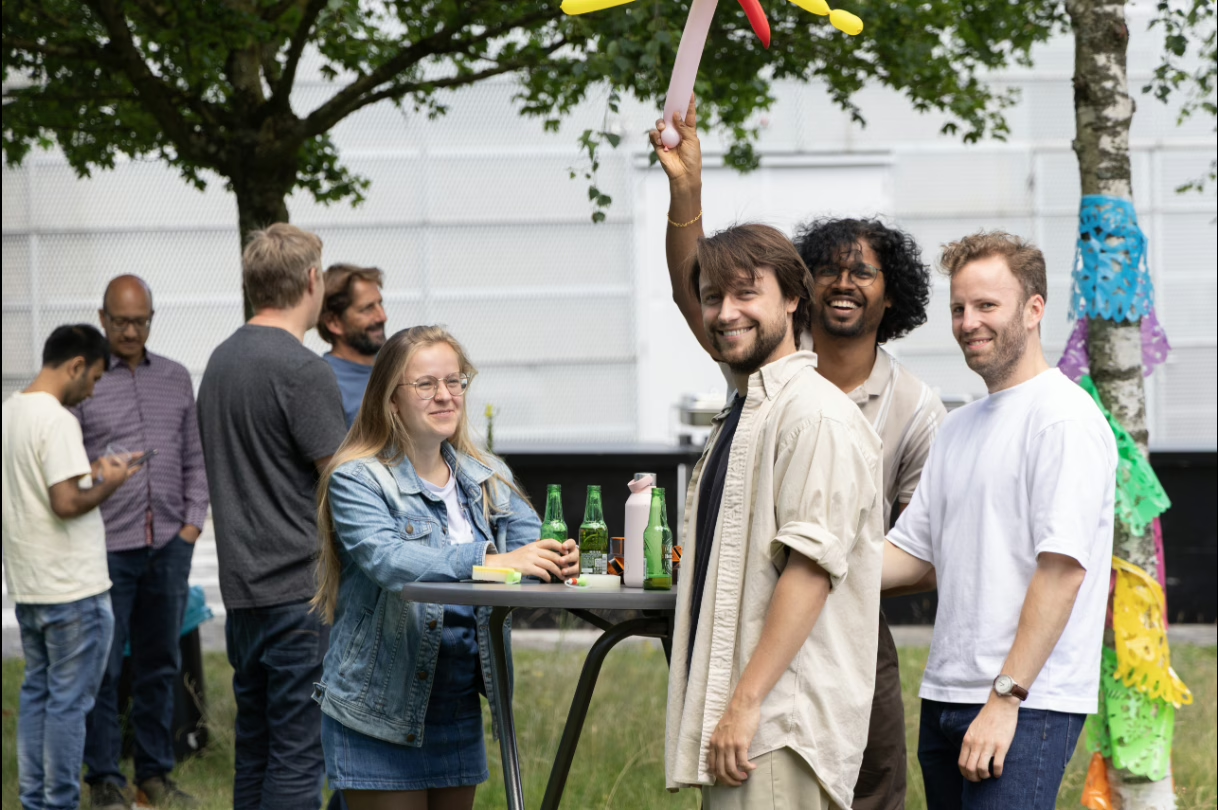
At AMOLF, we believe that diversity and inclusion are essential to excellent science and to a healthy research environment. People with different backgrounds, experiences, and perspectives approach scientific questions in different ways, challenge assumptions, and help us see our work from new angles. We value diversity in all its forms, including differences in cultural, ethnic, and religious background, neurotype, gender identity and expression, sexual orientation, health, physical abilities, age, and career stage. Learning from one another strengthens both our scientific work and our community at AMOLF.
Our goal is to provide a workplace where everyone feels safe and respected, and where people feel invited to contribute ideas and share their perspectives.
Sustainability
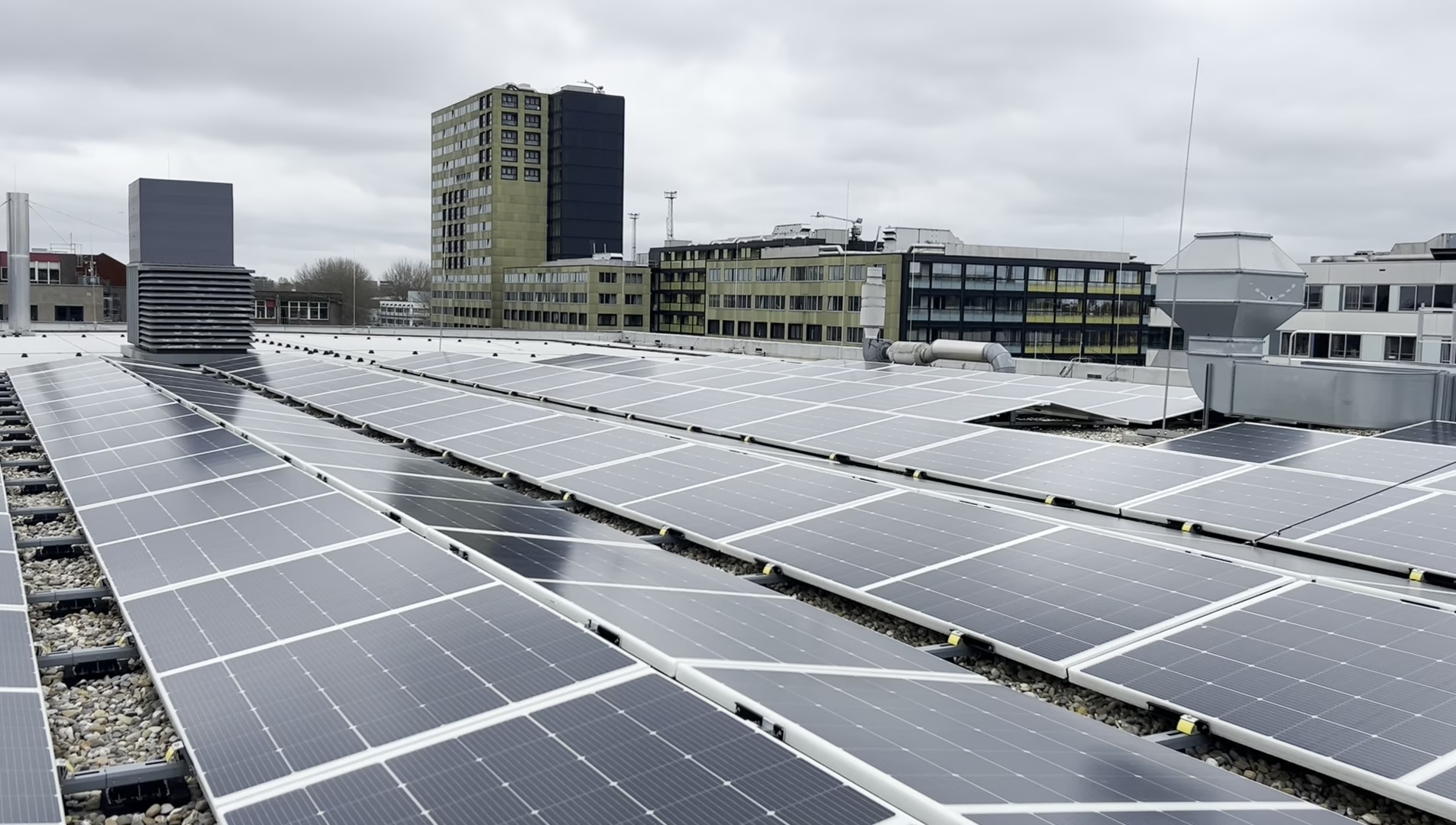
AMOLF is committed to reducing its environmental impact and making responsible choices in how we operate our institute. Recent steps include renovating the roof with reflective materials to lower cooling needs and installing more than 500 solar panels that will supply part of our electricity. We are also replacing older equipment and lighting with more energy-efficient alternatives.
Sustainable mobility is an important focus. Many employees use public transport, bicycles, or electric vehicles, and hybrid working helps reduce commuting. We also encourage researchers to make conscious travel choices, especially within Europe. Inside the building, we continue to improve waste separation and aim to reduce material use. Through these efforts, AMOLF works toward a more sustainable research environment.
History
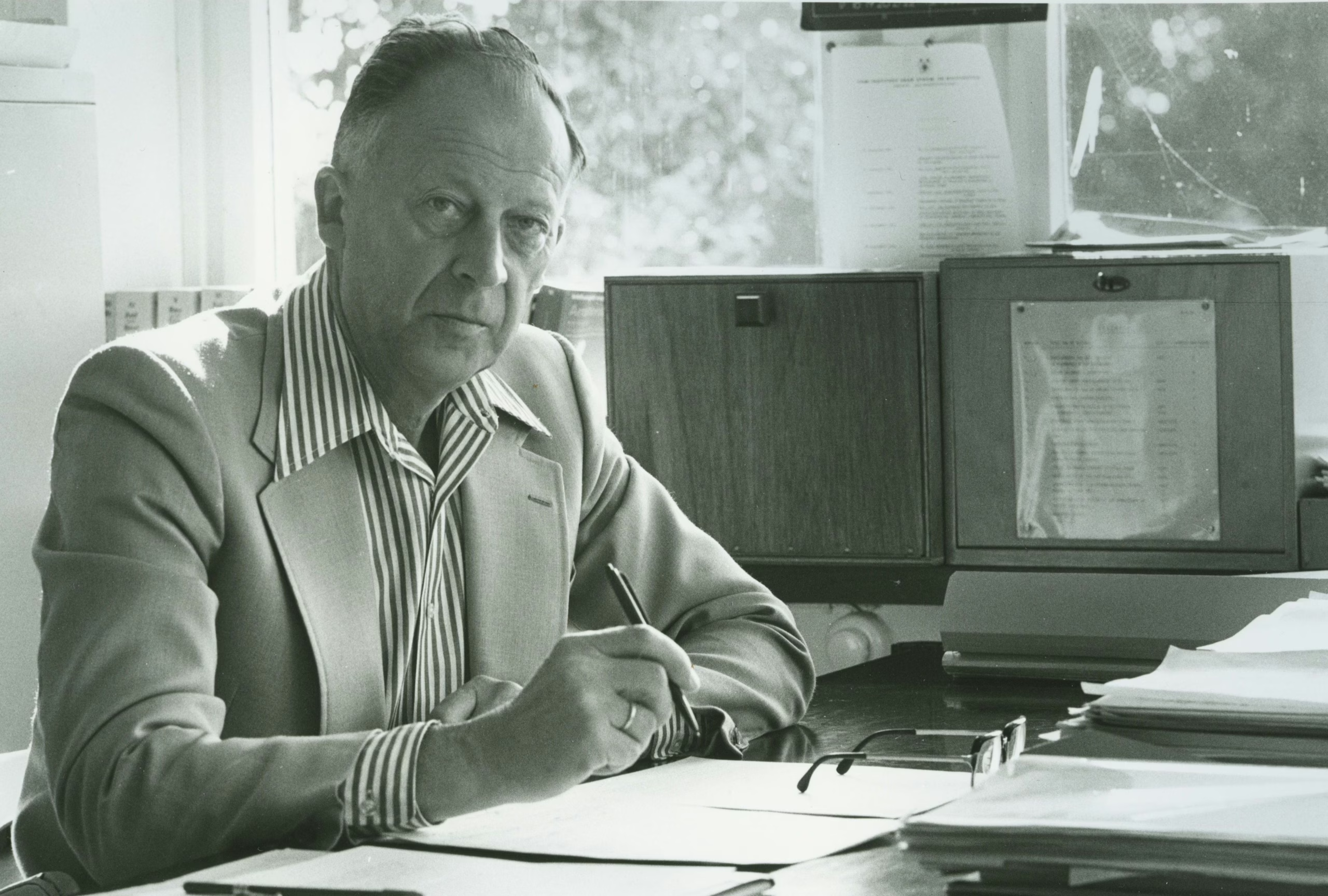
AMOLF was founded on September 15, 1949 by the Foundation for Fundamental Research on Matter (FOM) as the FOM Laboratory for Mass Spectrography, with physicist Jaap Kistemaker as its first director.
In the postwar years, AMOLF played a pioneering role in uranium isotope separation. In 1953, the institute produced ten milligrams of enriched uranium, contributing to the declassification of isotope-separation techniques and later informing the gas-centrifuge method used by Urenco. From the 1960s onward, AMOLF gained international recognition through fundamental research in surface physics and early solar-cell materials.
Around the turn of the century, AMOLF expanded into biomolecular physics and nanophotonics. More recently, the institute has pioneered fields such as designer matter, metamaterials, and advanced photovoltaics. Today, AMOLF’s research focuses on three interdisciplinary themes: Sustainable Energy Materials, Information in Matter, and Autonomous Matter, supported by four disciplinary research centers.
Contact
AMOLF
Visiting address
Science Park 104
1098 XG Amsterdam
The Netherlands
Mail address
P.O. Box 41883
1009 DB Amsterdam
The Netherlands
Get involved
Connect with our research community
Whether you’re a student, collaborator, or industry partner, we welcome you to explore our scientific environment, engage with our researchers, and discover how our work can support your ambitions.