Sustainable Energy Materials
3D Photovoltaics

Our group focuses on the development of new materials and sustainable energy conversion principles, including the investigation of nanoscale phenomena at (electrified) solid-liquid interfaces for sustainable energy generation.
Research Focus
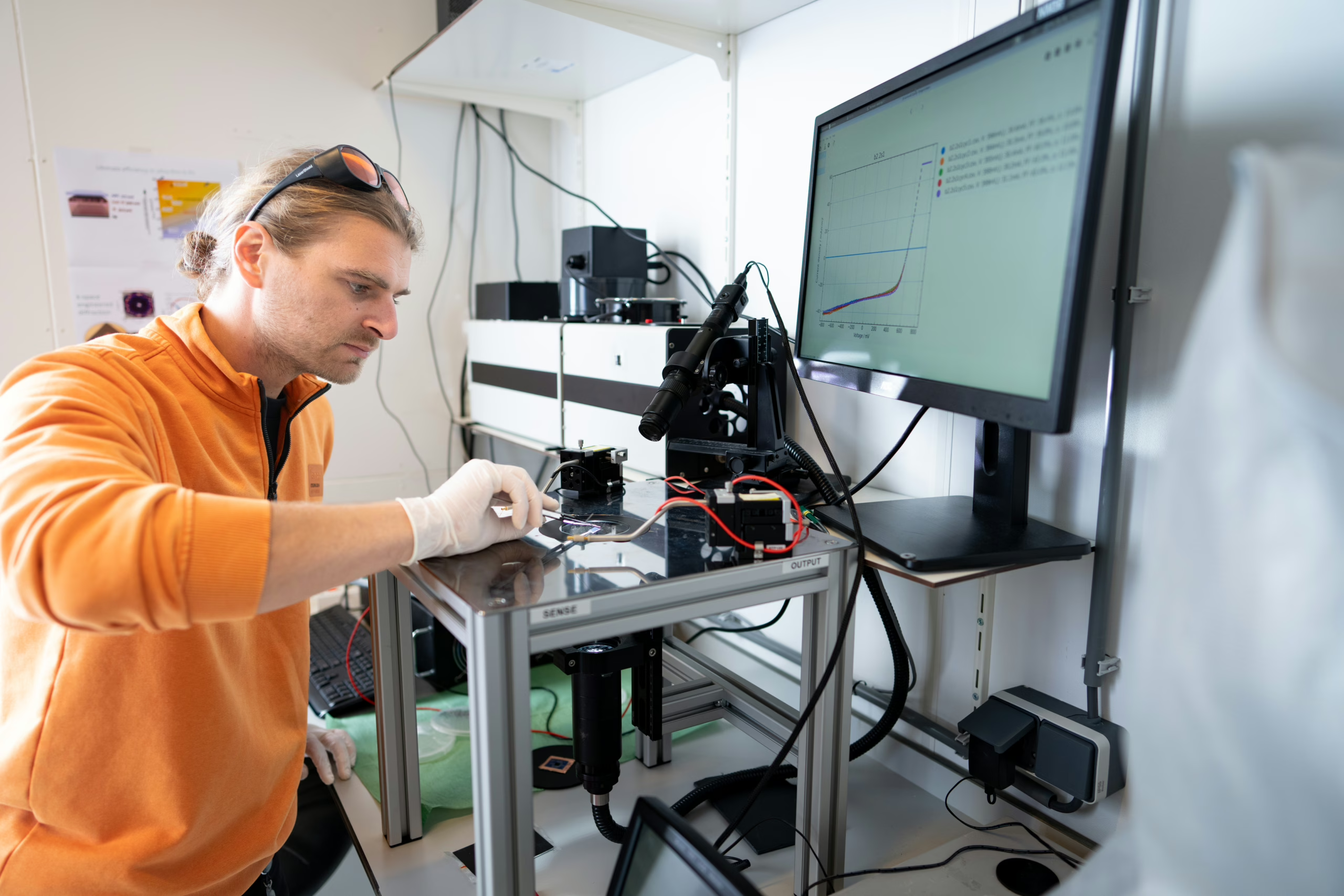
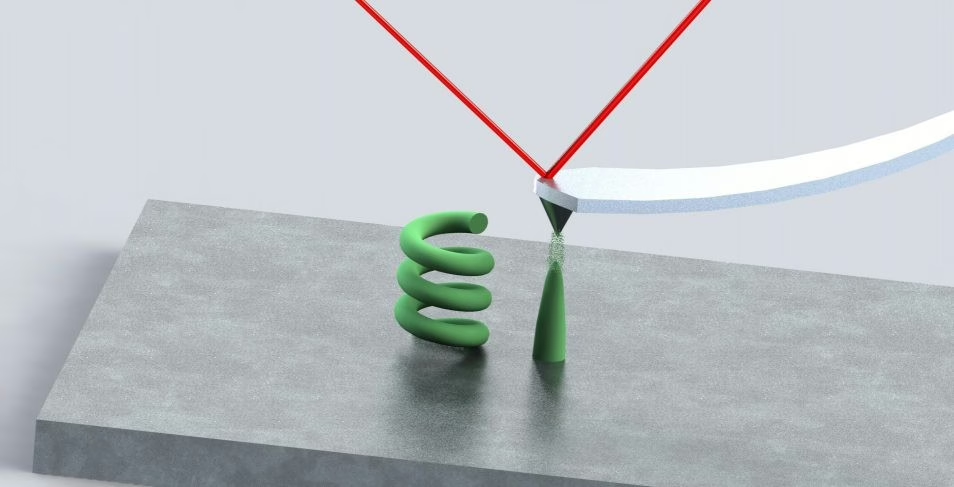
The focus of the group is to understand, visualize, and control nanoscale physical and chemical processes that have a significant impact on renewable energy generation and conversion, both of which are essential for a sustainable future. To do so, we have built a state-of-the-art research lab for nanophotonic numerical modelling, nanomaterial fabrication, scanning probe microscopy and nano-electrochemistry.
Light can be transformed into any of the three main energy carriers that rule our society (electricity, chemicals, heat), offering a sustainable alternative to fossil fuels. By understanding and optimizing light-matter interactions, these transformations can be made greener and more efficient. In our group, we combine numerical modelling with complementary microscopy techniques to develop new fundamental insights into light-matter interactions. For example, we design advanced nanophotonic architectures that enable high-efficiency photovoltaic devices that require less material and rely on more cost-effective materials. In parallel, we explore how light can enhance the efficiency, selectivity, and safety of chemical processes, which is crucial for enabling a sustainable transition in the chemical industry.
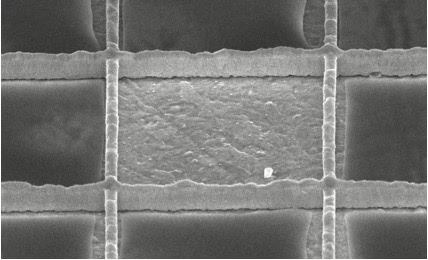
The energy transition towards electrification requires the development of efficient and stable electrocatalysts. Our research addresses the fundamental question of why certain materials exhibit high electrocatalytic activity while others do not. We develop and apply advanced electrochemical scanning probe techniques that not only resolve structure–function relationships at the nanoscale in operando conditions but also enable controlled electrochemical reactions with nanometre precision.











3D Photovoltaics Latest news
Selected publications