Sustainable Energy Materials
Hybrid Solar Cells

The Hybrid Solar Cell Group investigates the next generation of solar cells using metal halide perovskites. By deeply understanding the unique material properties and their impact on device performance, we aim to improve the stability of perovskite solar cells and develop new brain-inspired devices.
Research focus
The Hybrid Solar Cell Group researches the next generation of solar cells using metal halide perovskites. We develop a deep understanding of material properties and their impact on device performance.
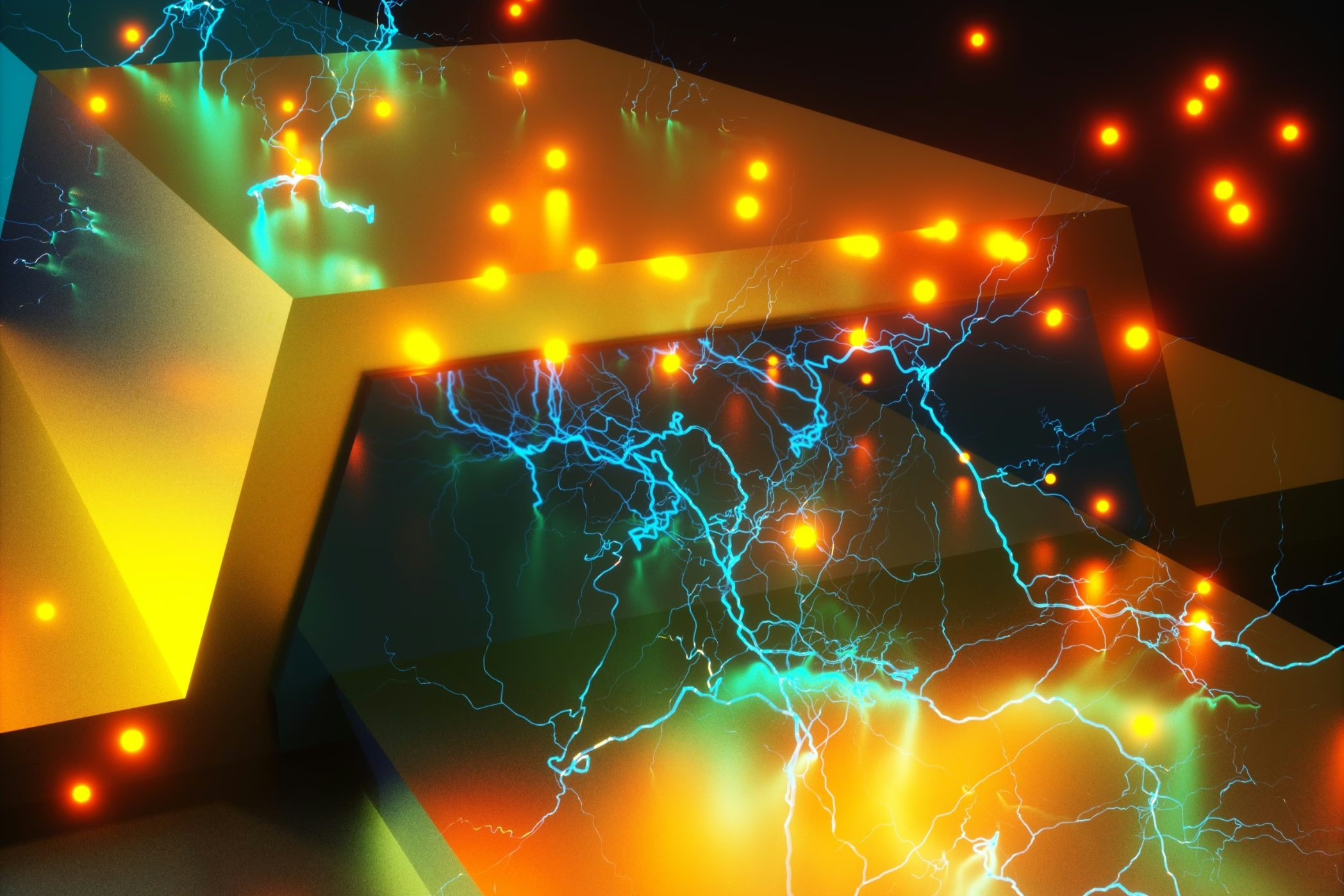
Our focus is on improving the stability of perovskite solar cells, addressing ion migration as a key challenge. We have developed unique techniques to study and suppress ion migration and explore new applications for ion migration. On the one hand, suppressing ion migration leads to more stable solar cells. At the same time, combining the excellent semiconducting properties of perovskites with mobile ions, we develop devices for memory applications.
Perovskite solar cells have caused a huge surge of interest recently due to their high efficiency, now approaching that of crystalline silicon. Stunningly, these materials are made of cheap and abundant ingredients and are solution-processable.
Despite the rapid progress in solar cell efficiency, many of the more fundamental properties are not well understood. To make further progress in materials design, in particular to reduce toxicity and increase lifetime, we need to fully understand these materials.
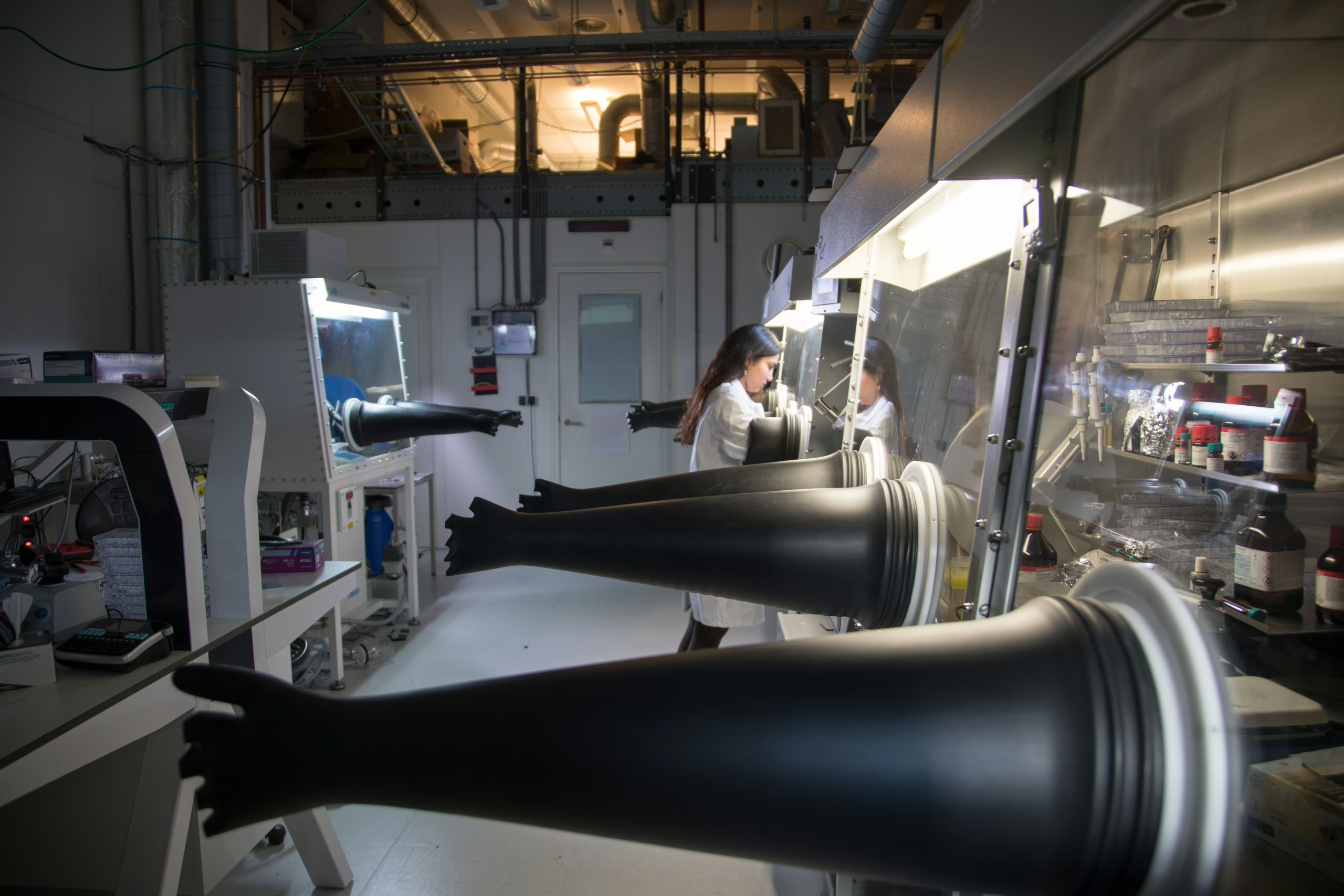
We work towards a better understanding of the working principles of hybrid perovskite semiconductors and devices, using a combination of spectroscopic methods and device design. Our focus lies on a unique property that characterizes perovskites, namely ion migration.
Perovskite semiconductors are efficient conductors for electrons and ions. For solar cells and LEDs we need to carefully control the ion migration to ensure long-term stability. On the contrary, ion migration can be used to imprint memory in a device for energy-efficient computation.
Our group specializes in novel methods to characterize mobile ions, combining electrical spectroscopy, correlative microscopy, and simulations.
With that knowledge, we develop strategies toward more stable perovskite solar cells, and we fabricate artificial synapses and neurons with this mechanism to enable hardware neural networks.








Hybrid Solar Cells Latest news
Most recent publications