Nanoscale Design, High Impact
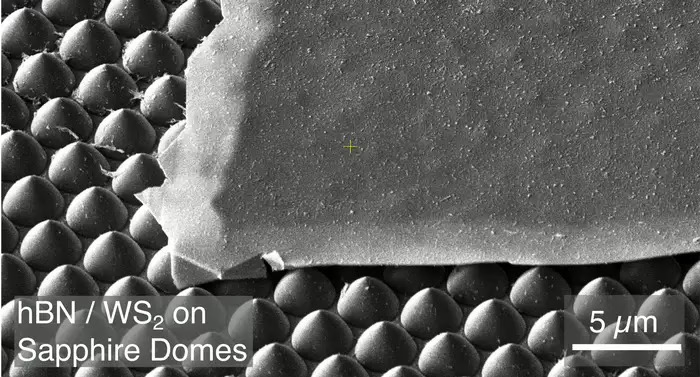
Developed by the Hybrid Solar Cells Group in collaboration with the Photonic Materials Group, the catalyst leverages nanoscale light–matter interactions to enhance electron transfer and minimize energy loss. Because only a tiny amount of material is needed, the design is highly scalable and resource-efficient.
Promising Results for CO2 Conversion
Early experiments indicate that the catalyst can support selective CO2-to-hydrocarbon conversion under mild conditions. This makes it a strong candidate for future solar-powered chemical and fuel production systems.
“By engineering light–matter interactions at the nanoscale, we enable reactions that were previously inefficient or impossible,”

Next steps
The team will now focus on improving long-term stability and fine-tuning the catalyst for industrially relevant reactions.